UNFUCG
DashboardSearchChatBookmarksNotificationsActivityPremiumProfile
?
Home
Search
Chat
Saved
Profile
Episode
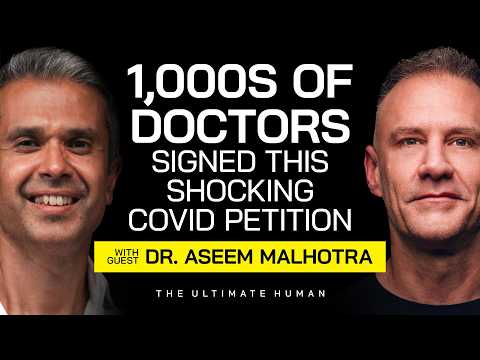
Dr. Aseem Malhotra: What 1000s of Doctors Are Saying About The COVID Vaccine Safety Data | TUH #173
~102 min
Episode Brief·YouTube

Dr. Aseem Malhotra: What 1000s of Doctors Are Saying About The COVID Vaccine Safety Data | TUH #173

Gary Brecka
Watch on YouTube Add to chat My bookmarks← All sources

TL;DR

The four things you'd lose by not watching

4 items

TL;DR

The four things you'd lose by not watching

4 items
1

Dr. Malhotra co-founded the Hope Accord petition, signed by thousands of doctors, demanding a moratorium on mRNA COVID vaccines after reanalysis of Pfizer/Moderna RCTs revealed a serious adverse event rate of 1 in 800—far exceeding the historical thresholds that pulled swine flu (1 in 100,000) and rotavirus (1 in 10,000) vaccines.

2

He dismantles the cholesterol hypothesis, citing Framingham data and a 2020 systematic review showing no linear relationship between LDL lowering and cardiovascular benefit; instead, insulin resistance and inflammation drive heart disease, and 93% of U.S. adults have suboptimal metabolic health.

3

To rebuild trust and health, he advocates banning ultra-processed food in hospitals and schools, taxing corporate fraudsters, and ensuring healthcare workers earn a living wage, framing the current system as “corporate tyranny.”

4

He shares personal encounters with RFK Jr., Nelson Mandela’s confidant Jay Naidu, and Indian elites, illustrating the global resonance of his message and the psychological barriers—fear, willful blindness—that must be overcome to accept the truth.

Protocols

Concrete recipes — what, when, how much, and why

4 items

track-five-metabolic-markers

WhatRegularly measure waist circumference, fasting triglycerides, HDL cholesterol, blood pressure, and fasting glucose to assess metabolic health.
WhenAt least annually, or more frequently if at risk.
For whomAll adults, especially those with family history of chronic disease.
WhyHaving all five markers in the normal range indicates optimal metabolic health and dramatically reduces risk for heart disease, cancer, Alzheimer's, and mental illness.
CaveatsThese markers are surrogates; insulin resistance is the underlying driver, so even if markers are borderline, dietary intervention may be needed.

Dr. Malhotra explains that metabolic syndrome is the common soil for most chronic diseases. Insulin resistance, driven by high-glycemic carbohydrates and ultra-processed food, causes chronically elevated insulin, which is directly toxic to the endothelium and promotes inflammation. By tracking these five simple markers, individuals can gauge their metabolic health. He notes that even well-controlled type 1 diabetics have a 10-year shorter life expectancy due to exogenous insulin, highlighting insulin's central role. The quickest way to improve these markers is a low-carbohydrate diet, which reduces insulin surges. He emphasizes that this is not about weight loss per se; even slim people can be metabolically unhealthy. The goal is to get all five markers into normal range without medications if possible.

Mechanism

High insulin levels damage the inner lining of arteries (endothelium), promote fat storage, and drive inflammation. Reducing dietary glucose spikes lowers insulin, which in turn improves triglycerides, HDL, blood pressure, and waist circumference. This reduces the inflammatory cascade that leads to plaque formation and cardiovascular events.

Personal experience

He shares that he was a sugar addict in his early 30s despite being thin and active, and only later realized the harm. He now uses these markers in his clinical practice to guide patients.

If you have all those five [markers] in the normal rate, you're in a much better state. Not just from heart disease, but cancer, Alzheimer's, mental health.

Also said
“Chronically raised insulin itself is directly toxic to the inner lining of the heart arteries, the endothelium.”— Explains the mechanism of harm.
“The quickest and the low-hanging fruit... is really to go low carb, that seems to be the most effective, quickest way.”— Specifies the dietary intervention.

low-carb-diet-for-metabolic-health

WhatReduce or eliminate high-glycemic index carbohydrates and ultra-processed foods to lower insulin levels and improve metabolic markers.
WhenAs a primary dietary pattern, especially for those with any signs of metabolic syndrome.
DoseSustained; not a short-term fix. The diet should become the default way of eating.
For whomAnyone with elevated triglycerides, low HDL, high blood pressure, abdominal obesity, or high fasting glucose; also those with heart disease, type 2 diabetes, or family history.
WhyLow-carb diets rapidly reduce glucose and insulin spikes, addressing the root cause of insulin resistance and inflammation.
CaveatsSome individuals (lean mass hyper-responders) may see LDL rise dramatically, but this does not appear to increase plaque progression. Monitor markers and consider advanced imaging if concerned.

Malhotra argues that the standard dietary advice to eat less fat and more whole grains has failed, as evidenced by the 93% metabolic unhealthiness rate. He points to the success of low-carb interventions in rapidly improving triglycerides, HDL, and blood pressure. He references the lean mass hyper-responder study to reassure that even very high LDL on a low-carb diet is not associated with plaque progression. He emphasizes that the diet must be whole-food based, not simply low-carb junk food. The goal is to keep insulin low, which also benefits mental health (as explored by Stanford's metabolic psychiatry unit) and reduces cancer risk. He notes that this approach is not taught in medical school, so patients must self-educate or find knowledgeable practitioners.

Mechanism

Dietary carbohydrates, especially refined ones, cause rapid blood glucose spikes, prompting the pancreas to release insulin. Over time, cells become resistant, requiring even more insulin. High insulin promotes fat storage, inflammation, and endothelial damage. By restricting carbohydrates, insulin levels drop, allowing cells to regain sensitivity, reducing inflammation, and improving lipid profiles independently of LDL.

Personal experience

He mentions managing patients with familial hyperlipidemia without statins by using low-carb diets and seeing improvements in their metabolic markers.

The quickest and the low-hanging fruit for us to do that is really to go low carb, that seems to be the most effective, quickest way.

avoid-ultra-processed-foods

WhatEliminate or drastically reduce consumption of ultra-processed foods, which are industrial formulations with additives, refined carbohydrates, and unhealthy fats.
WhenAt all times; make whole, minimally processed foods the foundation of the diet.
DosePermanent lifestyle change.
For whomEveryone, especially those with metabolic syndrome, heart disease, or mental health issues.
WhyUltra-processed foods drive insulin resistance, inflammation, and chronic disease; they are the 'new tobacco'.
CaveatsFood marketing often uses health halos ('heart healthy,' 'fortified'); ignore front-of-package claims and focus on ingredient lists.

Malhotra argues that the food environment is the primary driver of the chronic disease epidemic. 60% of U.S. calories come from ultra-processed foods. These products are engineered to be hyper-palatable and addictive, and they are marketed aggressively, often targeting children and vulnerable populations. He points out that even hospitals sell them, which legitimizes their consumption. He advises patients that if a food is advertised as healthy, it's likely the opposite. The solution requires both individual avoidance and policy change, such as banning sales in schools and hospitals and restricting advertising. He draws parallels to tobacco control, which succeeded through taxation, public education, and environmental restrictions.

Mechanism

Ultra-processed foods cause rapid glucose spikes, leading to insulin surges, inflammation, and endothelial damage. They also disrupt the gut microbiome and contain additives that may promote inflammation. Over time, this leads to insulin resistance, obesity, and the metabolic syndrome cluster.

Personal experience

He shares his own past sugar addiction and how he now reads labels critically. He also describes finding 'heart healthy' vegetable oil in an Airbnb, illustrating the pervasiveness of healthwashing.

If it's advertised or marked as healthy, it's likely the opposite.

Also said
“60% of the calories consumed in the United States come from ultra-processed food.”— Quantifies the problem.
“Hospitals that sold fast food... visitors were four times more likely to leave the hospital and purchase junk food.”— Shows the legitimizing effect.

spike-protein-detox-caution

WhatIf concerned about COVID vaccine injury, consider supplements like NAC or nattokinase that may help denature spike protein, but only if they pose no harm. Prioritize optimizing metabolic health.
WhenAfter consulting a knowledgeable practitioner; not as a first-line without evidence of persistent spike protein.
DoseNot specified; follow product labels or practitioner guidance.
For whomIndividuals with persistent symptoms post-vaccination, after ruling out other causes.
WhySome people cannot clear spike protein efficiently, leading to long-term symptoms. Certain compounds may help, but evidence is limited.
CaveatsLimited evidence; approach with 'first do no harm.' Metabolic health optimization is the foundation and may be sufficient. Testing for spike protein is available but may be sponsored by companies selling remedies, so interpret with caution.

Malhotra acknowledges that many people are worried about vaccine injury and that protocols like Peter McCullough's exist. He says, 'If it's going to potentially do you some good and no harm, why not?' but stresses that the evidence is still limited. He mentions that some companies claim NAC and nattokinase can denature spike protein, but these claims may be biased. He emphasizes that the most important step is to improve metabolic health, as those with poor metabolic health are more likely to suffer complications from the vaccine. He also notes the psychological trauma of being vaccine-injured and the need for psychological support. He does not endorse a specific protocol but suggests a cautious, individualized approach.

Mechanism

The spike protein from the vaccine can persist in some individuals for over 700 days, causing chronic inflammation and autoimmune-like symptoms. NAC is a precursor to glutathione, a major antioxidant, and may help reduce oxidative stress. Nattokinase is a fibrinolytic enzyme that may break down spike protein. However, these mechanisms are theoretical and not robustly proven.

If it's going to potentially do you some good and no harm, why not?

Also said
“Those companies claim that they can denature the spike protein in your body. But irrespective, something you and I very much align on is... optimize their metabolic health.”— Balances hope with caution and emphasizes foundational health.

What's new

Personal practice updates, fresh positions, predictions

3 items

hope-accord-and-vaccine-harm-rate

Dr. Malhotra co-founded the Hope Accord petition calling for a moratorium on mRNA COVID vaccines after an independent reanalysis of Pfizer/Moderna RCTs found a serious adverse event rate of 1 in 800, exceeding the risk of COVID hospitalization in the trial population.

Why this matters: This reanalysis, published in the journal Vaccine, was ignored by mainstream media and contradicts the initial 95% efficacy narrative.

Background

The original RCTs were touted as showing 95% efficacy with minimal side effects, leading to emergency use authorization. The reanalysis by Dr. Joseph Fraiman and others used newly available FDA and Health Canada data to match adverse events against the Brighton Collaboration list endorsed by WHO.

The reanalysis revealed that the rate of serious harm (life-changing event, disability, or hospitalization) was 1 in 800, while the rate of hospitalization with COVID in the trial was less than 1 in 800. This means the vaccine was more harmful than beneficial even in the short term for a relatively healthy population. Dr. Malhotra emphasizes that this is likely an underestimate because those with comorbidities were more susceptible to adverse events. He contrasts this with historical vaccine withdrawals: the 1976 swine flu vaccine was pulled at a harm rate of 1 in 100,000 for Guillain-Barré syndrome, and the 1999 rotavirus vaccine was suspended at 1 in 10,000 for bowel obstruction. The fact that the COVID vaccine remained on the market with a harm rate orders of magnitude higher reveals a profound regulatory failure. The paper was published in Vaccine, a top-tier journal, yet received no mainstream press coverage until Dr. Malhotra and others amplified it through alternative media. He recounts meeting Richard Horton, editor of The Lancet, who was unaware of the publication and called it “a pretty credible journal” but said nothing further. This silence, Malhotra argues, is emblematic of the corporate capture of medicine and media.

Personal experience

Dr. Malhotra describes how he highlighted this data in his own paper and media appearances, including on Joe Rogan, Tucker Carlson, and GB News, leading to a tweet that garnered 25 million views. He also shares that after his GB News appearance, he received a call from Robert F. Kennedy Jr. thanking him for his courage, and a DM from Jay Naidu, the anti-apartheid activist, praising his work.

You were more likely to suffer serious harm from taking the vaccine... at a rate of one in 800 than you were to be hospitalized with COVID.

Also said
“The swine flu vaccine was pulled from the market... at a rate of one in 100,000. That was enough to pull it.”— Shows the historical precedent for vaccine withdrawal at far lower harm rates.
“This should have been world news. It should have been the biggest story of the decade.”— Underscores the magnitude of the suppressed information.
“There was no publicity in any mainstream press. All of the publicity came from me ultimately when I published my paper.”— Highlights the media blackout and his role in breaking the story.

corporate-capture-of-medicine

Dr. Malhotra reveals that 86% of the UK's MHRA funding and 65% of the FDA's budget come from pharmaceutical companies, creating a regulatory environment that prioritizes industry profits over public safety.

Why this matters: This financial entanglement explains why the COVID vaccine was not pulled despite a harm rate far exceeding historical thresholds, and why the cholesterol hypothesis persists despite contradictory evidence.

Background

Operation Warp Speed fast-tracked vaccine approval, bypassing long-term safety studies. Historically, fast-tracked drugs are more likely to be withdrawn for safety reasons.

Malhotra argues that the COVID vaccine scandal is the culmination of decades of unchecked corporate power. He points out that the very name 'Operation Warp Speed' signaled a willingness to sacrifice safety for speed, as fast-tracked drugs have a higher withdrawal rate. The regulators tasked with protecting the public are funded by the industry they oversee: 86% of the UK's Medicines and Healthcare products Regulatory Agency (MHRA) budget comes from pharma, and 65% of the FDA's. This conflict of interest, he says, is why the 1 in 800 harm signal was ignored. He also details how Pfizer lobbied grassroots organizations in the summer of 2021 to push vaccine mandates, a tactic to distract from emerging real-world harm data and to imply that mandated products must be safe. This corporate influence extends to the cholesterol hypothesis: a trillion-dollar industry depends on the fear of LDL, and new expensive drugs are being pushed despite evidence that lowering LDL does not linearly reduce heart attacks. Malhotra calls this 'corporate tyranny'—a system where doctors are afraid to speak out, and where the medical establishment has lost public trust, with trust in doctors dropping from 74% in April 2020 to about 40%.

Personal experience

He shares that when he told the chairman of the British Medical Association about the MHRA's pharma funding, the chairman was shocked and unaware. He also recounts how senior NHS doctors admitted they got their vaccine safety information from the BBC, not from critically appraising evidence.

86% of the funding of our regulator in the UK... comes from big pharma. 65% of the FDA's funding comes from big pharma.

Also said
“Pfizer in the summer of 2021 had lobbied respected grassroots organizations in the US by giving tens of thousands of dollars to push the vaccine mandate narrative.”— Shows deliberate industry manipulation of public perception.
“Most of my colleagues in medicine... are getting their information on the safety and benefits of the vaccine from the BBC.”— Illustrates how even doctors were misled by media rather than data.

cholesterol-hypothesis-debunked

Dr. Malhotra presents evidence that LDL cholesterol is not a causal factor in heart disease; the original Framingham data showed no predictive value below 300 mg/dL, and statins work through anti-inflammatory and anti-clotting effects, not LDL lowering.

Why this matters: This contradicts decades of medical dogma and the basis for multi-billion-dollar statin and PCSK9 inhibitor markets.

Background

The diet-heart hypothesis emerged in the mid-20th century, linking saturated fat, high cholesterol, and heart disease. The Framingham study initially identified high cholesterol as a risk factor, but later reanalysis by its co-director William Castelli in 1996 revealed that LDL below 300 mg/dL had no predictive value in isolation.

Malhotra systematically dismantles the cholesterol hypothesis. He starts by noting cholesterol's vital roles in hormone production, cell membranes, and immunity. The fear of cholesterol arose from the Framingham study, but Castelli's 1996 reanalysis found that only LDL above 300 mg/dL—essentially familial hyperlipidemia (FH)—predicted heart disease. Even in FH, 70% of women and 50% of men do not develop premature heart disease; the real predictors are lipoprotein(a), fibrinogen, and metabolic abnormalities. Malhotra's own 2016 BMJ Open study of over 70,000 participants found no association between LDL and heart disease in people over 60, and an inverse association with all-cause mortality (higher LDL, lower death risk), likely due to LDL's role in immune function. A 2020 systematic review of 35 RCTs found no relationship between the degree of LDL lowering and cardiovascular benefit. Statins do show a small benefit, but Malhotra argues this is due to their anti-inflammatory and anti-clotting effects, not cholesterol reduction. He cites the recent lean mass hyper-responders study using Cleerly CCTA: 100 people with LDL over 200 mg/dL (some up to 500) on a keto diet showed no plaque progression over one year, and no relationship between LDL and plaque. Consequently, Malhotra tells patients that lowering LDL is not part of his management plan.

Personal experience

He states, 'I'm very explicit with my patients... lowering your LDL cholesterol is absolutely not part of my management plan.' He also mentions managing FH patients without cholesterol-lowering drugs.

Unless your LDL is greater than 300 milligrams per deciliter, it is no value in isolation in predicting heart disease.

Recommendations

Products, supplements, and tools mentioned in the episode

1 item

NAC (N-Acetyl Cysteine)

Supplement

Mentioned as a compound that may help denature spike protein in the body, though evidence is limited and may be sponsored by companies selling it.

Dr. Malhotra brings up NAC in the context of spike protein detox protocols. He says some companies claim it can denature spike protein, but he advises a pinch of salt because the data may be biased. He does not personally endorse it strongly, but suggests that if it does no harm, it might be worth trying. He emphasizes that optimizing metabolic health is more important.

vs alternatives

Compared to other detox protocols, NAC is relatively low-risk and has general antioxidant benefits.

Augmented NAC for example... those companies claim that they can denature the spike protein in your body.

Also said
“My approach is always first do no harm. So if it's going to potentially do you some good and no harm, why not?”— His cautious endorsement.
Find NAC
Disclosed sponsorships1speaker disclosed

Hope Accord petition

Service Sponsored · disclosed

A petition calling for a moratorium on mRNA COVID vaccines, signed by thousands of doctors and healthcare practitioners worldwide.

DisclosureDr. Malhotra is a co-founder of the Hope Accord petition.

The Hope Accord (hopeaccord.com) was co-founded by Dr. Malhotra and Dr. Joseph Fraiman, among others. It is based on the reanalysis of Pfizer/Moderna RCTs showing a serious adverse event rate of 1 in 800. The petition has garnered tens of thousands of signatures, including from prominent figures like Jay Bhattacharya (now NIH director). Malhotra mentions that the petition was part of the evidence he submitted to the UK's General Medical Council when his license was under investigation. He also notes that the Daily Mail recently covered it, linking it to Trump administration figures like RFK Jr. and Kash Patel, suggesting a potential policy shift. The petition is a central piece of his advocacy.

vs alternatives

Unlike typical online petitions, this one is grounded in peer-reviewed reanalysis and has influenced high-level policy discussions.

Personal experience

He describes the backlash he faced, including anonymous complaints to the GMC, but also the support from RFK Jr. and Jay Naidu.

The petition calling for this moratorium... has got tens of thousands of signatures around the world from healthcare practitioners.

Find Hope

Notable quotes

Lines worth pulling out — contrarian, specific, or perfectly phrased

5 items
You were more likely to suffer serious harm from taking the vaccine... at a rate of one in 800 than you were to be hospitalized with COVID.
Succinctly captures the core finding of the reanalysis that undermines the vaccine's risk-benefit profile.
The swine flu vaccine was pulled from the market... at a rate of one in 100,000. That was enough to pull it.
Highlights the stark discrepancy in regulatory standards between historical vaccines and the COVID vaccine.
Unless your LDL is greater than 300 milligrams per deciliter, it is no value in isolation in predicting heart disease.
Directly challenges the foundational belief of modern cardiology using the Framingham data itself.
Lowering your LDL cholesterol is absolutely not part of my management plan in preventing your heart disease.
A bold clinical stance from a cardiologist that defies standard guidelines.
People say tax the rich. I don't think that sounds right. Let's tax the fraudsters which happen to be some of the richest people in America.
A provocative policy soundbite that redirects populist anger toward corporate malfeasance.

Sign in to share feedback

Tell us if this brief hit the mark or missed it — feedback feeds back into the next iteration of the prompt.

Topics covered

covid-vaccine-safetymrna-vaccine-moratoriumhope-accordvaccine-adverse-eventsrct-reanalysiscorporate-capturemedical-misinformationcholesterol-mythldl-heart-diseasestatinsinsulin-resistancemetabolic-syndromeultra-processed-foodpublic-health-policypsychological-barrierswillful-blindnesscorporate-tyrannyvaccine-injury-detoxlean-mass-hyperrespondersframingham-study
Free account

Make this library yours

Reading is free for everyone. A free account adds the personal layer: save protocols, follow experts, and see how the other experts weigh in on this same topic.

Create a free accountSign in

Where the experts disagree — weekly

One email a week: the sharpest new disagreements and protocols from the library. No spam, unsubscribe anytime.

Educational summary of the cited expert source — not medical advice. Open the source recording linked above and consult a qualified physician before acting on any protocol.