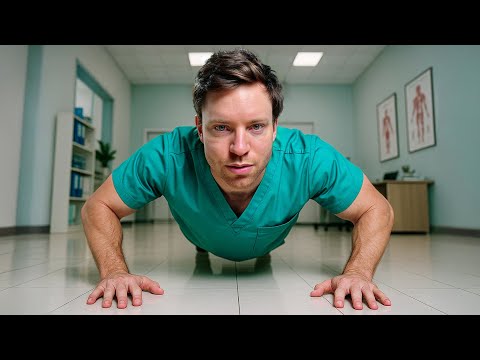

Exercise Snacks / VILPA (Vigorous Intermittent Lifestyle Physical Activity)
Stanfield introduces exercise snacks as the single most important advice he gives sedentary patients. He recounts a 48-year-old borderline patient who believed only formal gym workouts 'count' and thus did nothing. Stanfield reframed the conversation around micro workouts, drawing on the VILPA literature and the new meta-analysis of 14 RCTs to show that sporadic intense bursts improve fitness and lipids without any structured training. The patient created his own plan: parking farther, taking stairs powerfully, wall squats while tea brews, and active play with kids. Over months, these changes transformed his fitness and his self-perception. Stanfield stresses that exercise snacks should be thought of as a bridge—practical and sustainable—not a substitute for guidelines, but for the majority who do nothing, that bridge can be life changing.
The brief vigorous episodes drive heart rate and stroke volume upward, increasing cardiac workload and oxygen consumption. This mechanical and metabolic stress, repeated many times daily, stimulates similar adaptations to continuous training: improved cardiac output, mitochondrial efficiency, and lipid handling. The heart 'knows' it was pushed harder, irrespective of setting, leading to better VO₂max and cholesterol profiles. Over weeks to months, these physiological nudges reduce cardiovascular risk, which the observational mortality drops likely reflect.
So this is what I do in between seeing patients at the clinic. (He does a set of push-ups between consultations.)
I said to him, look, I'm not going to tell you to go to the gym. You don't need complex workouts. Instead, you just need to fit in micro workouts during the day.