
UNFUCG
DashboardSearchChatBookmarksNotificationsActivityPremiumProfile
?
Home
Search
Chat
Saved
Profile
Episode
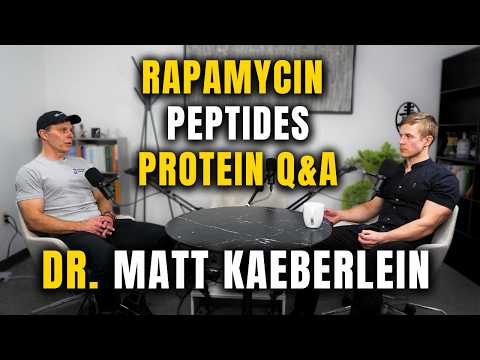
Longevity Scientist Answers Your Questions About Rapamycin - Q&A
~252 min
Episode Brief·YouTube

Longevity Scientist Answers Your Questions About Rapamycin - Q&A

Siim Land
Watch on YouTube Add to chat My bookmarks← All sources

TL;DR

The four things you'd lose by not watching

4 items

TL;DR

The four things you'd lose by not watching

4 items
1

Dr. Matt Kaeberlein dismisses Brian Johnson's decision to stop rapamycin as based on flawed biological age clocks, affirming rapamycin’s robust rodent lifespan extension and sharing his own anecdotal reversal of frozen shoulder and autoimmune issues.

2

He reveals a self-experiment with four consumer biological age tests that produced ages ranging from the low 40s to mid-60s, arguing these tools are too noisy and unvalidated for personal use, and recommends sticking to standard blood biomarkers.

3

He names SGLT2 inhibitors (canagliflozin, dapagliflozin) and estradiol as the most promising longevity compounds beyond rapamycin, explains the TRIM protocol (growth hormone, DHEA, metformin) for thymus regeneration, and announces he plans to try it himself.

4

He emphasizes lifestyle provides 100% confidence for improving healthspan versus <10% for speculative supplements, advocates 0.6–1 g/lb protein with a whole-foods diet and resistance training, and cautions against stacking unproven supplements by comparing the body to a complex machine.

Protocols

Concrete recipes — what, when, how much, and why

5 items

TRIM protocol (thymus regeneration)

WhatA regimen combining growth hormone, DHEA, and metformin, designed to restore thymic function and immune health in middle-aged and older adults.
WhenTypically administered in cycles over several months; he is planning to do it once he arranges MRI monitoring.
DoseSpecific doses not detailed; references Greg Fahy's published studies.
For whomPeople in their 40s-70s concerned with immunosenescence; still experimental and not a general recommendation.
WhyAims to reverse thymic involution — the early decline in thymus function after puberty — by shrinking fat infiltration, increasing thymic volume, and improving T-cell production, thereby combating immune aging.
CaveatsNo large randomized controlled trials; only small human studies exist. Growth hormone can impair insulin sensitivity, metformin is added to counteract this. He wants better immune function data. The effects on long-term health are unknown.

Greg Fahy's TRIM (Thymus Regeneration, Immunorestoration, and/or Mitigation) protocol is based on the idea that the dramatic drop in thymic function after puberty contributes to immunosenescence. Though the protocol includes DHEA and metformin largely for ancillary reasons, growth hormone is considered the primary active agent. Fahy's small human studies have shown increased thymic volume, reduced fat, and improvements in epigenetic aging clocks. Dr. Kaeberlein finds the data intriguing but wants to see direct measures of immune function and plans to self-experiment with pre/post MRI and immune biomarker panels.

Mechanism

Growth hormone reduces fat infiltration in the thymus and increases its volume visible on MRI, potentially regenerating thymic tissue. DHEA, which declines with age, may support hormonal balance and thymic function. Metformin, an anti-diabetic drug, offsets the insulin resistance caused by growth hormone. Together they aim to boost naive T-cell output and reduce sterile inflammation.

Personal experience

He stated, 'I personally am at some point going to give trim a try. I just need to figure out the logistics of the MRI.' He intends to measure his own thymus volume and immune markers before and after.

I personally am at some point going to give trim a try.

Also said
“The growth hormone does a couple of things to the thymus... you can see an increase in volume of the thymus.”— Explains the measurable effect of the primary agent.
“Greg has shown in a number of small but intriguing human studies evidence that the trim protocol over several months can improve thymic volume, reduce the fat infiltration and probably improve T-cell function.”— Summarizes current human evidence.

Moderate-to-high protein with whole foods diet

WhatConsume 0.6 to 1 gram of protein per pound of body weight per day, while eating a high-quality, whole-foods-based diet and limiting added sugars, simple sugars, and alcohol.
WhenDaily nutrition, lifelong.
Dose0.6–1 g protein per pound of body weight per day.
For whomMost adults, particularly those over 55, aiming to maintain function and healthspan. Not appropriate for individuals with specific medical restrictions.
WhySupports muscle mass, bone density, metabolic and hormonal health, and prevents frailty and sarcopenia, especially over age 55. The potential cancer risk of higher protein is largely negated by eating a clean diet and exercising regularly.
CaveatsHigh protein combined with a crappy diet (high in added sugars and processed foods) increases cancer risk. Very low protein after 55 is a bad idea due to higher frailty and mortality risk. Even high-quality protein bars should be consumed in moderation.

Dr. Kaeberlein emphasizes that any discussion of protein must be paired with diet quality. He references the debate with Peter Attia about protein bars, conceding that high-quality bars can be useful but not as dietary staples. He notes that people who chronically eat very low protein often 'don't look very good and they don't seem very happy,' and that the increased cancer risk from high protein is only seen in the context of an unhealthy diet. Thus, his practical advice is to keep protein moderately high, cut out simple sugars and processed foods, and do resistance training.

Mechanism

Dietary protein supports muscle protein synthesis and, through mTOR activation, can increase IGF-1, but when the diet is healthy and resistance training is practiced, the net effect is protective against sarcopenia and metabolic dysfunction. He argues that observational links between low protein and lower cancer risk do not prove causation and are outweighed by strength and function benefits.

Personal experience

He observes from personal interactions that very-low-protein dieters tend to look less healthy and less happy. He himself eats meat and a largely plant-based, whole foods diet with moderate-to-high protein.

I would say the best strategy for most people to adopt is what I would consider moderate to high protein... anywhere from 6 to 1 gram per pound of body weight per day, but you got to be eating a high quality diet.

Also said
“low protein above about age 55 is generally a bad idea. You're at higher risk of frailty, sarcopenia, fractures, and death than eating a high protein diet.”— Critical age-specific warning.
“If you're eating a crappy diet and you eat a lot of protein, you're going to increase your risk for cancer, period.”— Defines the crucial dietary context caveat.

Resistance training for healthspan

WhatInclude regular resistance training as a non-negotiable part of the exercise routine.
WhenConsistently, ideally multiple times per week.
For whomEveryone, especially older adults.
WhyBuilds and maintains muscle mass and bone density, improves metabolic health, and is required to fully benefit from a higher protein diet.

definitely resistance training should be part of your exercise routine.

Cut out simple sugars and read food labels

WhatAvoid added sugars and highly processed foods; read ingredient labels to spot hidden simple sugars.
WhenWhenever purchasing or consuming packaged foods.
For whomGeneral population.
WhySimple sugars drive metabolic dysfunction and amplify cancer risk when combined with high protein.

Read the frigin labels. I can't believe still today a lot of people don't look at labels. Like, cut out the simple sugars, right?

Rapamycin administration in dogs (speculative)

WhatIf considering off-label rapamycin for dogs, start after age 7 and only in dogs over 40 lbs, analogous to a human biological age of 55–65.
WhenAfter the dog reaches 7 years old (large breeds); for small dogs, slightly later.
DoseNot specified; references dog aging project protocols.
For whomDog owners interested in canine longevity, but this is not veterinary advice.
WhyMouse studies show that starting rapamycin at an equivalent older biological age still yields robust lifespan extension, and the risk of side effects is likely higher if started very young.
CaveatsThe speaker is not a veterinarian. The risk profile in dogs is not fully known, and starting earlier (e.g., in puppies) likely increases risk without greater benefit.

from our studies in the dog aging project, they have all been in dogs that are over 7 years old and at least 40 lbs.

What's new

Personal practice updates, fresh positions, predictions

4 items

consumer-biological-age-clocks-unreliable

He conducted an experiment with four consumer-facing biological age tests on himself and got results ranging from low 40s to mid-60s, concluding these tools are not usable for clinical or personal decision-making.

Why this matters: Provides firsthand data from a respected aging researcher that directly challenges the booming direct-to-consumer biological age industry.

Background

Biological age clocks have been marketed as tools to measure aging rate and guide interventions, but no regulatory body has validated them, and their precision in the real world is unclear.

He explains that these clocks typically measure DNA methylation patterns correlated with chronological age or mortality risk, not true biological age. First-generation clocks are trained on chronological age; second-generation clocks on mortality risk or pace of aging. Even the promising pace-of-aging clocks, which track changes in health over time, have not been validated in consumer-grade products. He warns that the premature rush to market could backfire when regulators see poor performance, harming credibility for responsible developers trying to use these clocks in drug approval trials.

Personal experience

At age 53¾, he sent duplicate blood samples to four companies. Ages ranged from low 40s to mid-60s, though the average matched his chronological age. Most duplicates were within 3–5 years, but one company's duplicates were 20 years apart. He notes the experiment cost several thousand dollars.

I did an experiment where I tested four different biological age tests from four different companies... The results I got back ranged from low 40s to mid60s.

Also said
“I don't think we can use these consumer facing biological age tests for anything right now other than enriching the people who are at these companies.”— Condemns the current consumer utility and highlights financial motives.
“None of these tests have been, you know, validated by any regulatory body, any independent, you know, consumer watchdog organization.”— Underlines the total lack of external oversight.

glp1-agonists-beyond-caloric-restriction

He has evolved from thinking GLP-1 agonists would only extend lifespan by reducing food intake to recognizing they may have independent health-promoting mechanisms.

Why this matters: Signals a shift in thinking about a major drug class that is widely used for obesity.

Background

Initially, when people suggested GLP-1 agonists like Wegovy and Mounjaro might be longevity drugs, he assumed any benefit would just be caloric restriction in a pill, because they reduce appetite.

After seeing more data on GLP-1 receptor targets outside the brain's appetite centers, he now believes there could be direct beneficial effects on age-related processes. He would like to see a lifespan study in laboratory animals. He also stresses that without resistance training and a quality diet, these drugs cause significant lean mass loss, increasing frailty, and cautions about hormonal perturbations during extreme calorie restriction.

I'm becoming more intrigued by the possibility that they could actually have positive health benefits through other mechanisms.

Also said
“I would love to see that experiment done. I have not seen anybody I've not heard of anybody doing that experiment yet in laboratory animals.”— Highlights that key evidence is still missing.

rapamycin-muscle-immune-benefits

He previously worried rapamycin would suppress immunity and cause muscle loss, but now believes the evidence points in the opposite direction — at low intermittent doses it may enhance immune function and help maintain muscle.

Why this matters: Counters a persistent concern among potential rapamycin users and reflects the expert's own updated view.

Background

Rapamycin is used at high continuous doses in organ transplant patients, where it is associated with impaired wound healing and metabolic effects, leading to fears about muscle and immune suppression.

Over the last few years, rodent studies show rapamycin boosts age-related immune function and prevents sarcopenia. Two large clinical trials of everolimus (a rapamycin derivative) in older adults showed improved vaccine response. His team's study of 333 off-label rapamycin users found lower rates of severe COVID-19 and long COVID symptoms, with no difference in infection risk. The Pearl trial from Ageless RX even hinted at improved body composition in women at very low doses. On the muscle side, he now says that if anything the needle is leaning toward better lean mass outcomes.

Personal experience

He reports personal reversal of autoimmune disease and frozen shoulder on rapamycin.

One of the fears I've had in the past about raomy is that it suppresses your immune system and makes you lose muscle. But over the last few years that has been not turned out not to be the case.

Also said
“We actually found in our study of 333 people using rapamy off label uh lower incidence of severe or moderate outcomes from COVID 19 and a lower risk of symptoms associated with long COVID.”— Provides human data supporting improved immune outcomes.
“At least anecdotally report benefits like reversal of hypertrophic cardiomyopathy, reversal of autoimmune disease in my own case um reversal of uh inflammation of the shoulder capsule commonly known as frozen shoulder.”— Adds concrete personal and anecdotal health reversals.

therapeutic-plasma-exchange-interest

He is increasingly convinced that therapeutic plasma exchange, removing harmful circulating factors, may have real benefits for aging and toxin exposure and wants to try it.

Why this matters: Indicates openness to a relatively intense, niche intervention that is not widely discussed in mainstream longevity circles.

Background

Based on parabiosis experiments where connecting the circulation of a young and old mouse appears to rejuvenate the old animal, plasma exchange targets the 'bad stuff' that accumulates with age.

I'm becoming more convinced there's there's real potential benefit there both in the context of aging, but also maybe in the context of things like, you know, microplastic exposure or heavy metal exposure.

Recommendations

Products, supplements, and tools mentioned in the episode

1 item

Use established blood biomarkers over consumer biological age tests

Practice

Instead of relying on unvalidated consumer biological age clocks, he recommends tracking standard markers like LDL, HDL, insulin, glucose, which can predict mortality risk.

We can come up with a set of those markers that everybody gets on their blood test and predict your risk of dying in the next 10 years.

Find Use
Disclosed sponsorships2speaker disclosed

The Longevity Leap

Book Sponsored · disclosed

The book covers 24 chapters on the biology of aging and major chronic diseases, plus over 70 clinically relevant biomarkers and their optimal ranges.

DisclosureThe host, Siim Land, is the author and promotes it as his new book during a mid-episode break.

I want to take a quick break to let you know that you can now get my new book, The Longevity Leap, on Amazon. It contains 24 chapters ranging from the biology of aging to all the major chronic diseases...

Find The

Optispan podcast

Service Sponsored · disclosed

For deeper dives into longevity topics, the Optispan podcast features interviews and discussions.

DisclosureDr. Kaeberlein hosts the podcast and mentions it at the end as a place for more content.

you can check out the Optispan podcast.

Find Optispan

Notable quotes

Lines worth pulling out — contrarian, specific, or perfectly phrased

6 items
the honest answer is nobody knows whether rapamy slows aging in humans or whether or not there are going to be significant benefits from rapamy. I don't know. Brian Johnson doesn't know. Nobody knows because we don't have randomized clinical trials yet.
Candid, level-setting admission from a leading rapamycin researcher.
his rationale as I understand it from what I've seen in the public domain is nonsense.
Blunt dismissal of a high-profile longevity influencer's decision-making.
resveratrol is the most debunked longevity molecule ever. Resveratrol does not increase lifespan in laboratory animals on average.
Strongest possible statement against a once wildly popular supplement, backed by a meta-analysis.
my confidence is 100% that you can improve your health span and likely your lifespan through lifestyle modifications. And my confidence is less than 10% that you can do that through supplements.
Quantifies his scientific belief in lifestyle versus speculative supplement benefits.
the human body is a really really complicated piece of machinery... if you go in there and you start taking screws out or pulling wires out at random, the chances you're going to make it work better are less than the chances you're going to break it.
Vivid analogy that captures his conservative stance on polypharmacy and supplement stacking.
I don't think we can use these consumer facing biological age tests for anything right now other than enriching the people who are at these companies.
Harsh indictment of the commercial biological age testing industry.

Sign in to share feedback

Tell us if this brief hit the mark or missed it — feedback feeds back into the next iteration of the prompt.

Topics covered

rapamycinbrian-johnsonbiological-age-clocksepigenetic-clocksdna-methylationsupplements-vs-lifestylesglt2-inhibitorsestrogen-longevityacarbosemetforminresveratrolantioxidantspeptidesglp1-agoniststrim-protocolthymus-regenerationigf1protein-intakegrip-strengththerapeutic-plasma-exchange
Free account

Make this library yours

Reading is free for everyone. A free account adds the personal layer: save protocols, follow experts, and see how the other experts weigh in on this same topic.

Create a free accountSign in

Where the experts disagree — weekly

One email a week: the sharpest new disagreements and protocols from the library. No spam, unsubscribe anytime.

Educational summary of the cited expert source — not medical advice. Open the source recording linked above and consult a qualified physician before acting on any protocol.