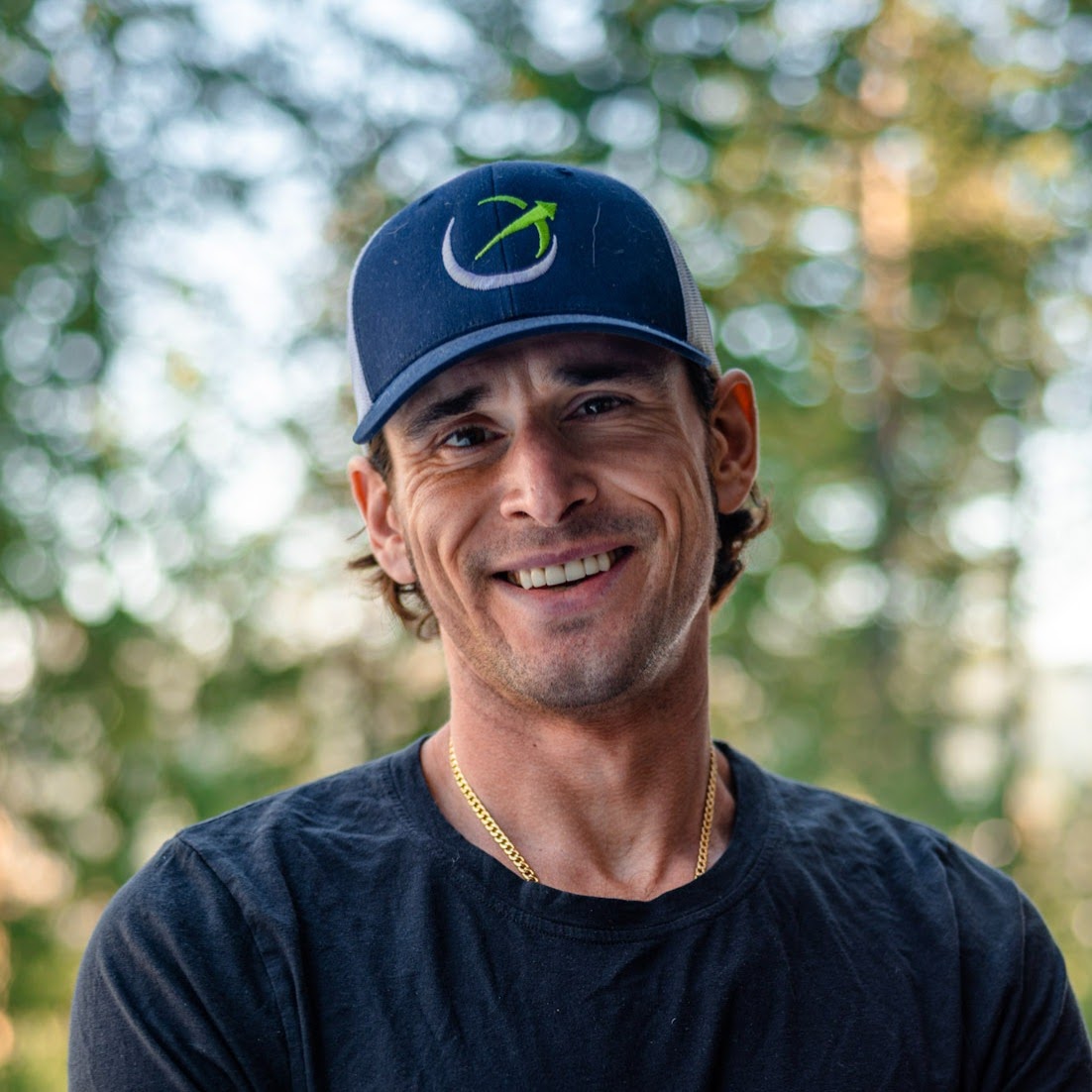
Dr. Marine Vandelar, sleep scientist and author of 'How To Sleep Like A Caveman', explains that modern hunter-gatherer tribes sleep 6.2–6.5 hours per night and spend 2–2.5 hours awake during the night without seeing it as a problem, challenging the 8-hour sleep ideal.
2
The 8-hour sleep rule originated from 19th-century social reformer Robert Owen's '888' slogan and was popularized by Matthew Walker's book, but large population studies show 6–8 hours is normal and associated with health, with most westerners sleeping around 7 hours.
3
Being awake up to 20% of the night is biologically normal and served an evolutionary sentry function; anxiety about waking up causes more harm than the waking itself.
4
Delayed Sleep Phase Syndrome and chronotype mismatches can be treated by shifting the biological clock forward or backward using carefully timed light exposure, but you cannot permanently change your underlying chronotype.
Protocols
Concrete recipes — what, when, how much, and why
9 items
Use bright light in the morning and dim light in the evening to adjust circadian phase
WhatTo shift your sleep schedule earlier (for evening types), get bright light exposure (preferably sunlight or a 10,000 lux lamp) immediately upon waking and keep evenings dark. To shift later (for morning types), use light in the evening.
WhenMorning light for phase advance; evening light for phase delay. The timing depends on your desired shift direction.
DoseAt least 30 minutes of bright light (10,000 lux) eyes-open. For phase advancing, start light at natural wake time and gradually move earlier.
For whomPeople with mild chronotype mismatches (e.g., evening types needing to wake up early for work/school).
WhyLight is the primary zeitgeber that entrains the suprachiasmatic nucleus (SCN) biological clock. Morning light advances the clock, evening light delays it.
CaveatsThis can only adjust the clock by about 1.5-2 hours. Larger shifts require more intensive chronotherapy or possibly melatonin under medical guidance. It does not change the underlying genetic chronotype—just masks it like 'dyeing blonde hair brunette'.
Dr. Vandelar emphasizes that you cannot permanently change your chronotype; you can only override it temporarily. For evening types who struggle with early starts, the standard advice is to get up early and use a lot of light. However, he cautions that if the delay is large (e.g., naturally falling asleep at 3 AM but needing to be up at 7 AM), a simple morning light push is insufficient. Instead, he describes a structured chronotherapy approach: either moving the schedule backward (waking up 30 minutes earlier every two days with light at the new target time) or moving forward (going to bed 3 hours later each day until the desired bedtime is reached, using light upon waking at the shifted times). This forward-moving technique is particularly useful for adolescents with Delayed Sleep Phase Syndrome. Light lamps that emit 10,000 lux are clinically equivalent to outdoor light. He also mentions that light in the evening can push the clock later, which is useful for morning types who want to stay up later for social reasons. The key is to be consistent and use light precisely timed.
Mechanism
Intrinsically photosensitive retinal ganglion cells (ipRGCs) containing melanopsin detect bright light and signal the SCN, suppressing melatonin and resetting the central clock. Evening light exposure delays melatonin onset; morning light advances it.
light later in the evening can push our clock more backwards uh which gives us a later sign of wanting to fall asleep. The opposite if you are an evening type and you want to be more of a morning type, then it's very important to work with light in the morning.
Also said
“usually our biological clock can adjust for like one and a half to two hours without too much work. If it's more then sometimes you need more like um and this is always doctor's prescription but like melatonin or guidance from a specialized sleep um expert.”— Sets the realistic limit for light-only adjustment.
“the light lamps that you're talking about, the bright lights that they they they emit 10,000 lux and they are just as good as being outside.”— Validates light therapy lamps as an alternative to sunlight.
Chronotherapy for Delayed Sleep Phase Syndrome (DSPS)
WhatFor large circadian delays, systematically move the sleep schedule forward in 3-hour jumps every day, using bright light upon waking at the new time, until reaching the desired target bedtime. Alternative: move backward 30 min every two days with light.
WhenWhen a person's natural sleep onset is 4+ hours later than desired. Forward-moving chronotherapy involves staying awake later each day (e.g., from 3 AM to 6 AM bedtime, then 9 AM, etc.), continuing around the clock to end up at the target bedtime.
DoseForward shift: 3 hours per day over 7-9 days. Backward shift: 30 minutes earlier every 2 days, which is slower but less disruptive.
For whomAdolescents and adults with diagnosed Delayed Sleep Phase Syndrome/Disorder who have failed simpler light therapy.
WhyThe homeostatic sleep drive and circadian clock can be forcefully shifted when the light-dark cycle is deliberately desynchronized. Forward shifting uses the natural tendency of most humans to delay more easily than advance.
CaveatsForward-moving chronotherapy requires strict adherence and temporary social disruption; it must be done under specialist supervision. Once the desired schedule is achieved, rigid adherence to regular bedtimes and morning light is mandatory to prevent relapse.
Dr. Vandelar defines Delayed Sleep Phase Syndrome as a condition where an individual's natural sleep onset is extremely late (e.g., 3-3:30 AM) and they cannot fall asleep earlier no matter what they try. This leads to chronic sleep deprivation, daytime sleepiness, concentration problems, and often tardiness at work or school. The common advice of just waking up early and getting light does not work for a 4-hour delay. He has used the forward-moving chronotherapy extensively in adolescents at a sleep medicine center. The protocol: on day 1, the person goes to bed at their natural time (3 AM). On day 2, they delay bedtime to 6 AM; day 3 to 9 AM; and so on, shifting 3 hours later each day. Upon each new wake time, they get bright light exposure to anchor the new rhythm. After 7-9 days, they 'circle the clock' and land at the desired earlier bedtime (e.g., 11 PM). This method is often more effective and faster than the backward approach, but it is intense. The backward approach (30 min earlier every two days) is gentler but may fail for large delays.
Mechanism
The suprachiasmatic nucleus (SCN) can be reset by abrupt shifts in light exposure and sleep timing. Forward shifting exploits the fact that the human circadian clock has a slightly longer than 24-hour period and is naturally inclined to delay; by delaying massively each day, the clock realigns with the desired schedule once the light pattern stabilizes.
I say to the adolescent you go to bed at 3:00 at night on the first day, the second day 6:00 in the morning, then 9:00 in the morning. So you should make a shift of 3 hours until you're in the right rhythm.
Also said
“if you have a a big delay like if you have to go uh asleep fall asleep around 11:00 and you fall asleep around 3 um that's a delay of 4 hours and you cannot fix that with just giving lights at 7:00 in the morning.”— Illustrates why standard light advice fails for DSPS.
“after 7 to nine days you usually achieve the the rhythm that they want.”— Gives the expected timeframe for forward-moving chronotherapy.
If too aroused to sleep, get out of bed and do something relaxing until sleepy
WhatWhen woken by an alarm or stress and unable to fall back asleep due to high arousal, leave the bedroom, engage in a calming activity (reading, documentary, puzzle) under dim light, and return to bed only when relaxed and sleepy.
WhenImmediately upon realizing that lying in bed is not leading to sleep because of hyperarousal (e.g., after a jarring alarm, anxious thoughts).
DoseUntil relaxation is achieved—no strict time limit.
For whomPeople who experience sudden nocturnal awakenings with high stress (alarms, nightmares, anxiety spikes).
WhyStaying in bed while frustrated creates a conditioned association between bed and wakefulness/anxiety. Rising breaks that cycle and allows the parasympathetic system to engage.
CaveatsAvoid bright lights (they can reset the circadian clock). Do not engage in stimulating activities like work or intense gaming. The goal is relaxation, not entertainment.
Dr. Vandelar addresses the scenario of being jolted awake—like Ben's blood glucose alarm story—where the body is thrust into an immediate state of arousal far from sleep. In such cases, the first priority is to de-arouse. He explains that many people worry about how long it takes to fall back asleep, but that worry itself is counterproductive. The more important goal is to become relaxed. If the arousal is too high, staying in bed can reinforce a stress reaction. Instead, he recommends getting out of bed and doing something that creates a good feeling and lowers heart rate and blood pressure, such as reading a book, watching a documentary, or doing a small puzzle—with no bright light. Only when one feels a genuine sense of sleepiness or deep relaxation should they return to bed. He distinguishes between being 'sleepy' and being 'relaxed': if you are relaxed and lying in bed with low arousal, that is perfectly fine even if sleep does not come immediately. Ben mentioned that he personally finds meditation apps like New Calm helpful for this, and Dr. Vandelar agreed that such sounds can work for mild arousal, but for very high arousal, getting out of bed is necessary.
Mechanism
Hyperarousal is driven by sympathetic nervous system activation (cortisol, adrenaline). Physical separation from the sleep environment and engaging in a pleasant, low-demand activity facilitates a shift to parasympathetic dominance, lowering heart rate and blood pressure, and allowing the homeostatic sleep drive to reassert itself.
if your arousal is too much up, you have to go out of the bed, do something that relaxes you, that gives you good feeling and then go back in the bed again when you're relaxed.
Also said
“I think a lot of people are worried about that [time to fall back asleep]. I think we shouldn't be worried about that that much. It's we should be wor worried more about when you're in the bed um and you are relaxed.”— Shifts the focus from latency to relaxation.
“Sometimes we say you have to go back to in the bed when you are sleepy. But um I think if you are relaxed and you're lying in the bed relaxed and your your blood pressure is going down, your heart rate's going down, then there's no issue with that.”— Clarifies that relaxation is sufficient, not just sleepiness.
Use a sleep diary instead of a wearable tracker to assess sleep
WhatKeep a simple paper sleep diary noting bedtimes, wake times, and subjective restfulness rather than relying on a commercial sleep wearable that provides inaccurate sleep stage data and induces anxiety via arbitrary scores.
WhenDaily, ideally as part of a sleep improvement plan over several weeks.
Dose2-3 weeks of daily logging.
For whomAnyone concerned about their sleep quality, but especially those with insomnia or anxiety about sleep.
WhyConsumer wearables are poor at estimating sleep stages and create 'orthosomnia'—anxiety over imperfect scores. A diary captures the subjective experience that matters more for well-being.
CaveatsA diary is still subjective; for clinical assessments, actigraphy (medical device) or polysomnography may be needed. However, for personal insight and reducing anxiety, a diary is superior to a tracker.
Dr. Vandelar strongly advises against relying on commercial sleep trackers. He explains that these devices are 'completely unreliable' at determining which sleep stage you are in. Moreover, the scores they produce (like 72 out of 100) can induce significant anxiety, a phenomenon sometimes called orthosomnia. People who felt they slept great may see a low score and then feel tired because the device told them they should be. In contrast, a simple sleep diary—recording when you went to bed, when you woke up, and how restful you felt—is more clinically useful and does not introduce this anxiety. He references the fact that even actigraphy (a medical device) has a ~20-30 minute discrepancy compared to subjective report, meaning that objective data is not always more 'true' than perception. The goal is to understand your personal sleep need and pattern, which a diary over a holiday period can reveal naturally without technology.
trackers are completely unreliable. So what we see is that if you look if you look at commercial trackers then uh they're not very good at estimating in what sleep phase you are and and they're actually quite terrible.
Also said
“a lot of people suffer from a lot of anxiety when they get the sleep score of 72 which when you have to start the game like oh my god you know I slept so great. Oh wait according to my wearable my wearable slept really shitty I'm screwed.”— Captures the orthosomnia phenomenon in vivid language.
Napping is beneficial for good sleepers but harmful for insomniacs
WhatIf you are a good sleeper, a nap of 20-45 minutes can improve mood, alertness, and problem-solving. If you suffer from insomnia, avoid napping entirely because it reduces homeostatic sleep pressure ('adenosine buildup') and worsens nighttime sleep.
WhenEarly afternoon (siesta timing) for good sleepers; no nap for insomniacs.
Dose20-45 minutes for good sleepers; 0 minutes for those with insomnia.
For whomGood sleepers can nap; those with chronic insomnia or difficulty falling asleep should avoid napping.
WhySleep pressure accumulates during wakefulness via adenosine. Napping dissipates that pressure, making it harder to fall asleep at night. For people with already fragile sleep, preserving sleep pressure is critical.
CaveatsNaps lasting longer than 45 minutes or too late in the day can cause sleep inertia and interfere with that night's sleep even in good sleepers. Cultural norms (siesta) often adapt to biphasic sleep patterns, but those patterns usually involve two shorter consolidated sleep periods at night, not a long daytime nap.
Dr. Vandelar explains that the effect of napping depends entirely on your sleeper type. For someone with a healthy sleep system, a brief afternoon nap can be restorative—it sharpens cognition and mood without significantly impairing nighttime sleep. This is consistent with some ancestral patterns where the Hadza tribe nap on average once every two days, adding about 17 minutes of total sleep. However, for someone with insomnia, the reduced sleep pressure from a nap can lead to increased nighttime wakefulness, because the brain's adenosine-driven sleep urge is depleted. He also distinguishes between fatigue and sleepiness: many people with insomnia feel extremely fatigued but not truly sleepy. They mislabel this and may lie in bed for long periods expecting sleep, which only builds frustration. He notes that building sleepiness (via adenosine) requires being out of bed and active. This is why 'sleep restriction' is a component of CBT-I: temporarily reducing time in bed to boost sleep pressure. By contrast, in good sleepers, napping does not disrupt the robust sleep system.
Mechanism
Adenosine accumulates in the brain during wakefulness, binding to A1 and A2A receptors and promoting sleepiness. A nap clears some adenosine, reducing the homeostatic sleep drive. In insomniacs whose sleep drive is already weak, this reduction tips the balance toward more nocturnal wakefulness.
if you're a good sleeper, then we know that napping can really um give you a better uh way of like solving problems. It can make you more alert. It can improve your mood. But if you're a bad sleeper, then it can actually decrease your sleep drive, which can give you more sleep problems during the night.
Also said
“A lot of people with insomnia are very fatigued, but they're not really sleepy.”— Key differentiation that guides napping advice for insomniacs.
Keep consistently regular bedtimes—even on weekends
WhatGo to bed and wake up at the same time every day, sticking closely to your natural chronotype rhythm, even on days off.
WhenEvery day, with minimal variability (ideally <1 hour difference).
DoseLifelong habit.
For whomEveryone, but especially those struggling with sleep quality or mood.
WhyRegularity stabilizes the circadian clock and strengthens sleep consolidation. Traditional tribes maintain extremely consistent bedtimes, unlike modern practice with social jetlag.
CaveatsYou don't have to be rigid like a nun, but large weekend lay-ins can disrupt the circadian rhythm and mimic jetlag. If you have a strong evening chronotype but must wake early for work, maintain the same early wake time on days off or at most extend sleep 1 hour.
Dr. Vandelar highlights that one of the major differences between traditional tribes and modern industrialized societies is sleep regularity. Tribal members adhere to very regular bedtimes aligned with natural light and dark cycles. In western society, the weekend sleep-in creates 'social jetlag', which disrupts the circadian clock and reduces sleep quality. He mentions a recent study showing that sleep consistency may even trump sleep volume for health outcomes. His advice: respect your personal circadian rhythm by maintaining a fixed sleep schedule. During holidays, when you can sleep without alarms, observe your natural rhythm to discover your personal chronotype and sleep need, then try to stick to that schedule as closely as possible during working weeks, using light therapy if needed to shift slightly.
Mechanism
The circadian clock is exquisitely sensitive to regular timing of light exposure, feeding, and activity. Irregular schedules cause the SCN to constantly readjust, leading to desynchrony of peripheral clocks in organs, impaired sleep quality, and metabolic dysregulation. Consistency maintains robust amplitude of circadian gene expression.
if you look at these traditional tribes, then... there's one thing that's really different from what we do in the western society is that they stick to very regular bedtimes.
Also said
“sleep consistency trumps sleep volume.”— Host's reference to recent study; reinforces the protocol's importance.
Avoid hot baths right before bed; take them 1.5-2 hours earlier to enhance sleep
WhatTake a hot bath or shower 1.5 to 2 hours before bedtime, not immediately before, so that core body temperature has time to drop, facilitating sleep onset.
When1.5-2 hours prior to desired sleep time.
Dose10-20 minutes in warm water.
For whomAnyone who struggles to fall asleep, especially those with a slower temperature drop.
WhyA hot bath initially raises skin temperature and triggers peripheral vasodilation, which then causes a drop in core body temperature once you exit the bath. This core temperature drop is a physiological signal for sleep onset.
CaveatsTaking a bath too close to bedtime means you go to bed with an elevated core temperature, which works against sleep onset. Also, keep the bedroom cool to support the temperature drop.
Dr. Vandelar emphasizes the role of thermoregulation in sleep. The body's core temperature naturally drops in the evening as part of the circadian signal for sleep. Hot baths manipulate this: warming the periphery causes blood vessels to dilate, releasing heat and subsequently lowering core temperature once you get out and cool down. The critical timing is important—1.5 to 2 hours allows the full effect. He also notes that a heavy meal close to bedtime raises metabolic heat and digestive activity, counteracting this cooling process. He recommends finishing the last meal by 8 PM (or similarly giving at least 2 hours before bed), eating something light if hungry late, and keeping the sleeping environment cool. Ben mentions that his wife is a 'furnace' and he uses bed cooling devices, which aligns with this principle.
Mechanism
Thermoregulatory processes: the preoptic area of the hypothalamus integrates body temperature with sleep-wake regulation. A drop in core temperature of about 0.5-1°C is associated with sleep onset. Passive heating via warm bath increases distal skin temperature and heat loss, lowering core temperature.
don't take a hot bath just before going to bed because it'll make your body temperature too hot which makes you uh have more difficulty falling asleep. You can have a hot bath but uh preferably do that one and a half to two hours before going to bed.
Also said
“two hours before going to bed, it's best to not eat anymore.”— Complements temperature advice with food timing.
Avoid the snooze button—it likely increases morning grogginess
WhatWhen the alarm goes off, get up on the first ring rather than using snooze intervals.
WhenEvery morning; do not set multiple alarms or use snooze.
DoseImmediate wake-up without snooze.
For whomAnyone who uses snooze and experiences morning grogginess, or wants to optimize morning alertness.
WhySnoozing puts you into repeated cycles of light sleep that are poor quality, and may strengthen a 'sleep inertia' process that makes you feel sleepier upon final awakening.
CaveatsDr. Vandelar acknowledges the research is 'very contradictive' but the theoretical concern is strong. A third proposed sleep-regulatory process actually works to pull you back down into sleep when you repeatedly wake up; snoozing may engage this process, leaving you groggier.
Dr. Vandelar explains that there are known processes regulating sleep: the circadian clock, sleep pressure (homeostasis), and a possible third process that helps consolidate sleep in the latter part of the night. The theory is that when you wake up to an alarm and then hit snooze, you drop into very light, fragmented sleep for 7-10 minutes, then wake again, over and over. This repeated breaking of sleep may actually strengthen the brain's drive to stay asleep, resulting in greater sleep inertia when you finally get up. Although direct research evidence is mixed, he leans toward recommending against snoozing. He contrasts this with protocols like NSDR (yoga nidra) that Ben mentions: those are restful wakefulness, not fragmented sleep, so they fit the 'awake but relaxed' philosophy and may be beneficial.
Mechanism
The 'sleep inertia' phenomenon is exaggerated by repeated awakenings from NREM sleep, and the hypothetical third process might be a homeostatic pressure to resume interrupted sleep, increasing grogginess upon final awakening.
if you look at the theory then it would be better to really have your sleep finish until the alarm clock goes because in this way you're just waking yourself up and going back to sleep again. ... in the morning you use your snooze alarm ... your body tends to push back again more which can make you more sleepy in the morning.
Also said
“the research on that is is very contradictive and uh what the theory is is that if you use a snooze alarm in the morning... your quality sleep in the last part of the night is actually really bad.”— Honestly presents the evidence status while stating the theoretical concern.
Masturbation/orgasm as a sleep aid
WhatHaving an orgasm (with or without a partner) can promote sleep due to the release of sleep-promoting hormones and neurotransmitters.
WhenWhen trying to fall asleep or return to sleep after an awakening.
DoseOne orgasm.
For whomAnyone (adult) who finds it helps; research suggests it helps more in men, likely due to the 'orgasm gap' in heterosexual couples.
WhyOrgasm triggers release of oxytocin, prolactin, and endorphins, which are sedating. There is little difference in sleep-promoting effect between partnered sex with orgasm and masturbation with orgasm.
CaveatsThis is based on correlational and physiological research, not large RCTs for insomnia. It may be less effective if the act itself is stimulating rather than relaxing. Not appropriate if it creates partner disturbance or violates personal boundaries.
Dr. Vandelar addresses a question about whether masturbation to fall back asleep (à la Joe Rogan) has any scientific backing. He confirms that orgasms are indeed 'sleep-promoting' because they release a cocktail of hormones that facilitate relaxation and sleep onset. He notes that sexual activity with an orgasm is more sleep-promoting than without, and that the difference between partnered sex with orgasm and masturbation with orgasm is not large. The effect is more pronounced in men, likely because men achieve orgasm more consistently in heterosexual sex. This aligns with the broader sleep advice that relaxation and positive hormone release can aid sleep. He does not frame it as a primary insomnia treatment but rather as a behavior that physiologically supports sleep.
Mechanism
Orgasm triggers a surge of prolactin (associated with sleepiness and sexual satiety), oxytocin (bonding, stress reduction), and vasopressin; sympathetic activation is followed by a parasympathetic rebound, lowering heart rate and blood pressure, facilitating sleep onset.
having an orgasm is actually sleepromoting ... all these hormones are released ... all these substances are released that are really sleepromoting.
Also said
“the difference between masturbating and then having an orgasm or having sex with a partner and then having an orgasm, the difference is not that big.”— Clarifies that the mechanism is orgasm-dependent, not partner-dependent.
What's new
Personal practice updates, fresh positions, predictions
5 items
Ancestral sleep patterns are not perfectly consolidated; modern tribes show 6.2-6.5h sleep plus 2.5h quiet wakefulness
Modern hunter-gatherer tribes (e.g., Hadza) sleep 6.2-6.5h per night, are awake for around 2.5h, and rarely have a moment where everyone is asleep simultaneously (<1 min per night). Awake time at night is evolutionarily normal, serving a sentry function.
Why this matters: Contradicts the pervasive idea that humans need a solid 8 hours of uninterrupted sleep; reframes nighttime awakenings as normal and adaptive rather than pathological.
Background
The modern sleep hygiene narrative often treats any awakening as problematic and pushes for 7-9 hours of unbroken sleep. This has been reinforced by wearable sleep trackers that penalize 'restlessness' and by popular books.
Dr. Vandelar points to studies on traditional tribes that live without artificial light or heating, whose sleep patterns likely mirror those of our ancestors 10,000–100,000 years ago. These people, such as the Hadza, show an average sleep duration of 6.2–6.5 hours measured by actigraphy, and they spend roughly 2–2.5 hours awake during the night. Crucially, they do not perceive this wakefulness as a problem—it is simply part of their normal night. The anthropologist research shows that in a typical night, there is less than one minute where every member of the group is asleep at the same time; someone is always alert, providing a sentry function against predators or other danger. Vandelar argues that this points to an evolved biphasic or polyphasic sleep architecture, and that modern anxiety about 'perfect sleep' has pathologised a normal biological pattern. A massive epidemiological study of 1.1 million people across the US, UK, and Netherlands found that being awake up to 20% of the night is entirely normal. He suggests that 'restful nights are more important than sleep'—if you are awake but relaxed and resting, it is not a health issue.
these people sleep for 6.2 to 6.5 hours and they're awake for two and a half uh per night. And they don't experience this um being awake as a problem.
Also said
“there's less than one minute that everybody's sleeping at the same time. So there's always somebody awake who can um uh sense danger.”— Illustrates the sentry function and why fragmented sleep across a group might have evolved.
“that actually being awake for up to 20% the night is quite normal and that's nobody talks about that.”— Directly counters the current cultural obsession with zero awakenings.
The 8-hour sleep rule is a cultural myth rooted in labor reform, not biology
The belief that everyone needs 8 hours of sleep originated with Welsh social reformer Robert Owen during the Industrial Revolution and was later cemented by Matthew Walker's 'Why We Sleep'; current population data shows 7 hours is average and health associations are with 6–8 hours.
Why this matters: Directly debunks one of the most commonly cited sleep 'facts' and calls out that even the National Sleep Foundation's 7-9h recommendation may be on the long side based on recent large-scale studies.
Background
The 8-hour sleep prescription has been repeated by health authorities, apps, and biohackers. Many people feel anxious if they get less than 8 hours, and the sleep tech industry has capitalized on that fear.
Dr. Vandelar traces the 8-hour rule to Robert Owen, a social reformer in Wales during the industrial revolution, who proposed an 'eight hours labour, eight hours recreation, eight hours rest' slogan as a humane alternative to brutal factory shifts—not a sleep science recommendation. In the modern era, Matthew Walker's popular book 'Why We Sleep' heavily promoted 8 hours as essential, but Vandelar notes that research published after the book demonstrates that being close to 7 hours, in the range of 6 to 8, is actually more associated with good health outcomes and is how people genuinely sleep. A large tri-national study found the average self-reported sleep is 7 hours, and only 10-25% sleep 8 hours or more. Vandelar suggests the 2015 National Sleep Foundation recommendation of 7-9 hours is a bit on the long side; the evidence base has shifted since then toward a wider normal range.
if you look at population studies from 2015 until now, then you see that around seven for most people is fine. And there's a lot of variability here. So between six and eight is quite average.
Also said
“Robert Owen was a social reformer from Wales and he lived during the industrial revolution. And what he said was that everybody needed to work for eight hours uh to have leisure time for 8 hours and to sleep for 8 hours.”— Shows the non-scientific origin of the 8-hour ideal.
“if you look at his advice to sleep for 8 hours then you see that the all the research after the book that Matthew wrote shows that actually close being close to seven and the range of six to eight is actually more um associated with health factor.”— Calls out Matthew Walker's book as outdated on this point.
Dreaming as a virtual reality for cognitive flexibility (Eric Hoel's overfitted brain hypothesis)
Neuroscientist Eric Hoel proposes that the bizarreness of dreams prevents the brain from overfitting to everyday patterns, keeping it flexible. This is supported by findings that artificial neural networks given 'dreamlike' noisy data become more intelligent and adaptive.
Why this matters: Reframes dreaming not just as emotional processing (amygdala activation during REM) but as a deliberate mechanism to inject creative noise into the brain's model of the world—with direct AI parallels.
Background
Traditional views on dreaming focus on memory consolidation and emotional regulation. The 'activation-synthesis' and threat simulation theories dominated. The idea of dreams as overfitting prevention is a newer computational neuroscience concept.
Dr. Vandelar discusses two main functions of dreaming. First, emotional processing: the amygdala (emotion center) is highly active during REM sleep, and dreaming helps reprocess daytime emotional experiences. Second, creativity and cognitive flexibility via bizarre dream content. He references neuroscientist Eric Hoel's theory that the surreal, non-logical nature of dreams acts as a kind of 'virtual reality' environment that prevents the brain's neural networks from becoming too specialized ('overfitted') to the regular patterns of waking life. By confronting the brain with odd, impossible scenarios, dreams force the system to remain plastic and capable of handling unexpected real-world challenges. Hoel's work further shows that when you make artificial intelligence systems 'dream' by injecting bizarre or off-pattern data, they become more intelligent and adaptive to changing environments. The human brain, as a 'supercomputer', benefits similarly. Vandelar notes that most people remember story-like dreams, which are typical of REM sleep, but dreaming occurs in all sleep stages. Suppressing REM with substances like cannabis or sleeping pills therefore disrupts both emotional processing and this creative flexibility.
the bizarness of dreams actually makes our brain more flexible because during our dream we have a virtual reality environment and in this virtual reality environment we act and we do like it's the real world.
Also said
“when you make artificial intelligence systems dream, they actually get more intelligent. They are more adaptive to changing environments and changing circumstances.”— Provides the AI parallel that reinforces the theory.
“the amygdala which is a very important structure in the brain that really has a very important function in emotions is very active during dreaming.”— Explains the emotional processing function of dreams.
Sleep reactivity as a major individual difference in insomnia risk
About 50% of people are insensitive to developing sleep problems; the other 50% have high 'sleep reactivity', an inheritable trait making them vulnerable to insomnia under stress. Early trauma can also increase sleep reactivity, requiring early targeted treatment.
Why this matters: Shifts insomnia understanding from purely psychological causes to a genetically influenced predisposition, and explains why some people sail through stress while others suffer severe sleep disruption.
Background
Insomnia is often treated as a uniform condition. The concept of sleep reactivity comes from the '3P model' (predisposing, precipitating, perpetuating) but is rarely broken down so explicitly in public discourse.
Dr. Vandelar outlines that vulnerability to insomnia is not evenly distributed. Around 50% of the population has low sleep reactivity and can sleep well even under significant stress. The other 50% have high sleep reactivity, which is partly heritable—if a parent has it, the child is more likely to have it too. This trait means that life challenges (financial problems, marital issues, high workload) translate into hyperarousal and increased wakefulness at night, because the body interprets stress as a signal to stay alert for danger (an ancestral survival mechanism). He also notes that childhood trauma can elevate sleep reactivity, as the brain never developed a deep sense of safety, leading to hypervigilance at night. For these individuals, it is critical to treat insomnia early when it first appears, because early intervention produces much better outcomes. Standard CBT-I works for about 85% of patients, but the 15% who do not respond often have this high reactivity or unresolved trauma, and may need additional approaches like EMDR or body-oriented therapies.
Personal experience
Dr. Vandelar mentioned he personally suffered from insomnia for 3 years before his PhD, which gave him personal understanding of the condition.
50% of all people are not sensitive to develop sleep problems. So 50% are um and that means that there's like a factor that is very important. It's called sleep reactivity which is inheritable.
Also said
“if your dad or your mom has it, then there's a big chance you're getting it too. And it means that you're actually sensitive to develop sleep problems or insomnia when you're facing challenges throughout your life.”— Clarifies the genetic underpinning of sleep reactivity.
“people who have experienced traumas in their early life like in their childhood they can also develop high sleep reactivity because they um did not develop a sense of safety and this uh reflects in the night.”— Explains the environmental pathway to high sleep reactivity.
Cognitive behavioral therapy for insomnia (CBT-I) success rates and alternatives
CBT-I is the gold standard and yields positive results in ~85% of people. For non-responders, alternative treatments include certain antidepressants (not benzodiazepines), EMDR for trauma, and body-oriented relaxation therapies.
Why this matters: Gives concrete, data-backed expectations for insomnia treatment and a tiered approach for treatment-resistant cases, directly from a clinician who has treated thousands.
Background
Many people believe sleeping pills are the primary medical solution for insomnia. Dr. Vandelar's experience shows a clear algorithmic approach: start CBT-I, then if needed, escalate to specific medications or trauma therapy.
Dr. Vandelar has personally delivered CBT-I to around 7,000-8,000 patients. He reports an 85% positive response rate. The 15% who do not respond well often have either high sleep reactivity or unresolved trauma. For those without trauma but who still struggle, he sometimes discusses medication with a physician—specifying that benzodiazepines are avoided because they suppress REM and deep sleep, while off-label options like mirtazapine or amitriptyline might be considered in a sleep center. For trauma-related cases, he recommends therapies like EMDR, which can address the underlying hypervigilance and safety deficits, or more body-focused relaxation therapies. He emphasizes the importance of catching insomnia early—the sooner after onset treatment begins, the better the result—especially for trauma survivors. He also stresses that the standard short-term insomnia advice (like staying awake to build sleep pressure) must be adapted for these complex cases.
Personal experience
Dr. Vandelar: 'I've suffered from it for 3 years. So that was before I started doing my PhD. Uh so I know what I'm talking about.' This personal history informs his empathetic approach.
I think in total like 7 to 8,000 people and I think that 85% of the people reacted positively to the treatment and 15% didn't and then it really depends on what kind of person you have that suffers from insomnia.
Also said
“if you treat these people very early in the development of insomnia then the treatment results are better.”— Stresses the importance of early intervention.
“sometimes I uh advise them to do more trauma related therapy like EMDR um and that kind of stuff and sometimes that works very well.”— Offers a specific alternative for trauma-related insomnia.
Recommendations
Products, supplements, and tools mentioned in the episode
5 items
10,000 Lux Bright Light Therapy Lamp
Tool
Recommended as an effective alternative to outdoor sunlight for circadian phase shifting and treating seasonal affective disorder or DSPS.
Dr. Vandelar endorses bright light lamps that emit 10,000 lux, stating 'they are just as good as being outside.' These can be used in the morning to advance the circadian clock or in the evening to delay it, depending on the therapeutic goal. They are particularly useful in dark winter months or for people who cannot get outside early. The host mentions there are also light glasses (e.g., Luminette, Re-Timer) that provide the same benefit while allowing mobility.
vs alternatives
Compared to natural sunlight, the lamps are equally efficacious for circadian entrainment at the prescribed lux level. Compared to wearable light glasses, lamps are stationary but may cover a wider visual field; both work.
the light lamps that you're talking about, the bright lights that they they they emit 10,000 lux and they are just as good as being outside.
Also said
“use a lot of light in the morning, uh, less light in the evening... look at temperature, don't make it too hot in the night.”— Part of the broader 'rules of nature' protocol for sleep.
Pilot Pen with built-in light (for bedside journaling)
Tool
Ben Greenfield recommends this specific tool: a pen with a small light that allows writing down worries or thoughts at night without turning on bright overhead lights, offloading them from the mind.
The host, Ben Greenfield, mentions he keeps a physical piece of paper and a 'pilot pen' that clicks to emit a small light next to the bed. This allows him to write down intrusive thoughts that might otherwise keep him awake. Dr. Vandelar agrees that writing down worries can be effective, as the frontal lobe (responsible for rational thought) is not functioning optimally at night, making rumination less productive. The pen bypasses the need to turn on room lights, which would disrupt melatonin and the circadian clock. This is a simple behavioral tool that aligns with cognitive behavioral strategies for insomnia.
vs alternatives
Versus a smartphone notes app: the phone emits blue light and may tempt further engagement. Versus a voice recorder: similarly light-free but less tactile. A low-illumination penlight is a simple, one-purpose tool.
Personal experience
Ben Greenfield: 'there's even this thing called a pilot pen and if you click it on it like makes a little light that you can write with so you don't have to flip the lights on. That that is clutch in my opinion.'
it's just like waiting for you the next morning, you can quit worrying about it.
Also said
“dealing with negative things during the night is actually not the best time to do that because you have less control and less ways of rethinking things.”— Dr. Vandelar's rationale for offloading thoughts to paper instead of ruminating.
Yoga Nidra / NSDR (Non-Sleep Deep Rest) for morning or nocturnal rest
Practice
Ben Greenfield mentions using 20-30 minute yoga nidra (body scan) sessions when he wakes up too early, as a form of restful wakefulness that fits the expert's 'awake but relaxed is fine' paradigm. Dr. Vandelar endorses this concept.
Ben describes waking up at 4:30 AM when his target is 5:00 AM, and instead of trying to force sleep, he runs a 30-minute NSDR/yoga nidra session. This leaves him feeling like he got extra quality rest. Dr. Vandelar immediately agrees that this fits perfectly with his view that being awake during the night is not problematic as long as it's restful. This contrasts with the snooze-button approach, because NSDR is a deliberate relaxation practice rather than fragmented sleep. It lowers arousal and can even provide some of the restorative benefits of sleep without the need to actually fall back asleep. This practice is widely associated with Dr. Andrew Huberman, whom Ben credits for introducing it.
vs alternatives
Compared to snoozing or trying to force sleep, NSDR promotes relaxation without the fragmented sleep architecture that snoozing creates. It aligns with the expert's philosophy of prioritizing restful nights over 'perfect' sleep metrics.
Personal experience
Ben Greenfield: 'I wake up at 4:30. I'm like I'd like to stay in bed a little longer... So I'm going to run like a 30 minute NSDR yoga nidra session.'
That really fits the theory that being awake during night is not problematic as long as it's it's it's restful.
Also said
“This would be like let's say I want to get up at 5:00 a.m. but for some reason I wake up at 4:30. I'm like I'd like to stay in bed a little longer. Probably not going to sleep. So I'm going to run like a 30 minute NSDR yoga nidra session.”— Ben's personal protocol that exactly maps to the 'restful wakefulness' principle.
Ben Greenfield mentions using this app, which plays 'super relaxing beats,' to help him sleep on airplanes, in hotels, and occasionally during the night. He finds it effective for mild arousal but not for high-alert awakenings.
Ben shared that New Calm is his go-to app for relaxation and sleep. It delivers binaural-like relaxing beats that help him transition to sleep in unfamiliar environments or after mild awakenings. However, when his blood glucose alarm went off at 3 AM, even New Calm couldn't overcome the high arousal. Dr. Vandelar confirmed that different arousal levels require different strategies: sounds work for light arousal, but when highly aroused, getting out of bed is necessary. This app is thus recommended as a tool for general relaxation and sleep onset, not for acute hyperarousal. It is an example of a commercial product that the host personally uses, not directly endorsed by the expert but consistent with his advice to use relaxing sounds.
vs alternatives
Compared to other relaxation apps (Calm, Headspace), New Calm focuses on specific beat patterns rather than guided meditation, which may be less cognitively demanding. The expert did not compare directly but noted that such sounds work at lower arousal levels.
Personal experience
Ben Greenfield: 'I have one app that I really like. Maybe you've heard of it before. It's called New Calm and it plays these super relaxing beats. That one is one that that can helps me sleep on an airplane, hotel room, whatever.'
it plays these super relaxing beats. That one is one that that can helps me sleep on an airplane, hotel room, whatever.
Ben Greenfield mentions the 'Dave Asprey trick' of consuming a little collagen and honey before bed to provide a small amount of amino acids and fructose, which may stabilize blood sugar and support sleep. Dr. Vandelar does not object, as long as it's light and not a heavy meal.
Ben brings up that if you are a bit hungry before bed, a small snack like collagen and honey might be beneficial. This idea was popularized by Dave Asprey (Bulletproof). The collagen provides glycine, an amino acid that can lower core body temperature and promote sleep, while honey provides a small amount of glucose to keep the liver glycogen stores topped up, preventing hypoglycemia-induced awakenings. Dr. Vandelar's main rule is to avoid heavy meals within 2 hours of bed, but if hunger would prevent sleep, a light, easily digestible snack is acceptable. This recommendation is therefore conditional: it's for those who get hungry and would otherwise sleep poorly, not a universal prescription. The expert didn't specifically endorse this exact combination, but it fits his 'eat something light, eat something that you can process well' guideline.
vs alternatives
Compared to a larger meal or a fatty snack, a light combination of protein and carbohydrate is less likely to cause digestive discomfort or thermogenesis that disrupts sleep.
if you're still hungry, I mean, going to bed and being hungry is not a good idea. So eat something light, eat something that you can uh process uh well.
Also said
“we know that two hours before going to bed, it's best to not eat anymore.”— Sets the general rule within which a light snack may be an exception.
How To Sleep Like A Caveman by Dr. Merijn Vandelar
Book Sponsored · disclosed
A book that examines modern sleep problems through the lens of ancestral sleep patterns, drawing on anthropology, neuroscience, and clinical sleep medicine.
DisclosureThe guest is the author of the book; it was the topic of the podcast.
Dr. Vandelar wrote this book to translate sleep science and evolutionary biology into practical, myth-busting advice. The book covers topics like the origin of the 8-hour rule, how traditional tribes sleep, chronotypes, dreaming, sleep divorce, insomnia treatments, and a 3-week step-by-step program to improve sleep. The host, Ben Greenfield, describes it as 'one of the best ones that I've read in some time' and notes it is full of practical tips, including a dedicated section on how to get a better night's sleep in three weeks. The title provocatively suggests that by understanding how our ancestors slept (or didn't), we can let go of harmful modern anxieties.
vs alternatives
Compared to Matthew Walker's 'Why We Sleep', Vandelar's book more emphasizes the broad normal range of sleep duration, de-pathologizes awakenings, and integrates evolutionary anthropology rather than primarily focusing on the dangers of sleep deprivation.
Personal experience
Ben Greenfield's: 'I really enjoyed it... the book was just chalk full of practical tips.'
I always kind of thought maybe caveman ancestors just slept in terror from a, you know, the prospect of a saber-tooth tiger, but there's a little bit more to it than that.
Also said
“that's what I describe as the first factor. Don't believe everything you read about sleep because or you see about sleep because I think if you look at the newspapers and if you look at the social media then there's a lot of rubbish going on.”— Captures the book's skeptical, myth-busting tone.
Lines worth pulling out — contrarian, specific, or perfectly phrased
5 items
being awake in essence is not a problem. I think that if you look at these traditional tribes and you see that being awake for like two to two and a half hours during the night, I mean these people sleep for 6.2 to 6.5 hours and they're awake for two and a half per night. And they don't experience this being awake as a problem.
Core thesis of the book—radically reframes nocturnal awakenings.
there's less than one minute that everybody's sleeping at the same time. So there's always somebody awake who can sense danger.
Vivid imagery of the sentinel hypothesis; directly contradicts the modern idea that everyone should sleep through the night.
Don't believe everything you read about sleep because... if you look at the newspapers and social media then there's a lot of rubbish going on.
Blunt, quote-worthy skepticism from a sleep scientist.
the all the research after the book that Matthew wrote shows that actually close being close to seven and the range of six to eight is actually more associated with health factor.
Directly challenges the famous 'Why We Sleep' narrative on optimal sleep duration.
If you make artificial intelligence systems dream, they actually get more intelligent. They are more adaptive to changing environments and changing circumstances. And our brain is like a supercomputer in which the same thing happens.
Modern, cross-disciplinary insight linking dream bizarreness to cognitive flexibility and AI.
Sign in to share feedback
Tell us if this brief hit the mark or missed it — feedback feeds back into the next iteration of the prompt.
Reading is free for everyone. A free account adds the personal layer: save protocols, follow experts, and see how the other experts weigh in on this same topic.
Educational summary of the cited expert source — not medical advice. Open the source recording linked above and consult a qualified physician before acting on any protocol.