
UNFUCG
DashboardSearchChatBookmarksNotificationsActivityPremiumProfile
?
Home
Search
Chat
Saved
Profile
Episode
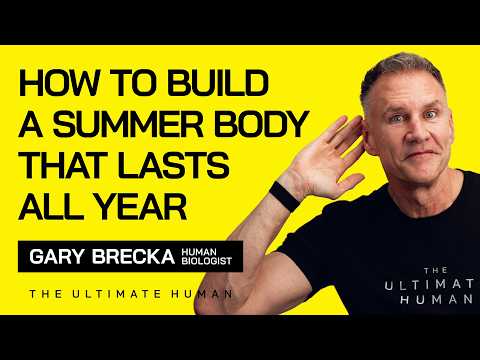
How to Build Muscle and Lose Fat at the Same Time | TUH #254
~13 min
Episode Brief·YouTube

How to Build Muscle and Lose Fat at the Same Time | TUH #254

Gary Brecka
Watch on YouTube Add to chat My bookmarks← All sources

TL;DR

The four things you'd lose by not watching

4 items

TL;DR

The four things you'd lose by not watching

4 items
1

Body composition, not scale weight, determines how you look; muscle is dense, fat occupies more space.

2

Building muscle and losing fat simultaneously (body recomposition) is most effective for beginners or those with higher body fat, and requires both resistance training and precise protein intake with leucine.

3

A 3-day daily undulating periodization (DUP) workout split—strength, hypertrophy, endurance—with specific rep ranges, loads, and rest periods optimizes adaptation without overtraining.

4

Avoid aggressive calorie deficits; aim for max 1% body weight loss per week to prevent metabolic adaptation and minimize muscle loss.

Protocols

Concrete recipes — what, when, how much, and why

5 items

Daily Undulating Periodization 3‑day split

WhatRotate through strength (Monday), hypertrophy (Wednesday), and endurance/volume (Friday) workouts with specific rep, load, and rest parameters to build muscle and lose fat simultaneously.
WhenWeekly, with dedicated rest days between sessions.
DoseMonday: 5‑8 reps, 85‑95% 1RM, 2‑3 min rest. Wednesday: 10‑12 reps, 65‑80% 1RM, 1 min rest. Friday: 12‑15+ reps, 40‑60% 1RM.
For whomAnyone wanting a structured plan; most effective for beginners or those returning to training, but applicable to all levels.
WhyExposes muscles to varying mechanical tensions, metabolic stress, and neural demands, preventing adaptation plateaus and reducing injury risk.
CaveatsRequires honest 1RM estimation and ability to adjust loads. Emphasize rest days for recovery.

Brecka explains that training at maximal intensity year‑round is counterproductive and can cause injury. Periodization is the deliberate manipulation of load, volume, intensity, and recovery. Linear periodization increases intensity while decreasing volume; block periodization focuses on specific adaptations in phases. However, Brecka recommends daily undulating periodization because it changes rep ranges and loads within the same week, keeping the body adapting without monotony. He provides a complete example: Monday is strength with low reps and heavy weight, Wednesday is hypertrophy with moderate reps and shorter rests, and Friday is endurance with high reps and light load. This structure ensures each week taps into different muscle‑building stimuli.

Mechanism

Varying rep ranges recruit different muscle fiber types and energy systems: heavy loads emphasize neural adaptations and type II fibers; moderate loads with controlled tempo stimulate metabolic stress and muscle damage pathways; high reps enhance capillary perfusion and endurance. DUP amalgamates these stimuli, preventing the body from settling into a single adaptation pattern.

This is where periodization becomes so important. Periodization is the strategic changing of your training over time. It's the deliberate adjustment of load, volume, intensity, and recovery so your body continues to adapt without breaking down.

Also said
“You can't train at maximal intensity all year round and expect your body to continually improve. In fact, you might end up only hurting yourself.”— Explains the danger of skipping periodization.

Protein intake for muscle gain and recomposition

WhatConsume 1.6‑2.2 g of protein per kg of body weight daily (higher end for those training), spread across meals, to support muscle protein synthesis.
WhenDaily, ideally divided into 3‑4 meals with 20‑40 g protein each.
Dose1.6‑2.2 g/kg/day; aim for 3‑4 g leucine per meal.
For whomYounger adults and individuals engaged in resistance training; older adults (65+) should target 1.2‑1.6 g/kg.
WhyProvides sufficient amino acids, especially leucine, to maximally stimulate the mTOR pathway and prevent muscle loss during a caloric deficit.
CaveatsEnsure high‑quality protein sources; even one missing essential amino acid limits the response.

Brecka details how muscle protein synthesis is driven by resistance training and amino acid availability. He stresses that total daily protein intake must be adequate, with research showing a range of 1.6‑2.2 g/kg for younger adults to increase lean body mass, and 1.2‑1.6 g/kg for those over 65. To maximally trigger the mTOR pathway per meal, 3‑4 g of leucine is needed, which typically comes from 20‑40 g of high‑quality protein. This protocol ensures that every feeding window supports muscle building, which is crucial during recomposition where the goal is to build muscle while losing fat.

Mechanism

Protein ingestion elevates plasma amino acids, with leucine acting as the primary signal for mTORC1 activation. mTORC1 phosphorylates downstream targets like p70S6K, increasing translation initiation and muscle protein synthesis. Without sufficient leucine, mTOR remains inactive, blunting the anabolic response to training and to meals.

For those engaged in regular exercise training or seeking maximal hypertrophic adaptations, I would recommend aiming towards the higher end of the ranges.

Also said
“To build muscle, you have to have enough of all nine essential amino acids. If you're deficient in even one of these essential amino acids, your body's ability to build muscle becomes severely limited.”— Highlights the importance of protein quality.

Avoid aggressive caloric deficits

WhatSet a weight loss target of no more than 1% of total body weight per week to prevent metabolic adaptation and preserve muscle.
WhenWhenever aiming for fat loss during recomposition.
DoseUp to 1% body weight loss per week.
For whomAnyone attempting to lose body fat while building or retaining muscle.
WhyLarger deficits trigger a survival response that lowers energy expenditure, stalls fat loss, increases hunger, and impairs recovery, making adherence unsustainable.
CaveatsIndividual variation exists; monitor energy, recovery, and progress, and adjust if plateaus occur.

Brecka explains that fat oxidation requires a sustained caloric deficit, but many people cut calories too drastically and see no further weight loss. The body instead enters metabolic adaptation, burning fewer calories than predicted and fighting fat loss. He describes this as a starvation protection mechanism that also causes hormonal imbalances, reduced energy, and increased hunger. By capping loss at 1% of total body weight per week, fat loss can proceed linearly without triggering this defensive slowdown, and muscle preservation is better supported.

Mechanism

Aggressive energy restriction suppresses leptin, thyroid hormones, and sympathetic nervous system activity while increasing cortisol and ghrelin. Together, these changes reduce resting metabolic rate and non‑exercise activity thermogenesis, making further fat loss difficult. A moderate deficit keeps these counter‑regulatory responses muted.

Your goal should be to lose a maximum of 1% of total body weight per week. This is a healthier, linear decline, which also minimizes muscle loss.

Also said
“When calories are reduced aggressively, the body does not continue losing weight. It undergoes a process called metabolic adaptation.”— Defines the core problem.

Leucine-centric meal structuring

WhatInclude 3‑4 grams of leucine per meal by consuming 20‑40 grams of high‑quality protein (e.g., animal proteins, whey) to maximally activate muscle protein synthesis.
WhenAt every meal, especially post‑workout and breakfast.
Dose3‑4 g leucine, achieved via 20‑40 g protein per meal.
For whomAll adults aiming to build or maintain muscle mass, particularly those in a caloric deficit.
WhyLeucine is the key amino acid that turns on the mTOR pathway; without this threshold, the anabolic signal is sub‑optimal.
CaveatsNot all protein sources are equally rich in leucine; plant‑based eaters may need higher total protein or leucine supplementation.

Brecka highlights that muscle protein synthesis requires both mechanical tension from resistance training and amino acid availability. Among amino acids, leucine is uniquely potent at stimulating mTOR. Citing research, he says a per‑meal dose of about 3‑4 g of leucine, achievable with 20‑40 g of high‑quality protein (like meat, dairy, or whey), maximally stimulates this pathway. He warns that missing even one essential amino acid undermines muscle building, so the meal must deliver a complete amino acid profile. This protocol underpins the broader protein intake advice and ensures each eating opportunity contributes to the anabolic state.

Mechanism

Leucine binds to and inhibits the regulatory protein sestrin2, which normally suppresses the GATOR2 complex. Inhibition by leucine relieves the brake on mTORC1, allowing mTORC1 to phosphorylate downstream effectors like 4E‑BP1 and S6K1, driving muscle protein synthesis. The 3‑4 g threshold likely represents the amount needed to fully inhibit sestrin2.

Research suggests that approximately 3 to 4 g of leucine per meal, typically achieved with 20 to 40 g of high‑quality protein, is required to maximally stimulate this pathway in most adults.

Nutrient timing post‑resistance training

WhatConsume carbohydrates after training to enhance glycogen replenishment in muscle cells and reduce the likelihood of fat storage.
WhenShortly after resistance training sessions.
For whomIndividuals performing resistance training, especially those seeking body recomposition.
WhyResistance exercise increases GLUT4 translocation, allowing glucose uptake into muscle independently of insulin, so post‑workout carbs preferentially go to muscle.
CaveatsTotal daily intake still matters most; timing offers a small edge, not a replacement for overall diet.

Brecka explains that food macronutrients are directed to different tissues based on hormonal and cellular signals, and the strongest determinant of nutrient partitioning is resistance training. Lifting weights increases GLUT4 translocation in muscle cells, enhancing glucose uptake even without a large insulin spike. Therefore, carbs consumed after training are more likely to be used to replenish muscle glycogen rather than being stored as fat. While he emphasizes that total daily calories and macros are paramount, this strategic timing can provide a meaningful, though modest, advantage for those trying to build muscle and lose fat.

Mechanism

Muscle contraction stimulates translocation of GLUT4 transporters to the cell surface, allowing glucose entry independent of insulin. This increased permeability persists for hours post‑exercise, creating a window where ingested carbohydrates are efficiently taken up by muscle fibers for glycogen synthesis, simultaneously reducing the glucose load on adipose tissue.

Lifting weights can increase GLUT4 translocation in muscle cells, which enhances glucose uptake independent of insulin. This means that carbohydrates consumed after training are more likely to replenish muscle glycogen rather than be stored as fat.

What's new

Personal practice updates, fresh positions, predictions

5 items

body recomposition for the general public

Gary Brecka clarifies that body recomposition—building muscle while losing fat—is achievable but its rate differs by training status, being most effective for beginners or those with higher body fat.

Why this matters: He reframes the 'summer body' goal away from scale weight toward body composition and sets realistic expectations about who can achieve recomposition quickly.

Background

Many people believe weight loss and muscle gain are mutually exclusive or that scale weight is the only metric; Brecka counters that recomposition is possible through targeted nutrition and training.

Brecka opens by emphasizing that people want less body fat and more muscle, not just a lower number on the scale. He explains that muscle is compact and fat occupies more space, so two people of same height and weight can look completely different. Body recomposition is the simultaneous lowering of body fat and building of lean mass, but it is most effective for beginners, those with higher body fat percentages, and those returning to training after a layoff. The more advanced you are, the slower recomposition becomes because the body adapts less dramatically. This isn't a one‑size‑fits‑all process; it requires understanding the underlying physiology.

The more advanced you are, the slower body recomposition becomes.

Also said
“Have you ever noticed how two people of similar stature can weigh the exact same yet their bodies appear entirely different? That difference comes down to body composition.”— Illustrates the visual impact of body composition versus scale weight.
“There is a way to change the composition of your body by building muscle and losing fat all at the same time. This process is called body composition.”— Introduces the term body recomposition as an achievable method.

daily undulating periodization as the recommended training model

Instead of linear or block periodization, Brecka advocates daily undulating periodization (DUP) where intensity and rep ranges vary across the week, exposing muscles to different stimuli and preventing plateaus.

Why this matters: He explicitly states 'the plan I would recommend' and walks through a complete 3‑day split with precise loads, rep counts, and rest times—a concrete, actionable framework.

Background

Traditional training plans often stick to one rep range or follow linear progression; DUP challenges the body in multiple ways weekly, which Brecka argues is superior for continuous adaptation and injury prevention.

Brecka warns against training at maximal intensity year‑round, saying it leads to burnout or injury. He introduces periodization as the strategic manipulation of training variables. He mentions linear periodization (increasing intensity, decreasing volume) and block periodization (phases for hypertrophy, strength, power) before endorsing DUP. DUP changes intensity and rep ranges within the same week, so the muscles encounter varying mechanical tensions, metabolic stress, and neural demands. He then details a 3‑day split: Monday strength (5‑8 reps, 85‑95% 1RM, 2‑3 min rest), Wednesday hypertrophy (10‑12 reps, 65‑80% 1RM, 1 min rest), Friday endurance/volume (12‑15+ reps, 40‑60% 1RM). This structure ensures recovery and adaptation without monotony.

The plan I would recommend is daily undulating periodization. This is a training model where intensity and rep ranges change throughout the week rather than staying fixed.

Also said
“Monday would be strength‑focused. This involves working in lower rep ranges. I prefer 5 to 8 repetitions per set using heavier weight, most often 85 to 95% of your one rep max. Rest periods are longer, varying between 2 and 3 minutes.”— Specific parameters for the strength day.
“On Wednesday, you would prioritize hypertrophy. You begin to work in moderate rep ranges, typically 10 to 12 repetitions per set using moderate weight, 65 to 80% of your one rep max, and this should all be done with controlled tempo and shorter rest intervals of about 1 minute.”— Specific parameters for the hypertrophy day.
“Friday would be the final day of the split, and it's centered around endurance and volume. Repetitions are higher, ranging from 12 to 15 plus repetitions per set with lighter loads and approximately 40 to 60% of your one rep max.”— Specific parameters for the endurance day.

leucine threshold for maximal muscle protein synthesis

Brecka cites research that 3‑4 grams of leucine per meal, typically from 20‑40 g of high‑quality protein, is required to maximally stimulate the mTOR pathway and initiate muscle protein synthesis.

Why this matters: Pinning an exact leucine number and tying it to a specific meal protein amount gives a precise nutrition target that listeners can act on.

Background

Many people focus on total daily protein without timing or leucine content; Brecka emphasizes that the mTOR switch is triggered meal‑by‑meal, and even one deficient essential amino acid can cripple muscle building.

After explaining that muscle protein synthesis is the driver of muscle gain, Brecka states that resistance training creates the mechanical signal, but sufficient amino acids—especially leucine—are needed to turn on the mTOR pathway. He explains that leucine acts as a key regulator, and research indicates that approximately 3‑4 g of leucine per meal, achieved with 20‑40 g of high‑quality protein, maximally stimulates this pathway in most adults. He underscores that if any one essential amino acid is missing, the body’s ability to build muscle becomes severely limited, making protein quality and distribution critical.

Research suggests that approximately 3 to 4 g of leucine per meal, typically achieved with 20 to 40 g of high‑quality protein, is required to maximally stimulate this pathway in most adults.

Also said
“If you're deficient in even one of these essential amino acids, your body's ability to build muscle becomes severely limited.”— Highlights the danger of lacking any essential amino acid.

metabolic adaptation when calories drop too low

Aggressive calorie restriction triggers metabolic adaptation where the body conserves energy, making fat loss stall; Brecka caps healthy weight loss at 1% of body weight per week.

Why this matters: He directly challenges the common ‘cut harder’ mindset and explains the biological counter‑response with concrete, actionable limits.

Background

Many dieters slash calories drastically and then plateau, mistakenly thinking they need to cut more; Brecka explains that this survival response increases hunger, reduces energy, and resists further fat loss.

Brecka explains that to burn fat, a sustained caloric deficit is needed, but the size of the deficit matters enormously. When calories are reduced too aggressively, the body undergoes metabolic adaptation: it burns fewer calories than expected and fights further weight loss, entering a starvation‑protection mode. Side effects include increased hunger, reduced energy, slower recovery, and hormonal imbalances. Consequently, fat loss plateaus and adherence drops. His recommended maximum rate is 1% of total body weight per week, which allows a linear decline while minimizing muscle loss and avoiding the metabolic slowdown.

Your goal should be to lose a maximum of 1% of total body weight per week. This is a healthier, linear decline, which also minimizes muscle loss.

Also said
“When calories are reduced aggressively, the body does not continue losing weight. It undergoes a process called metabolic adaptation.”— Defines the phenomenon.

protein intake recommendations by age and training

Brecka cites age‑specific ranges: adults 65+ should consume 1.2‑1.6 g/kg, younger adults 1.6‑2.2 g/kg, aiming toward the higher end for maximal hypertrophy.

Why this matters: Providing distinct numbers for different populations helps listeners tailor their intake instead of using generic advice.

Background

Standard recommendations often use a flat number like 0.8 g/kg; Brecka’s cited ranges reflect research on lean body mass gains and vary by age and training demand.

Brecka references research investigating how much protein supports muscle mass across age groups. For adults aged 65 and older, 1.2 to 1.6 g/kg daily was linked to significant lean mass increases. For younger adults, the range is higher, 1.6 to 2.2 g/kg. He notes that those regularly exercising or seeking maximal muscle growth should target the upper end of these ranges. This ties back to the need to provide ample amino acids for muscle protein synthesis across all meals.

The findings indicated that for adults age 65 years and older, a daily protein intake ranging from 1.2 to 1.6 g per kilogram of body weight was associated with significant increases in lean body mass. In younger adults, protein intake should be higher, about 1.6 to 2.2 g per kilogram of body weight for similar effects.

Disclosed sponsorships3speaker disclosed

Ultimate Human VIP Community

Service Sponsored · disclosed

Brecka promotes his VIP community, which includes whole‑food recipes, movement recommendations, and a 10‑month ‘Becoming the Ultimate Human’ course with a full month dedicated to movement and fitness.

DisclosureGary Brecka hosts the community and promotes it on his podcast.

He describes the VIP community as containing thousands of like‑minded people working together to become healthier, with the centerpiece being a 10‑month course that dedicates an entire month to movement and fitness. Additionally, the community grants access to an AI tool trained on his own content, called ‘Ask Gary Anything’, which answers questions on movement, food, and supplements as if you were talking directly to him. The hook is a cohesive ecosystem combining education, peer support, and personalized guidance.

Please check out my VIP community. It's filled with recipes that only use whole foods, movement recommendations, and a 10‑month Becoming the Ultimate Human course that spends an entire month focused on movement and fitness alone.

Also said
“You'll also get access to my Ask Gary Anything feature. It's an AI that I feed all of my podcast, stage talks, lectures, interviews, white papers, books. I do not let it crawl the web.”— Details the unique AI feature.
Find Ultimate

Ask Gary Anything AI

Tool Sponsored · disclosed

A custom AI that answers health and fitness questions based solely on Brecka’s own content—podcast, talks, interviews, papers, and books—not the general internet.

DisclosureCreated by Gary Brecka, exclusive to his VIP community.

Brecka presents ‘Ask Gary Anything’ as a personal AI assistant trained exclusively on his intellectual output, ensuring responses reflect his specific viewpoints and recommendations. He states it does not crawl the web, so answers are confined to his framework. This is offered as a benefit inside the VIP community, giving members direct, conversational access to his guidance without having to search through episodes manually.

It's an AI that I feed all of my podcast, stage talks, lectures, interviews, white papers, books. I do not let it crawl the web. You can ask it all sorts of recommendations on movement, food, supplements, and it will respond like you're having a direct conversation with me.

Find Ask

10‑Month Becoming the Ultimate Human Course

Service Sponsored · disclosed

A structured course covering multiple aspects of health, with a full month focused on movement and fitness, included in the VIP community.

DisclosureGary Brecka created and sells this course inside his VIP community.

A 10‑month Becoming the Ultimate Human course that spends an entire month focused on movement and fitness alone.

Find 10‑Month

Notable quotes

Lines worth pulling out — contrarian, specific, or perfectly phrased

5 items
You don't need to starve yourself. You don't need endless cardio. You just need structure.
Distills the episode’s anti‑fad message into a memorable mantra.
The more advanced you are, the slower body recomposition becomes.
Contrarian to the ‘anyone can transform quickly’ narrative; sets realistic expectations.
Lifting weights can increase GLUT4 translocation in muscle cells, which enhances glucose uptake independent of insulin. This means that carbohydrates consumed after training are more likely to replenish muscle glycogen rather than be stored as fat.
Concise explanation of nutrient partitioning and why post‑workout carbs can be strategic.
You can't train at maximal intensity all year round and expect your body to continually improve. In fact, you might end up only hurting yourself.
Straightforward case for periodization and against ego-driven training.
Your goal should be to lose a maximum of 1% of total body weight per week. This is a healthier, linear decline, which also minimizes muscle loss.
Puts a specific, actionable number on safe fat loss that many listeners can adopt.

Sign in to share feedback

Tell us if this brief hit the mark or missed it — feedback feeds back into the next iteration of the prompt.

Topics covered

body-compositionbody-recompositionmuscle-protein-synthesisleucinemTOR-pathwayfat-oxidationcaloric-deficitmetabolic-adaptationprotein-intakeperiodizationdaily-undulating-periodizationGLUT4nutrient-timinginsulin-sensitivityresistance-trainingsleepstress-management
Free account

Make this library yours

Reading is free for everyone. A free account adds the personal layer: save protocols, follow experts, and see how the other experts weigh in on this same topic.

Create a free accountSign in

Where the experts disagree — weekly

One email a week: the sharpest new disagreements and protocols from the library. No spam, unsubscribe anytime.

Educational summary of the cited expert source — not medical advice. Open the source recording linked above and consult a qualified physician before acting on any protocol.