UNFUCG
DashboardSearchChatBookmarksNotificationsActivityPremiumProfile
?
Home
Search
Chat
Saved
Profile
Episode
What to Expect From a Full-Body MRI | Prenuvo Scan Walkthrough
~43 min
Episode Brief·YouTube

What to Expect From a Full-Body MRI | Prenuvo Scan Walkthrough

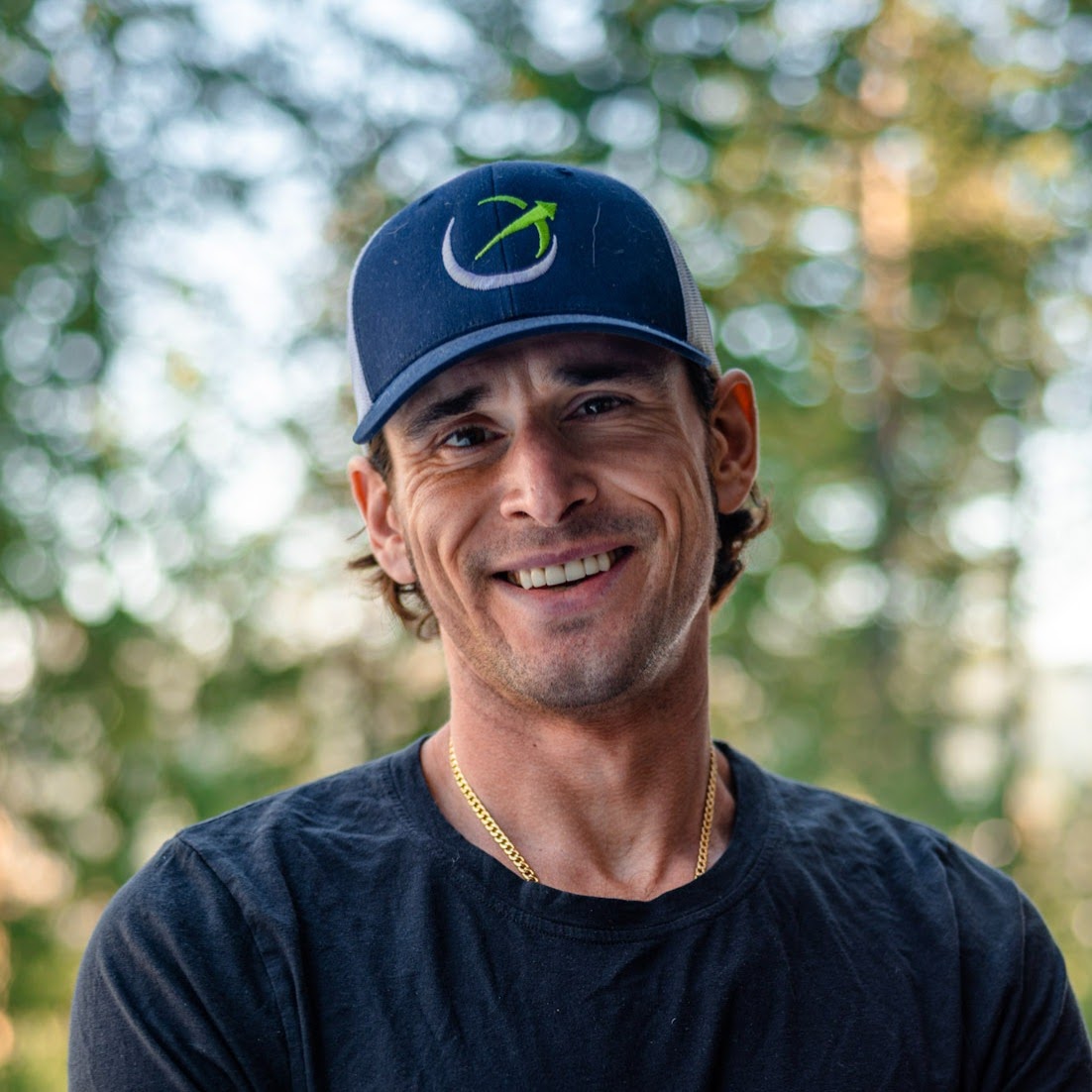
Ben Greenfield
Watch on YouTube Add to chat My bookmarks← All sources

TL;DR

The four things you'd lose by not watching

4 items

TL;DR

The four things you'd lose by not watching

4 items
1

Ben Greenfield recently got a full-body MRI via Next Health using Prenuvo technology, revealing asymptomatic findings: a punctate pontine brain hyperintensity, C5-C6 disc bulge, severe L1-L2/L4-L5 degeneration, torn meniscus with effusion, and bilateral hip bursitis—all managed without surgery.

2

He advocates that expensive full-body MRIs are not for everyone, but for self-quantifiers with a clear-headed approach, they provide valuable baseline data to track benign findings like liver hemangiomas every 3–5 years.

3

His core strategy is conservative: targeted exercise (neck traction, core bracing, deep abdominal work, Knees Over Toes program, hip openers) keeps him pain‑free despite significant degenerative changes, avoiding costly interventions like stem cells or spine surgery.

4

Key supplement/tools mentioned include a mucus thinner for freediving sinus relief, balloon cranial adjustment for sinus issues, and his AI assistant at bengreenfieldlife.com for his protocols.

Protocols

Concrete recipes — what, when, how much, and why

5 items

Core‑ & glute‑focused exercise for lumbar spine degeneration

WhatA daily practice of deep abdominal work (not crunches/sit‑ups), glute strengthening, hip flexor stretching, and breathing‑focused spine stabilization.
WhenDaily, as part of ongoing maintenance.
Dosenot specified – it is a continuous lifestyle habit
For whomPeople with asymptomatic or mild disc bulges and arthritis who are willing to commit to consistent exercise.
WhyKeeps him pain‑free despite severe disc degeneration (L1‑L2, L4‑L5, L5‑S1) and prevents the need for surgical or regenerative interventions.
CaveatsIf symptoms appear, a medical evaluation is warranted; the protocol does not reverse structural damage, it manages function.

Greenfield believes the common medical path of surgery or stem cell injections for back arthritis is often unnecessary. He points to his own severe MRI findings and contrasts his pain‑free daily function with the radical options others push. His approach is built on the idea that the body can compensate for structural degeneration if the surrounding musculature is robust and posture is controlled. He highlights that many people with similar findings end up in surgery largely because they don’t do this deep stabilisation work and instead rely on passive treatments. The MRI here simply reinforces that his exercise program is working and should continue.

Mechanism

Strengthening the deep core and glutes offloads the spinal discs and facet joints; diaphragm‑focused breathing increases intra‑abdominal pressure to stabilise the spine during movement, reducing shear forces.

Personal experience

He has been told by multiple doctors about his severe disc degeneration, yet remains pain‑free. He attributes this fully to his core and glute routine.

I pay a great deal of attention to my core strength. I pay a great deal of attention to stretching my hip flexors and strengthening my glutes and doing a lot of deep abdominal work. uh not like crunches and sit‑ups, but work where I'm really focusing on breathing and stabilizing the spine.

Also said
“I have severe degeneration of my L1 L2 disc. I have L4 L5 disc bulges. Uh L5S1 L5S1 issues. Um I'm relatively painfree in my back though.”— Quantifies the severity of the MRI finding vs his subjective state.
“right now, um, I'm sticking to my guns and continue to do what I what I am doing.”— Shows his conviction to stay with conservative care despite the MRI.

Neck stabilisation & traction exercises for cervical spondylosis

WhatRegular neck exercises focusing on stabilisation and traction mobility to manage a C5‑C6 disc bulge.
WhenConsistently, as part of his routine.
For whomThose with mild cervical degenerative findings who want to preserve function.
WhyMaintains a pain‑free neck and prevents progression of the bulge into symptomatic territory.
CaveatsOnly appropriate if no red‑flag neurological symptoms are present.

Greenfield briefly mentions that he is asymptomatic despite the MRI showing a protruding or bulging abnormality at C5‑C6. He sees this finding as validation that his existing neck exercises are working, rather than as a sign to escalate care. The segment is short, but it reinforces his pattern of using scans as feedback for a routine, not as a trigger for alarm.

Personal experience

He performs traction and stabilization exercises and remains pain‑free.

I'm asymptomatic. I don't have any problems with my neck, but this is good to know for me in terms of continuing to do the neck stabilization and traction exercises that I do to maintain pain‑free status despite some degeneration.

Knees Over Toes program & VMO strengthening for knee arthritis

WhatExercises from Ben Patrick's Knees Over Toes program, emphasising VMO (vastus medialis) strengthening, hamstring stretching, and knee stabilisation drills.
WhenConsistently over years; ongoing.
For whomIndividuals with degenerative knee arthritis or meniscal tears who want to remain active without surgery.
WhyImproved his left knee from a subjective 30 % function to 85 % function and allows him to avoid vascular or cartilage interventions for now.
CaveatsDoes not reverse cartilage loss; heavy deep squats and mountain sprints are still limited. Effusion from a meniscal tear persists.

Greenfield admits his knees are damaged after two decades of Ironman, Spartan races, and adventure racing. The MRI confirms degenerative changes and a small meniscal tear with effusion. Five years ago his left knee was at 30 % capacity; after adopting the Knees Over Toes protocol, he reports an 85 % subjective improvement and minimal daily pain. He still avoids activities that demand deep flexion under load, such as heavy squats or sprinting on uneven terrain. He would consider future cartilage‑repair technologies only if they become reliable, but for now he manages entirely with exercise. His story underscores that even a structurally compromised joint can be functional with the right strength routine.

Mechanism

Strengthening the VMO helps stabilise the patella and reduces uneven loading on the joint; stretching the hamstrings decreases posterior tension; general leg strengthening offloads the joint surface.

Personal experience

Describes being at 30 % five years ago vs 85 % now, and credits the program for saving him from 'hobbling about'.

I would probably be hobbling about if I didn't pay a lot of attention to strengthening the muscles around my knee so this cartilage degeneration doesn't become an issue. If someday they develop some type of cartilage scaffolding or you know the magic gel from Germany turns out to actually work, I would consider doing a treatment for the knee.

Also said
“If you would asked me five years ago, I would have said 30% until I started to do Ben Patrick's knees over toes program and I started to uh pay attention to strengthening the VMO and doing stabilizing exercises for the knee and really good stretching.”— Quantifies the dramatic improvement he attributes to the protocol.

Hip opener stretches for asymptomatic bursitis

WhatPigeon pose, triangle chair stretches, supine hip openers (lying on back in yoga fashion) and other four‑legged stretches to manage bilateral hip bursitis.
WhenRegularly, as part of his flexibility and hip maintenance work.
For whomThose with hip bursitis who want to maintain mobility without invasive procedures.
WhyKeeps him pain‑free in the hips despite MRI‑evident bursa‑filled sacs (bursitis).
CaveatsHe plans to run the findings by an orthopaedic friend and a stem‑cell practitioner to rule out additional needs, implying this protocol alone may not be sufficient for everyone.

Greenfield briefly covers that his MRI shows bilateral hip bursitis yet he has no pain. He uses the same logic as with his spine and knees: the finding only reinforces his commitment to his existing hip‑opener routine, rather than prompting new interventions. He acknowledges he will seek a professional opinion to ensure nothing else is developing, but the absence of symptoms again grounds his approach.

Mechanism

These stretches mobilise the hip joint and reduce compression on the trochanteric bursae, promoting fluid exchange and reducing inflammatory stiffness.

Personal experience

He does these stretches consistently and reports zero hip pain.

I do a lot of hip openers, pigeon poses, um, four‑legged stre or four‑legged um, uh, triangle chair stretches, uh, such as a hip opener lying on your back that you do in yoga. I don't have, um, any hip pain, knock on wood.

Periodic full‑body MRI for tracking benign lesions

WhatGet a Prenuvo full‑body MRI every 3–5 years to monitor unchanged benign findings such as liver hemangiomas and disc degeneration.
WhenEvery 3–5 years, based on his comparison of scans 5 years apart.
DoseOnce every 3–5 years
For whomSelf‑quantifiers who understand incidentalomas and have a trusted medical interpreter.
WhyAllows him to catch growth of a known benign lesion (hemangioma) or progression of degenerative changes early, without obtaining scans too frequently.
CaveatsExpensive; may lead to unnecessary follow‑up if misinterpreted; not for everyone, as he explicitly states.

Greenfield points to his liver hemangioma (11 mm) that has stayed stable for five years and was confirmed benign by a dedicated liver MRI and fibroscan. He plans to repeat the full‑body MRI every few years to track such findings. This turns the scan from a one‑time anomaly hunt into a structured surveillance tool. He is careful to frame this as a personal protocol suited to his risk tolerance and resources, not a public‑health recommendation.

Personal experience

He had an MRI 5 years ago showing the same hemangioma, and a fibroscan that reported his liver was 'like a newborn baby's'. The repeat MRI confirmed stability, which gives him peace of mind interpreting future results.

something that if I were to get a full body MRI every 3 to 5 years, I would keep my eyes on it to make sure there's nothing going on here as far as as as growth.

Also said
“I had a similar size growth 5 years ago. These hemangiomas are a very common and benign growth on the liver. I've also had a fibro scan and a more specific uh MRI of the liver and shown it to be nonproatic.”— Demonstrates that a stable benign lesion can be safely monitored.

What's new

Personal practice updates, fresh positions, predictions

2 items

Full‑body MRI for the biohacker: benefits and risks

Greenfield argues that full‑body MRI scans are not for mass adoption due to cost and potential to burden the medical system with incidental findings, but they are deeply valuable for self‑quantifiers who can interpret results rationally and resist over‑treatment.

Why this matters: He draws a clear line between the unselected population and the biohacker, acknowledging that many asymptomatic findings can cause unnecessary panic if not handled with a level head.

Background

Full‑body MRIs have become popular in longevity circles, but mainstream medicine often warns against them because incidentalomas lead to cascades of follow‑up procedures with low yield.

Greenfield explains that because he is asymptomatic and has a network of trusted specialists, he can look at findings like a pontine hyperintensity or spine degeneration without jumping to invasive procedures. He sees the scan as a way to monitor benign lesions over time (e.g., a stable liver hemangioma he has tracked for 5 years) and to motivate consistent preventive habits. The expense and stress are real downsides, but for someone dedicated to self‑experimentation and armed with a reasonable lens, the scan offers actionable insights that regular check‑ups miss.

Personal experience

He and his wife both had scans; he walked through his results showing multiple findings, all asymptomatic, all managed with lifestyle.

I don't recommend these for everybody on mass scale because is, a they're expensive and b it would burden the medical system with a lot of unnecessary procedures and a lot of people worried about things that they might not need to be worried about.

Also said
“Yet, if you are one of those people who might fall into the category of someone who loves to self‑quantify, to biohack, to take deep deep dives into your own health, and you're able to look at things through like a reasonable lens … I think you can find some interesting things on a Prouvo.”— Specifies the ideal candidate profile, not a blanket recommendation.

Asymptomatic findings do not equal disease

Greenfield repeatedly emphasises that a concerning MRI finding in the absence of symptoms does not automatically demand treatment, and that many people undergo unnecessary procedures because they react to the image rather than the clinical picture.

Why this matters: This stance runs counter to the instinct many people have after seeing a report with words like 'degeneration' or 'lesion'.

He illustrates this with his own spine, brain, liver, sinuses, hips, and knees—all showing abnormalities on MRI, yet he remains pain‑free and high‑functioning. The pontine hyperintensity in his brain is flagged, but he has no headaches, brain fog, or neurological symptoms, so he only plans a SPECT scan out of curiosity, not alarm. The liver hemangioma (11 mm) has not grown in five years and a previous fibroscan called his liver 'like a newborn baby's'. He wants viewers to understand that a finding is just one data point; the body's function and lack of symptoms should guide intervention.

Personal experience

He has a punctuate left pontine flare hyperintensity, bilateral hip bursitis, and severe lumbar degeneration—all asymptomatic, all managed with exercise.

This would be one of those findings where if I did want to do some deeper digging, I could go talk with a neurologist. And I actually am going to go down to Dr. for Daniel Aemon's clinic and do what's called a spec scan on my brain uh later this year. But this is again a finding that would make you feel super concerned, but I'm asymptomatic.

Also said
“one doctor might look at this and say, 'Dude, spine surgery, go in.' Or another doctor might look at it and say, 'Let's get you in for, you know, $50,000 of stem cells in Mexico.' For me, um I think that back pain, you know, despite showing up as a general arthritis, can really be managed quite well with exercise and posture.”— Shows his contrarian stance that expensive and invasive options are often avoidable.

Recommendations

Products, supplements, and tools mentioned in the episode

5 items

Next Health

Service

Greenfield booked his full‑body MRI via Next Health, a company that offers diagnostics and treatments in multiple cities.

He praises Next Health as a convenient gateway for advanced diagnostics and mentions they operate in many major cities. The scan itself is performed by Prenuvo, but Next Health handles the patient journey. The endorsement is personal and grounded in his recent experience.

Personal experience

He used Next Health for his own scan about 8 days before the video.

I do these through an organization called Next Health. Um fantastic company that does a lot of diagnostics and treatments and um they're in a lot of major cities.

Find Next

Prenuvo (full‑body MRI)

Service

Prenuvo is the MRI technology provider that generates the detailed system‑by‑system body report.

He recommends Prenuvo scans explicitly for self‑quantifiers who can handle the information. He walks through the interface, showing that results are organised by nervous, respiratory, circulatory, endocrine systems, with major and informational findings. The scan detects subtle abnormalities early, but he cautions that it also picks up many benign findings. The value lies in having a baseline for future comparison and in motivating lifestyle interventions rather than reflexively seeking procedures.

vs alternatives

Compared to a targeted MRI ordered by a specialist, the Prenuvo whole‑body approach scans a broad range of anatomy at once, which can uncover unexpected findings but also increases incidentalomas.

Personal experience

He and his wife both recently had Prenuvo scans and he shares his full report as an example.

the actual MRI uh company is called Prouvo. So when you get one of these tests, you know, you do want to be careful because you'll find some things that might be benign or nonproatic

Also said
“I'm not going to make this video too long. I just want to walk you through uh some some of the findings. Both my wife and I uh have done these recently, and we think they're very interesting.”— Shows that his personal household has adopted the scan and finds value.
Find Prenuvo

Ben Patrick's Knees Over Toes program

Practice

A knee rehabilitation program focusing on VMO strength, backward walking, sled pulls, and eccentric loading to restore knee function.

Greenfield attributes his left knee's improvement from 30% to 85% function directly to this program. He had a torn meniscus, effusion, and arthritis, yet avoided further degeneration by adopting the exercises. The program is presented as evidence‑based in his personal experience, and he encourages viewers with similar issues to consider it before more aggressive solutions. He does not detail specific moves, but references VMO strengthening and hamstring stretches as key components.

vs alternatives

He contrasts it with waiting for speculative future treatments like 'cartilage scaffolding' or a 'magic gel from Germany', implying that the program is a real, available solution while those remain hypothetical.

Personal experience

His left knee went from 30% to 85% subjectively, and he 'would probably be hobbling about' without it.

I started to do Ben Patrick's knees over toes program and I started to uh pay attention to strengthening the VMO and doing stabilizing exercises for the knee and really good stretching. I would probably be hobbling about if I didn't pay a lot of attention to strengthening the muscles around my knee

Find Ben

Mucus thinner (for sinus relief during freediving)

Supplement

Used episodically when he freedives to clear sinuses, which may be inflamed according to MRI.

The MRI shows mucosal inflammation in his paranasal sinuses, but he is asymptomatic in daily life. The only time it manifests is during freediving, where he takes a mucus thinner and finds it effective. He does not endorse a specific product, but the practice may be useful for similar individuals with mild sinusitis exacerbated by pressure changes.

Personal experience

He takes it when freediving and it 'seems to work just fine'.

The only time this has popped up before with me has been when I'm free diving and I take a mucus thinner and it seems to to work just fine.

Find Mucus

Balloon cranial adjustment

Practice

A manual therapy where a balloon is used to adjust skull bones, presumably to improve sinus drainage or cranial motion.

He refers to it in passing as something he combines with nose and mouth taping for his sinus inflammation. He does not elaborate on the practitioner or frequency, but notes it is 'just what it sounds like' and that detailed information can be found via his AI assistant. It appears to be a niche manual therapy he uses as part of a broader sinus management strategy.

Personal experience

He gets the occasional balloon cranial adjustment.

I get the occasional balloon cranial adjustment, uh, which is just what it sounds like, getting your skull bones adjusted with a balloon.

Find Balloon
Disclosed sponsorships1speaker disclosed

Ben Greenfield's AI assistant at bengreenfieldlife.com

Tool Sponsored · disclosed

He mentions that viewers can ask his AI about everything he has done for his sinuses, cranial adjustments, etc., implying it's a repository of his health protocols.

DisclosureIt's his own website and AI tool, so he has a clear affiliation.

He briefly mentions this AI function as a way for his audience to dig deeper into his specific practices without needing to search through old content. The AI is trained on his published material and can answer questions about his personal health routines, serving as a self‑serve knowledge base.

Personal experience

He encourages viewers to use it to find his sinus and cranial adjustment protocols.

I even have a handy AI function at ben greenfieldlife.com where you can ask my AI, hey, tell me what Ben's done for his sinuses. And you can find it in there.

Find Ben

Notable quotes

Lines worth pulling out — contrarian, specific, or perfectly phrased

5 items
one doctor might look at this and say, 'Dude, spine surgery, go in.' Or another doctor might look at it and say, 'Let's get you in for, you know, $50,000 of stem cells in Mexico.' For me, um I think that back pain, you know, despite showing up as a general arthritis, can really be managed quite well with exercise and posture.
Captures his radically conservative stance: severe MRI findings don't equal need for aggressive intervention.
I was even told I have the liver of a new born baby. So again, I'm not concerned here, but it is interesting.
A striking, humorous anecdote that underscores how a benign finding (hemangioma) does not correlate with liver health.
the main thing I wanted to do was a show you what the results of a full body MRI look like, and b kind of walk you through the idea that you don't necessarily have to like run to every specialist on the planet to get this stuff treated. A lot of it comes down to caring for your body, especially your muscularkeeletal system.
Succinctly states the entire purpose of the video and his personal philosophy of active self‑care over medicalisation.
I would probably be hobbling about if I didn't pay a lot of attention to strengthening the muscles around my knee so this cartilage degeneration doesn't become an issue.
A visceral testament to the power of targeted exercise in preserving function despite joint damage.
I don't recommend these for everybody on mass scale because is, a they're expensive and b it would burden the medical system with a lot of unnecessary procedures and a lot of people worried about things that they might not need to be worried about.
Honest limitation of full‑body MRI as a public health tool, rare in a video that largely promotes the scan.

Sign in to share feedback

Tell us if this brief hit the mark or missed it — feedback feeds back into the next iteration of the prompt.

Topics covered

full-body-mriprenuvonext-healthasymptomatic-findingsspine-degenerationbrain-hyperintensityliver-hemangiomaknee-arthritismeniscal-tearhip-bursitissinus-inflammationknees-over-toes-programcore-strengtheningglute-strengtheningneck-stabilizationhip-openersmucus-thinnerballoon-cranial-adjustmentbiohackingself-quantification
Free account

Make this library yours

Reading is free for everyone. A free account adds the personal layer: save protocols, follow experts, and see how the other experts weigh in on this same topic.

Create a free accountSign in

Where the experts disagree — weekly

One email a week: the sharpest new disagreements and protocols from the library. No spam, unsubscribe anytime.

Educational summary of the cited expert source — not medical advice. Open the source recording linked above and consult a qualified physician before acting on any protocol.