
UNFUCG
DashboardSearchChatBookmarksNotificationsActivityPremiumProfile
?
Home
Search
Chat
Saved
Profile
Episode
How Should I Work Out as a Woman? | Dr. Stacy Sims
~6 min
Episode Brief·YouTube

How Should I Work Out as a Woman? | Dr. Stacy Sims

Stacy Sims
Watch on YouTube Add to chat My bookmarks← All sources

TL;DR

The four things you'd lose by not watching

4 items

TL;DR

The four things you'd lose by not watching

4 items
1

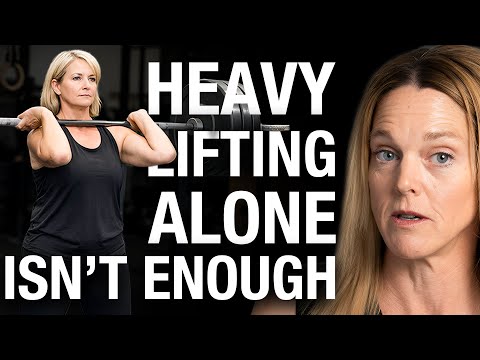
Stacy Sims emphasizes that simply lifting heavy (e.g., 5x5) is not enough; women should follow periodized training plans with 4-week blocks that cycle through strength, power, and lighter phases to ensure progressive overload and avoid plateaus.

2

Balance and stability work, often neglected, can be incorporated as a warm-up before heavy lifting to improve movement quality without sacrificing strength work.

3

French contrast training—an advanced method of stacking 3-4 near-max lifts, immediately into a plyometric move, then into higher-rep endurance work—captures CNS activation to build explosive power and fatigue resistance, especially useful for endurance athletes.

4

For cyclists and runners worried about heavy weights messing up their sport legs, Sims recommends combining heavy lifting with mobility work and then immediately doing hill repeats to transfer strength into sport-specific movement.

Protocols

Concrete recipes — what, when, how much, and why

4 items

4-Week Periodized Strength Blocks

WhatStructure training in 4-week cycles: one block focused on heavy strength (e.g., 5x5), next block power/contrast work (e.g., French contrast), followed by a de-load or endurance-emphasis block, incorporating balance/stability warm-ups throughout.
WhenYear-round for progressive overload; adjust block focus based on sport season.
Dose4-week blocks (implied), with progression in load or volume each block.
For whomWomen who strength train, especially those new to periodization or stuck in a constant heavy regimen.
WhyTo prevent stagnation, integrate neurological gains from heavy lifting into functional power, and allow recovery.
CaveatsNeed to progress gradually into advanced techniques like French contrast; beginners should build base strength first.

Sims contrasts the common 'just do 5x5' advice with a more nuanced yearly plan. Even though heavy lifting is great, it shouldn't be the only tool. The body adapts to consistent loading, so changing the stimulus—by adding plyometric and lighter work—keeps the central nervous system challenged and improves overall athleticism. She notes that after a heavy block, a de-load or endurance block helps the body recover and 'solidify' strength gains. For endurance athletes, a specific block of French contrast training can yield the ability to produce power late in a race, when fatigue would normally blunt output. She emphasizes that coaches and individuals should plan these blocks deliberately, rather than reactively switching based on random blog posts.

Mechanism

Progressive overload and periodization principles: varying stimulus drives neuromuscular adaptations across force-velocity spectrum; de-load consolidates strength.

So it's definitely something that people don't talk enough about the periodization progressive overload. How do we incorporate that with heavy lifting?

Also said
“So we have to look at the bigger picture like how do we phase into that for one two how are we periodizing that to get progressive overload and three we need to have d lo in order to really solidify the work that we put into the heavy lifting”— Breaks down the phases needed.

French Contrast Training Set

WhatPerform 3-4 near-maximal lifts (e.g., squats), immediately perform 5-6 explosive plyometric movements (e.g., pogos, box jumps), then immediately perform a higher-rep endurance set (e.g., lighter squats or jumps), all within one continuous set sequence. Rest fully between sequences.
WhenDuring power/contrast-focused training blocks, typically one to two times per week.
Dose3-4 heavy reps, 5-6 plyos, higher-rep endurance (unspecified, but likely 8-12+).
For whomIntermediate to advanced athletes, particularly cyclists, mountain runners, ultra-runners; not for beginners.
WhyCaptures CNS potentiation from heavy lifts, transfers to explosive power, then trains muscular endurance while high-threshold motor units are still active.
CaveatsRequires proficient technique in lifts and plyometrics; begin with submax loads and lower plyo intensity. Not suitable for those without a strength base.

The concept emerged from sports where athletes must be strong and then move rapidly (cutting, jumping). Sims adapted it for endurance athletes, reasoning that the ability to summon power in a fatigued state is critical. She describes an example: five very heavy squats, straight into pogos or broad jumps, and then into higher-rep lighter squats. The contrast not only improves power output but also mental resilience in producing force when tired. She notes that her athletes who incorporate this type of session often report being able to find an extra gear during the latter stages of a race. She warns however that it's intense and must be periodized carefully within a block to avoid overtraining and injury.

Mechanism

Heavy loading increases neural drive and motor unit recruitment. Immediately following with a plyometric exploits post-activation potentiation, enhancing rate of force development. The subsequent endurance set forces the already-fatigued high-threshold fibers to continue working, extending their endurance capacity. This 'polarizes' motor unit recruitment across the intensity spectrum.

Personal experience

I use it a lot for my cyclists and my mountain runners or my ultra runners because they have to have that power within some of the fatigue. And so, if you're really working on that contrast work, then when they get halfway through a race and they need to find some power, they're able to generate it.

So it's doing three to four really heavy lifts right into a pio move. And so you're capturing that central nervous system activation from that really heavy heavy lift to bring it right into a power move.

Also said
“then right after that you get into some more endurance like higher rep stuff. So you kind of go through the entire range within one set of activity”— Completes the sequence.
“it's maximizing and and polarizing the ends of the muscle activity”— Explains the physiological goal.

Balance and Stability Warm-up

WhatBefore heavy lifting sessions, incorporate 5-10 minutes of balance and stability exercises (single-leg stands, unstable surface drills) as a movement preparation warm-up.
WhenAt the start of strength training sessions.
Dose5-10 minutes (implied).
For whomAll women, especially those time-limited.
WhyImproves neuromuscular control and joint stability, reducing injury risk, without requiring a separate dedicated session.
CaveatsNone given, but ensure it doesn't exhaust you before heavy lifts.

you can do balance and stability as a warm-up into a heavier work

Heavy Lift + Mobility + Hill Repeats

WhatFor endurance athletes (cyclists, runners) concerned about heavy lifting affecting their sport legs, do a session combining heavy lifts, mobility work, and then immediately go ride or run hill repeats to blend strength with sport movement.
WhenOn days when you want to integrate strength and sport-specific power.
DoseHeavy lifts (unspecified volume), mobility (unspecified), then hill intervals (unspecified).
For whomEndurance athletes, especially cyclists and runners who are skeptical about heavy lifting.
WhyTo transfer gym strength directly into sport-specific power without losing the feel for the bike or run.
CaveatsEnsure proper recovery; not to be done close to key endurance sessions or races without careful planning.
Mechanism

Neural priming: heavy lifting increases neural output, then the subsequent sport movement encodes that heightened drive into the specific muscle patterns.

Well, maybe we do some heavy lifting and mobility and then go ride up some hills or something like that.

What's new

Personal practice updates, fresh positions, predictions

3 items

periodization-over-heavy-lifting

Sims shifts the conversation from 'lift heavy' to 'periodize your lifting,' arguing that always training in 5x5 low-rep ranges neglects important phases that develop power, endurance, and movement quality.

Why this matters: Counters the prevailing simplified message that just lifting heavy is sufficient; introduces structured block periodization as a missing piece for women's training.

Background

Previously, women were told to avoid heavy weights in favor of high-rep boot camps and pink dumbbells. The pendulum swung to heavy lifting with programs like 5x5, but many stayed there indefinitely.

Sims explains that while heavy lifting is crucial for central nervous system adaptation and bone density, staying in a fixed rep scheme limits overall athletic development. She advocates thinking in terms of a yearly macrocycle, with 4-week blocks that alternate emphasis: a strength block using heavy loads (e.g., 5x5), then a transition to power/contrast work that combines heavy lifts with plyometrics to maximize force production, followed by lighter de-load or endurance-focused phases. This approach not only prevents burnout but also 'solidifies' the gains from heavy lifting by integrating them into functional movement. For athletes, she highlights how a French contrast block, for instance, can prepare them to summon power when fatigued. The overarching message is that progressive overload is a long game, not a single rep scheme.

So it's definitely something that people don't talk enough about the periodization progressive overload. How do we incorporate that with heavy lifting?

Also said
“the examples were always 5x5 or 3x5 and that's just a short period in time. So we have to look at the bigger picture like how do we phase into that for one two how are we periodizing that to get progressive overload”— Shows that popular heavy lifting templates are incomplete.
“we need to have d lo in order to really solidify the work that we put into the heavy lifting”— Emphasizes de-loading to consolidate strength gains.

french-contrast-training

An advanced training technique that strings together a heavy lift, a plyometric move, and a lightened endurance set in one sequence to maximize neural drive and power development.

Why this matters: Under-discussed method that bridges the gap between gym strength and sport-specific explosive performance, especially for endurance athletes.

Background

Traditional strength programs separate heavy days and power/recovery days, but athletes in field sports need to express power after heavy loading. French contrast originated from that need and is now applied to endurance sports to improve late-race power.

Sims details that typical heavy lifting focuses on concentric muscle actions, often neglecting the stretch-shortening cycle critical for explosive movements like jumping or cutting. French contrast begins with 3-4 near-maximal reps (e.g., heavy squats), immediately followed by 5-6 explosive plyometrics (pogos, box jumps) to exploit the heightened central nervous system activation from the heavy load, then immediately into a higher-rep endurance set (like lighter squats or jumps). This 'polarizes' the muscle recruitment—recruiting high-threshold fibers for both maximal strength and speed, then challenging their endurance. She uses it regularly with her cyclists and ultra-runners to teach their bodies to generate power when already fatigued, such as mid-race hill surges or final kicks. The host calls it new to him, and Sims responds with 'You’re gonna have to try it because it’s amazing.'

Personal experience

I use it a lot for my cyclists and my mountain runners or my ultra runners because they have to have that power within some of the fatigue.

So it's doing three to four really heavy lifts right into a pio move. And so you're capturing that central nervous system activation from that really heavy heavy lift to bring it right into a power move.

Also said
“then right after that you get into some more endurance like higher rep stuff. So you kind of go through the entire range within one set of activity, but it's maximizing and and polarizing the ends of the muscle activity.”— Clarifies the full sequence and intended effect.
“if you're really working on that contrast work, then when they get halfway through a race and they need to find some power, they're able to generate it.”— Real-world application in endurance competition.

balance-stability-as-warmup

Instead of treating balance and stability as separate sessions, use them as a warm-up before heavy lifting to integrate movement prep without detracting from strength training time.

Why this matters: Practical tip for time-crunched women to include injury-prevention work without losing progress.

you can do balance and stability as a warm-up into a heavier work

Recommendations

Products, supplements, and tools mentioned in the episode

1 item

French Contrast Training

Practice

Sims enthusiastically endorses this advanced training method as 'amazing' and cites her personal use with clients. She recommends it to the host who hasn't tried it.

While not a product, this practice is a standout recommendation in the conversation. Sims explains that it fills a gap in typical training programs by addressing the stretch-shortening cycle and neural transfer. She positions it as a potent tool for anyone, particularly endurance athletes, who must produce power under fatigue. The host admits it's new to him, so Sims's pitch is that it's underutilized and worth incorporating. The practice requires a solid strength foundation and progression, making it an intermediate-to-advanced tool.

vs alternatives

Unlike traditional separate strength and plyometric workouts, French contrast compresses them into one set, which may be more time-efficient and neurally demanding.

Personal experience

I use it a lot for my cyclists and my my mountain runners or my ultr runners

You're gonna have to try it because it's amazing.

Also said
“it's definitely more advanced”— Positions the practice as for experienced trainees only.
Find French

Notable quotes

Lines worth pulling out — contrarian, specific, or perfectly phrased

6 items
when I first started coming out talking about women need to lift heavy, it was because we had this big idea that strength training was high reps, like the pink dumbbells.
Vividly captures the cultural shift from 'pink dumbbells' high-rep to heavy lifting, showing her role in the movement.
the examples were always 5x5 or 3x5 and that's just a short period in time.
Points out the limitation of the most popular heavy lifting prescription.
it's definitely something that people don't talk enough about the periodization progressive overload.
Core message of the segment.
So it's doing three to four really heavy lifts right into a pio move. And so you're capturing that central nervous system activation from that really heavy heavy lift to bring it right into a power move.
Clear, concrete description of the French contrast mechanism.
You're gonna have to try it because it's amazing.
Enthusiastic personal endorsement.
if you're really working on that contrast work, then when they get halfway through a race and they need to find some power, they're able to generate it.
Practical outcome that would appeal to athletes.

Sign in to share feedback

Tell us if this brief hit the mark or missed it — feedback feeds back into the next iteration of the prompt.

Topics covered

heavy-liftingperiodizationprogressive-overloadfrench-contrast-trainingbalance-and-stabilitycentral-nervous-systemplyometricsendurance-athleteswomen-strength-trainingmuscle-activationstrength-power-endurancede-loadmobility-warmupsport-specific-power
Free account

Make this library yours

Reading is free for everyone. A free account adds the personal layer: save protocols, follow experts, and see how the other experts weigh in on this same topic.

Create a free accountSign in

Where the experts disagree — weekly

One email a week: the sharpest new disagreements and protocols from the library. No spam, unsubscribe anytime.

Educational summary of the cited expert source — not medical advice. Open the source recording linked above and consult a qualified physician before acting on any protocol.