UNFUCG
DashboardSearchChatBookmarksNotificationsActivityPremiumProfile
?
Home
Search
Chat
Saved
Profile
Episode
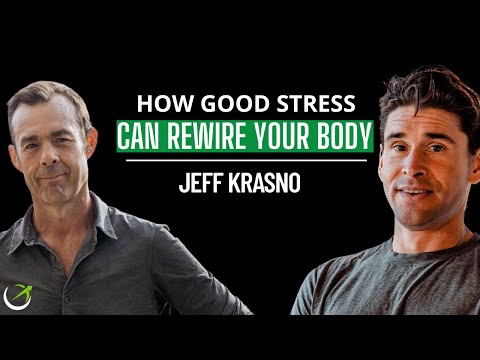
How “Good Stress” Can Rewire Your Body
~231 min
Episode Brief·YouTube

How “Good Stress” Can Rewire Your Body

Ben Greenfield
Watch on YouTube Add to chat My bookmarks← All sources

TL;DR

The four things you'd lose by not watching

4 items

TL;DR

The four things you'd lose by not watching

4 items
1

Jeff Krano lost 65 lbs in 4 months by stacking a low-carb diet, 15.5-hour intermittent fasting, and a cold plunge before his first meal — the fasted state and cold force the body to oxidize fat for heat.

2

Chronic disease is overwhelmingly driven by the exposome (total environmental exposures), not genetics — humans have only ~22,300 genes, fewer than a grape plant, giving us immense agency over our health.

3

Hormetic “good stress” — from cold, heat, hypoxia, plant compounds, or even difficult conversations — builds cellular and psychological resilience when applied in the right dose.

4

Simple daily tweaks like barefoot shoes, resting squats instead of chairs, and morning light re-align modern life with our evolutionary design, reversing ancestral mismatch.

Protocols

Concrete recipes — what, when, how much, and why

10 items

Fasted Cold Plunge for Fat Loss

WhatDo a cold plunge before your first meal of the day while in a fasted, low-carbohydrate state to force your body to oxidize fat for thermogenesis.
WhenMorning, after 15.5 hours of intermittent fasting, before breaking the fast.
DoseCold plunge (temperature and duration enough to drop core temperature, not specified) after a low-carb diet and fast; Jeff did this daily and lost 65 lbs in 4 months.
For whomThose seeking weight loss and blood sugar management, especially those with insulin resistance (Jeff used it to reverse his own).
WhyWhen fasted and blood glucose is low, cold exposure forces mitochondria to use free fatty acids for heat production, accelerating weight loss and improving blood sugar.
CaveatsAnecdotal; no long-term clinical trials. Ensure you are medically cleared for cold exposure and fasting. Not for pregnant women or those with certain cardiovascular conditions.

Jeff discovered this protocol while experimenting to reverse his diabetes and obesity. He was already following a ketogenic diet and intermittent fasting (eating window ~10am-6:30pm). By adding a cold plunge right before his first meal, he maximized the thermogenic demand when blood glucose was at its lowest. He explains that the body's need to return to homeostasis after cold causes it to seek an energy substrate; without circulating glucose, the only option is to oxidize stored fat. This simple cadence—fast, then cold, then eat—acted as a powerful catalyst. Separately, Ben Greenfield had independently developed a similar protocol called 'Strike, Shiver, Stroll' (caffeine, then aerobic activity, then cold), and both marveled at the convergence.

Mechanism

1. Fasting and a low-carb diet reduce serum glucose. 2. Cold plunging lowers core body temperature, triggering homeostatic thermogenesis. 3. Mitochondria require fuel to generate heat. 4. With glucose unavailable, the body mobilizes triglycerides from adipose tissue, converting them to free fatty acids and glycerol, which are oxidized for heat. 5. This process enhances fat loss and improves insulin sensitivity over time.

Personal experience

Jeff lost 65 lbs in about 4 months using this stack. Ben had similar results with his own variant and has never seen another person describe this approach besides himself until Jeff.

What I found was that if I jumped into a cold plunge before I ate my first bite of food, it had really an accelerating weight loss response and a really good blood sugar management response... my core body temperature would plummet... my mitochondria needed to look around and find something to make heat with.... because my blood glucose was low, it only had one option, which was to oxidize fat... I think I lost 65 lbs in about 4 months with that little stack.

Also said
“Your body is engineered for homeostasis. It's engineered for thermogenesis to pull my body temperature back up... it would have to make heat to do that. And in order to make heat, it needed an energy substrate.”— Clarifies the biological necessity that forces fat oxidation.
“I have this book called Boundless... one of the prime strategies I teach is called strike, shiver, stroll. It's very similar to what you described.”— Ben's independent corroboration of the approach.

Strike, Shiver, Stroll (Ben Greenfield's Protocol)

WhatConsume a fatty acid oxidation enhancer (caffeine, EGCG, berberine, etc.), then do 20-40 minutes of easy aerobic activity, followed by 2-5 minutes of cold exposure.
WhenMorning, fasted, before first meal.
DoseStrike: a dose of caffeine or other enhancer; Stroll: 20-40 min of conversational-pace activity; Shiver: 2-5 min cold plunge or shower.
For whomIndividuals looking for a structured fat loss protocol, especially those already adapted to fasting and exercise.
WhyThe enhancer stimulates fat release, the aerobic session accelerates fat oxidation, and the cold finish forces remaining fat to be burned for heat, maximizing fat loss.
CaveatsNo large human studies; anecdotal. Ensure cold exposure is safe. Not for beginners to fasting or cold.

Ben describes this protocol from his book 'Boundless'. 'Strike' is consuming a compound that promotes white-to-brown fat conversion and fatty acid mobilization; caffeine is the easiest. Then 'Stroll' is low-intensity aerobic work to burn circulating fatty acids. Finally, 'Shiver' — cold exposure — forces the body to harvest remaining fatty acids from stores for thermogenesis. Ben emphasizes the step order: the stroll depletes glycogen, making the cold phase even more effective. Jeff wholeheartedly agreed, recognizing the same underlying physiology he had stumbled upon.

Mechanism

1. Caffeine/EGCG/etc. upregulate lipolysis and brown fat activation. 2. Aerobic exercise increases fat oxidation rate. 3. Post-exercise, when glycogen is lower, cold exposure induces non-shivering thermogenesis, pulling fatty acids from adipose tissue and uncoupling mitochondria to generate heat. 4. This cascade leads to rapid fat loss and improved metabolic flexibility.

Personal experience

Ben uses this protocol personally and has taught it for years, seeing dramatic transformations.

Step one strike is to consume something that will enhance fatty acid oxidation... caffeine is the lowest hanging fruit... then you go for an aerobic session... then you finish with about two to five minutes of cold because at that point you are as you've just elegantly described in a low glucose state. You're able to grab calories from fat to convert them into heat via mitochondrial uncoupling.

Also said
“Sometimes people push back and say, 'But Ben, where's like the 20-week long research study on the people who did this and the people who didn't do this?' But as you've just said, Jeeoff, and again, you're the first guy who I've ever heard talk about this besides me, it works like gang busters.”— Emphasizes the real-world effectiveness despite lack of studies.

Barefoot Walking and Toe Spacers

WhatWear thin-soled barefoot shoes or go completely barefoot, and use toe spacers to restore natural foot biomechanics.
WhenAs much as possible throughout the day, especially during walks and daily activities.
DoseContinuous; wear barefoot shoes like Vivo Barefoots; use toe spacers during periods of sitting or after exercise to realign toes.
For whomAnyone suffering from foot issues, back/knee pain, or wanting to improve posture and balance; especially those who have worn traditional shoes for years.
WhyModern cushioned, narrow shoes act like casts, atrophying foot muscles and misaligning the big toe, leading to poor balance and increased fall risk with age.
CaveatsTransition slowly to avoid injury; foot muscles need time to strengthen. Those with severe foot deformities should consult a professional.

Ben and Jeff discuss the evolutionary mismatch: for most of human history, we walked barefoot or with minimal soles. The modern shoe, with its thick sole and narrow toe box, crams the toes together, atrophying the foot's musculature and undermining the big toe's pivotal role in gait. Jeff compares it to putting a limb in a cast — the muscles waste. Ben wears nothing at home and uses toe spacers to undo 30 years of damage. This simple change can alleviate back and knee pain by restoring natural movement.

Mechanism

The foot contains numerous small muscles and proprioceptors. When confined, these weaken, reducing ground-feel and neurofeedback. A wide toe box allows the toes, especially the big toe, to splay and provide a stable platform for push-off. Toe spacers help counteract the compression forces, encouraging realignment and muscle activation.

Personal experience

Ben: 'I wear nothing. And then I wear toe spacers to adjust the 30 years I spent kind of effing up my feet with the narrow toe box approach.' Jeff: 'I have a whole kind of philosophy around movement... I do the barefoot shoes thing.' Both report improved foot sensitivity and reduced pain.

In the last 50 years is essentially put our feet inside of casts. And it's like if anyone's ever broken their arm, they know what happens to their musculature when you put your arm in a cast. It completely atrophies. And now we have a whole population walking around with essentially atrophied muscles in their feet and ankles.

Also said
“When we push the toes together like that in a tight little triangle, we essentially lose the the pivot capability of that big toe.”— Explains the biomechanical consequence.
“I'm wearing my Vivo Barefoots right now, which is essentially trying to mimic some sort of paleolithic shoe.”— Tangible product recommendation.

Resting Squat Instead of Sitting

WhatReplace sitting in chairs with a resting squat (deep squat position) whenever possible, e.g., waiting, watching TV, or during everyday activities.
WhenAnytime you would normally sit, unless eating or forced (like on an airplane).
DoseAs often as feasible. Aim to accumulate squatting time throughout the day.
For whomThose with lower back pain, knee issues, or tight hips; pretty much everyone as a preventive practice.
WhySitting in chairs deconditions the hip, back, and ankle mobility; resting squats preserve natural joint ranges and solved Jeff's lower back and knee pain.
CaveatsBuild up flexibility gradually; use a wall or support if needed. Discomfort is normal initially. Avoid if you have acute injuries.

Jeff explains that society expects us to sit everywhere — doctor's offices, airports, even yoga studios before we get a seat. He refuses nine times out of ten and squats instead. This simple posture mimics the ancestral resting position and maintains the deep hip and ankle range of motion. Ben also squats while waiting for flights. Both find it transformative for back health.

Mechanism

The resting squat places hips, knees, and ankles in a loaded, end-range position that maintains mobility and circulation. It strengthens the posterior chain and core, prevents hip flexor tightness from prolonged sitting, and decompresses the spine.

Personal experience

Jeff: 'I will also almost always issue chairs and squat... that was a huge one for me and solved so many issues related to my lower back pain and knee pain.' Ben: 'I wait for the airplane to arrive in a squat.'

I will also almost always issue chairs and squat like do a resting squat instead... at night... if I get pulled into doing something with my kids... I'll do it within a resting squat. By the way, I'm right. I wait for the airplane to arrive in a squat.

Also said
“In nine times out of 10, I I politely decline [to sit]. I pretty much seat if you know sit if I'm going to have a meal or I'm stuck on an airplane.”— Shows the deliberate rejection of chairs.

Deliberate Hypoxia (Breathwork)

WhatIntentionally create mild hypoxia and hypercapnia through breath-holding or reduced-oxygen training to stimulate red blood cell production and mitochondrial efficiency.
WhenOccasional sessions, not daily; can be done via breathwork exercises.
DoseNot specified; Jeff mentions it as a deliberate stressor, noting that the dose makes the poison.
For whomThose looking to improve endurance and cellular resilience; athletes or biohackers.
WhyMimics high-altitude training; increased CO2 triggers EPO release, boosting red blood cells and oxygen-carrying capacity, and enhances mitochondrial adaptation.
CaveatsToo much can be dangerous; blackout risk in water. Start gently under guidance.

Jeff describes how the body's chemo-receptors near the carotid arteries sense elevated carbon dioxide and signal EPO production, which increases red blood cell count. This is the basis for altitude training. By occasionally exposing the body to brief periods of lower oxygen, you mimic that stressor, making mitochondria more efficient. He frames it within the hormesis principle: the right dose yields adaptation, too much is harmful.

Mechanism

Hypercapnia (elevated CO2) detected by peripheral chemoreceptors → stimulates kidney EPO release → increased erythropoiesis → greater oxygen delivery. Concurrently, hypoxia triggers HIF-1α pathways that enhance mitochondrial biogenesis and efficiency.

Personal experience

Jeff incorporates 'a kind of deliberate hypoxia' into his routine but doesn't detail his exact method.

You have these amazing little chemo receptors kind of near your carotid arteries. They sense that that abundance of carbon dioxide. They give your body a signal to produce more EPO that produces more red blood cells... your body has a natural adaptive response to that stressor and you actually your mitochondria become more efficient and you have more red blood cells.

Embracing Hard Conversations

WhatDeliberately lean into difficult, emotionally stressful conversations rather than avoiding them, using the adrenaline rush as a training stimulus for emotional regulation.
WhenWhenever a challenging interpersonal situation arises — with family, friends, colleagues.
DoseAs needed; the practice is to stay present and regulate instead of fleeing.
For whomAnyone who tends to avoid conflict or feels anxious about tough talks.
WhySimilar to cold exposure, the immediate stress response (epinephrine) provides an opportunity to practice top-down prefrontal control over the amygdala, building psychological resilience.
CaveatsThis is not about seeking conflict but facing necessary conversations. Requires baseline emotional regulation skills. Not for trauma unless supported therapeutically.

Jeff notes that we often avoid stressful conversations, but on the other side lies the world we imagine possible. The initial panic — the epinephrine surge — is like the shock of cold water. If we stay and breathe through it, we activate the prefrontal cortex to calm the limbic system, reinforcing our capacity to handle stress. Over time, this builds the same adaptive resilience as physical hormetic stressors. He uses this practice especially with family and friends.

Personal experience

Jeff actively seeks these conversations now, finding them incredibly helpful for personal growth.

I've started to actually really embrace hard, stressful conversations... you get that epinephrine rush. You think you're going to have this panic attack and then you have this moment available to you to actually put some top-down pressure on top of that involuntary bottomup response... and actually to sit there in an emotionally regulated place and have a conversation with somebody that doesn't agree with you... I find this to be incredibly helpful.

Also said
“Almost every time on the other side of them, there's the world that we imagine is possible.”— Motivational framing.

Intermittent Fasting (15.5-Hour Window)

WhatFast for 15.5 hours, eating all meals within an 8.5-hour window, e.g., 10am to 6:30pm.
WhenDaily.
Dose15.5-hour fast, 8.5-hour eating window.
For whomThose managing blood sugar or weight; Jeff and Ben both use it.
WhyReduces serum glucose, improves insulin sensitivity, and complements cold therapy for fat loss.
CaveatsNot for pregnant women or those with eating disorders; monitor energy levels.

I was also fasted for 15 and 1/2 hours, let's say... my window kind of consumption window between 10 and 6:30, 10 and 7 depending about my kids.

Low-Carb Ketogenic Diet

WhatMaintain a macronutrient ratio high in protein, low in carbohydrates to keep blood glucose low and promote fat adaptation.
WhenAs the default dietary pattern.
DoseUndefined; Jeff keeps to a 'very keto focused diet'.
For whomThose with insulin resistance or weight loss goals.
WhyKeeps insulin low, facilitates fat oxidation, and synergizes with fasting and cold stress.
CaveatsMay need electrolyte management; not for everyone long-term.

My blood sugar management protocol stack which is a combination of a very keto focused diet. So macronutrient ratio that is high protein and and low carbohydrate.

Morning Light Exposure

WhatGet outside and expose your eyes to natural light within the first 20-30 minutes after waking.
WhenFirst thing in the morning.
Dose20-30 minutes of outdoor light.
For whomEveryone; Jeff's non-negotiable.
WhySets circadian rhythm, improves sleep and mood via light-sensitive pathways.
CaveatsNone mentioned.

I get outside right away. I usually have like a espresso. I get outside, I get morning light in the first kind of 20, 30 minutes of of my day.

Contrast Therapy (Sauna + Cold Plunge)

WhatAlternate between sauna (heat) and cold plunge, typically a couple of rounds, in a fasted morning state.
WhenMorning, after light exposure.
DoseA couple back-and-forth rounds; duration unspecified.
For whomThose with access to sauna and cold plunge.
WhyCombines heat stress (heat shock proteins) and cold stress for dual hormetic benefits.
CaveatsStay hydrated; not for those with uncontrolled blood pressure.

I go right into my contrast bathing kind of scenario. So, I will get in a sauna. I will get in a cold plunge. I'll usually go back and forth a couple times.

What's new

Personal practice updates, fresh positions, predictions

5 items

you-are-a-flame-metabolism-impermanence

Jeff uses a lighter analogy to explain that our bodies, like a flame, are continuous chemical reactions, not fixed objects, linking Buddhist impermanence to human physiology.

Why this matters: Reframes metabolism from a fixed trait to a dynamic process, empowering change.

Background

Mainstream Western views often treat slow metabolism or genetic predispositions as static identities.

Jeff explains that just as a flame's form appears stable while molecules constantly move on, our body's 7 octillion atoms undergo 37 billion billion chemical reactions per second. This means there is no fixed 'Jeff' or 'Ben', only constant change. The Buddha's insight under the bodhi tree — that everything is impermanent — applies at the cellular level, offering agency because we are not stuck with 'bad knees' or 'slow metabolism' as permanent traits. This idea bridges Eastern wisdom and Western science.

Personal experience

He applies this to how we talk about health: people say 'I have a slow metabolism' like 'I have an ugly sweater', but metabolism is a process, not a product.

If you were to look at that flame, you know, you recognize the flame itself by the form. It's flickering a little bit, but you instinctively know that all the molecules that have made up this flame have moved on. Like they've just moved on, right? They've just gone away. And that can help you understand really the nature of your body because your body also is a chemical reaction.

Also said
“Your metabolism is a process and not a product.”— Encapsulates the core insight that metabolic identity is changeable.
“You and I are experiencing 37 billion billion chemical reactions per second.”— Quantifies the scale of impermanence.

exposome-environmental-exposures

The exposome is the sum of all environmental exposures — diet, toxins, relationships, trauma — and it, not genes, drives most chronic disease.

Why this matters: Shifts focus from genetic determinism to modifiable factors, giving listeners a handle on their health destiny.

Background

Traditionally, people believe their genes dictate health outcomes. Jeff introduces the term exposome, borrowed from Dr. Mark Hyman, to underscore the Buddhist concept of interdependence — we are not separate from our environment.

Jeff explains that the Buddha saw the universe as an interconnected, mutually dependent web. Similarly, our bodies are not isolated bags of skin; we are in constant exchange with our environment. The exposome includes diet, relationships, childhood trauma, toxins, pathogens, and even screen time. The overwhelming majority of chronic disease stems from how the exposome washes over our genes, not from the genes themselves. Realizing this gives us profound agency: by altering our environment — eating diverse foods, reducing toxins, nurturing community — we can push our health trajectory toward thriving. This is the science of epigenetics in action.

Personal experience

Ben notes that his gut microbiome tests look dramatically different when he's traveling in urban environments versus at home surrounded by animals and nature, aligning with the exposome concept.

The exposome can really be understood as the sum total of all of your environmental exposures... the overwhelming majority of chronic disease is not attributable to our genes. It's actually attributable to this exposome. It's the exposome washing over our genes that actually contributes to chronic disease or or great health, thriving health.

Also said
“You can alter your environment to some degree to push yourself down that trajectory towards healing.”— Actionable takeaway.

fewer-genes-than-grape-plant

The Human Genome Project revealed humans have about 22,300 genes — fewer than a grape plant (30-35k) — debunking genetic determinism and highlighting epigenetics.

Why this matters: A vivid, counterintuitive fact that challenges hubris and emphasizes that gene expression, not raw gene count, matters.

Background

Historically, scientists assumed our sophistication required hundreds of thousands of genes; the discovery was a shock.

Jeff recounts how the Human Genome Project, spurred by the belief in genetic determinism since Watson and Crick, aimed to find a gene for every trait and disease. When the map came back with a meager count, it was a slap in the face for our complex. This gave rise to epigenetics: our genes express differently based on the exposome. While genes can load the gun (e.g., APOE4 for Alzheimer's), the environment pulls the trigger. Jeff shares his own genetic SNPs for caffeine addiction and carb metabolism, using them to guide focus rather than resign to fate.

Personal experience

Ben shares his loaded guns: diabetes risk, colon cancer, detox pathways, which he manages with diet, supplements, and lifestyle tweaks. Jeff found a SNP for caffeine overconsumption and blood sugar regulation, informing his protocols.

We have less genes than a grape. I'll specify a grape plant. Yeah. So this was uh yeah, an eye opener for me... a grape plant will have about 30 to 35,000 genes and a human has about 22,300 genes more or less the last we counted.

Also said
“That thing has more genes than you.”— The provocative statement from Zach Bush that sparked Jeff's interest.
“It's really how the genes express again in relationship to the exposome to the environment that actually determines most of human health and thriving and on the other side disease.”— Clear statement of epigenetics principle.

social-interaction-hormetic-stress

Ben suggests that social engagement — from public speaking to meeting new people — can act as good stress, building resilience, while loneliness breeds disease.

Why this matters: Extends the concept of hormesis beyond physical stressors to psychological and social domains.

Background

Known that loneliness increases sympathetic nervous system activity and inflammatory gene expression; the novel angle is reframing social discomfort as a training stimulus.

Jeff agrees, noting that teens today bury themselves in phones, avoiding real-world interaction. He uses public speaking as an example: the butterflies before stepping on stage are the epinephrine surge, but with repeated exposure, the brain learns to apply top-down control, entering flow. This is essentially exposure therapy for social anxiety. The antidote to the modern epidemic of loneliness — where 58% of Americans eat all meals alone — is to deliberately seek social discomfort as a health practice, balancing the need for solitude with communal connection.

Personal experience

Jeff describes his daughters retreating into their rooms for digital intimacy, and Ben shares that he gets nervous before social events but sees that stress as a 'good stress' that builds social muscle.

I think that social interaction might be a might be considered a good stress... you know, public speaking... you get butterflies... the moment that you step on stage you get into flow and the more that you do that the easier it becomes to step on stage.

Also said
“58% of Americans report eating every single meal of the day alone.”— Shocking statistic underscoring the urgency.
“I've started to actually really embrace hard, stressful conversations... you get that epinephrine rush... and then you have this moment available to you to actually put some top-down pressure on top of that involuntary bottomup response.”— Practical application of social hormesis.

wealth-and-hellness-burnout

Jeff's term for how building a massive wellness festival empire (Wanderlust) paradoxically destroyed his health, leading to obesity, diabetes, and chronic fatigue.

Why this matters: Reveals the dark side of the wellness business and the personal cost of ignoring one's own health while promoting it.

Background

Jeff ran Wanderlust, hosting 68 festivals in 20 countries, while traveling 200+ days a year, chasing growth, living on coffee and wine.

After starting a yoga studio at Ground Zero post-9/11, Jeff's wife's healing work inspired him to merge yoga with music festival scale. Wanderlust exploded, but Jeff became the poster child for burnout: he was chronically stressed, overweight, brain-fogged, irritable, phone-addicted. His daughters nicknamed him 'the boobs of man' due to his 'inner tube adiposity'. A diabetes diagnosis in 2019–2020 became his wake-up call. He then spent years interviewing 400 doctors and experimenting on himself to reverse his decline, eventually writing 'Good Stress'.

Personal experience

He describes his daily routine as 'coffee to wine o'clock', eating airport carbicide, and anchoring self-worth to business growth. The collapse taught him that health requires balance, not just scale.

I call my journey into wealth and hellness... I was really overweight I was about 210 you know I had all that kind of inner tube adaposity around the middle I had what my daughters love to call the boobs of man... I was chronically fatigued brain fogged... irritable, checking my phone every two seconds.

Also said
“This was not like the Brian Johnson go to bed at 4 p.m. style. No, this was... people really living in the full joyous expression of their life.”— Contrasts the earlier healthy hedonism with later burnout.
“By the end of it I found myself in really really sorry shape... I got a diabetes diagnosis in 2019, 2020. And that was a big wakeup call for me to to really change my life.”— Turning point.

Recommendations

Products, supplements, and tools mentioned in the episode

2 items

Vivo Barefoot Shoes

Tool

Ben wears them, and Jeff advocates barefoot/minimalist footwear to reverse foot atrophy.

These shoes have a wide toe box and ultra-thin sole that mimics barefoot walking while providing protection. Ben specifically mentions his Vivo Barefoots as a paleolithic shoe alternative.

vs alternatives

Versus typical cushioned running shoes that act as casts.

Personal experience

Ben: 'I'm wearing my Vivo Barefoots right now, which is essentially trying to mimic some sort of paleolithic shoe.'

I'm wearing my Vivo Barefoots right now.

Find Vivo

Toe Spacers

Tool

Ben uses toe spacers to correct decades of narrow-toe-box damage.

These are simple silicone or gel spacers placed between toes to gently realign them to a splayed position, counteracting the deforming effects of modern shoes.

vs alternatives

Surgery or orthotics for foot realignment could be alternatives, but toe spacers are non-invasive and cheap.

Personal experience

Ben: 'I wear nothing. And then I wear toe spacers to adjust the 30 years I spent kind of effing up my feet with the narrow toe box approach.'

I wear toe spacers to adjust the 30 years I spent kind of effing up my feet.

Find Toe
Disclosed sponsorships2speaker disclosed

Good Stress: The Health Benefits of Doing Hard Things

Book Sponsored · disclosed

Ben found the book compelling enough to invite Jeff on the show, folding over many pages.

DisclosureJeff Krano is the author of the book being discussed.

Ben initially cynical about another 'do hard things' book, but was surprised by the depth, scientific grounding, and practical protocols. Jeff wrote the book after his own health collapse, distilling interviews with 400 doctors and personal experimentation into 10 actionable protocols for lifespan and healthspan.

vs alternatives

Unlike typical wellness books that may be shallow, this one bridges Eastern metaphysics with Western medicine and provides concrete, hormesis-based protocols.

Personal experience

Ben: 'It was so compelling that I decided I want to get Jeff on the show.'

It actually wound up being a book in which I I folded over a lot of pages and wrote a bunch of questions down.

Also said
“The book for those of you listening in is good stress.”— Direct recommendation.
Find Good

Commune (onecommune.com)

Service Sponsored · disclosed

Jeff created Commune after Wanderlust, offering masterclass-style courses with top health experts, plus a physical retreat center in Topanga.

DisclosureJeff Krano is the founder of Commune, an online course platform and retreat center.

Commune hosts 170 full-length courses from figures like Deepak Chopra, Wim Hof, Mark Hyman, and many functional medicine leaders. Jeff and his wife also built a 10-acre retreat center where courses are filmed in a holistic setting. Ben puts the link in show notes.

vs alternatives

Like Masterclass but exclusively for well-being, with a community and retreat component.

Personal experience

Jeff lives on the retreat property and uses it daily.

We've created and shot 170 full-length courses... we built a retreat center also called commune it's this amazing 10-acre property up in Topanga.

Find Commune

Notable quotes

Lines worth pulling out — contrarian, specific, or perfectly phrased

6 items
Your metabolism is a process and not a product.
Challenges the static self-view and opens the door to change.
We have less genes than a grape plant.
A jaw-dropping fact that undercuts genetic determinism.
Culture is fast, evolution is slow.
Encapsulates why modern life makes us sick despite our ancient genes.
In the last 50 years is essentially put our feet inside of casts.
Powerful analogy for how shoes atrophy our feet.
I've started to actually really embrace hard, stressful conversations... you get that epinephrine rush... and then you have this moment available to you to actually put some top-down pressure on top of that involuntary bottomup response.
Extends the hormesis concept to emotional regulation in real time.
The dose makes the poison.
Classic toxicology phrase cleverly repurposed for the good stress framework.

Sign in to share feedback

Tell us if this brief hit the mark or missed it — feedback feeds back into the next iteration of the prompt.

Topics covered

metabolism-as-impermanent-processexposomefewer-genes-than-grape-planthormetic-stresscold-plunge-before-foodstrike-shiver-strollancestral-mismatchbarefoot-walkingresting-squatdeliberate-hypoxiasocial-stress-as-hormesisxenohormesiswellness-burnoutintermittent-fastinglow-carb-dietmorning-lightcontrast-therapyhard-conversationslearning-new-skillsalcohol-moderation
Free account

Make this library yours

Reading is free for everyone. A free account adds the personal layer: save protocols, follow experts, and see how the other experts weigh in on this same topic.

Create a free accountSign in

Where the experts disagree — weekly

One email a week: the sharpest new disagreements and protocols from the library. No spam, unsubscribe anytime.

Educational summary of the cited expert source — not medical advice. Open the source recording linked above and consult a qualified physician before acting on any protocol.