
UNFUCG
DashboardSearchChatBookmarksNotificationsActivityPremiumProfile
?
Home
Search
Chat
Saved
Profile
Episode
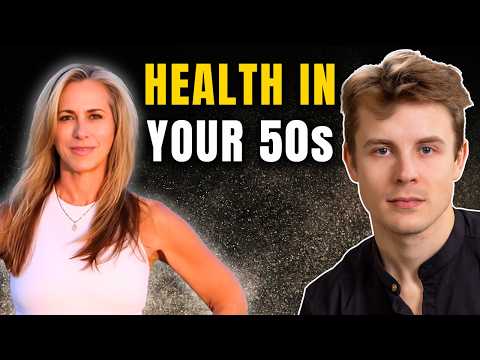
Julie Gibson Clark On Staying Healthy at Age 55
~231 min
Episode Brief·YouTube

Julie Gibson Clark On Staying Healthy at Age 55

Siim Land
Watch on YouTube Add to chat My bookmarks← All sources

TL;DR

The four things you'd lose by not watching

4 items

TL;DR

The four things you'd lose by not watching

4 items
1

Julie Gibson Clark, a top contender in the Rejuvenation Olympics, maintains a simple yet rigorous daily routine: a pound of vegetables (half greens), 100+ grams of protein, no alcohol, and a rotating exercise schedule that includes four weightlifting days, a VO2 max session, a HIIT session, and at least four sauna sessions per week.

2

She follows an additive diet philosophy—focusing on what to eat more of rather than restriction—and embraces a “longevity mindset” that stacks incremental, lifelong habits over short-term, crash-and-burn cycles.

3

Her health journey was sparked by chelation therapy for heavy metal poisoning, which lifted a bone-deep exhaustion she didn’t know she had, leading to an ongoing hunt for interventions that sustain that optimal state, including senolytics, NAD+ precursors, and liposomal glutathione.

4

She uses the ProLon fasting mimicking diet kit every 3–4 months, takes Novos Core daily, and has found that low-dose melatonin (Herbatonin 0.3 mg) and magnesium threonate at night markedly improve her sleep scores, especially during hormone fluctuations.

Protocols

Concrete recipes — what, when, how much, and why

6 items

Nightly Beet Kvass (fermented beet drink)

WhatFerment 1 lb of chopped beets with 1–1.5 tsp salt, cinnamon, cloves, and water in a 64-oz jar for 2–3 weeks; drink the liquid mixed with sparkling water as a nightly non-alcoholic cocktail.
WhenEvery night, as a replacement for a glass of wine.
DoseOne glass per night; the jar yields multiple servings. Fermentation time 2–3 weeks on the counter.
For whomHerself and anyone seeking a low-sugar, gut-healthy, non-alcoholic evening drink.
WhyProvides daily beet consumption (linked to methylation and nitric oxide), beneficial probiotics, and a satisfying ritual that replaces alcohol.
CaveatsNone mentioned; the leftover beet solids can be blended into soups and salads to avoid waste.

This protocol grew out of reading Dr. Cara Fitzgerald’s “Younger You,” which advocates eating a beet a day to lower DNA methylation age. Julie, with her MTHFR SNP and heavy metal history, wanted a consistent way to get that beet in. The fermentation process not only creates a tasty, effervescent drink but adds the gut-health benefits of live cultures. She has perfected the recipe with cinnamon and cloves, describing it as “so good.” She often preps a fresh jar weekly, and the ritual of drinking it with sparkling water at night replaces her old habit of a glass of wine, which she can no longer tolerate. The beet pulp goes back into meals, so nothing is wasted—a practical demonstration of her longevity mindset of stacking habits.

Mechanism

Beets contain TMG (trimethylglycine) which supports methylation pathways (relevant to MTHFR variants) and nitrates that can boost nitric oxide for blood flow. Fermentation adds probiotics and may enhance nutrient bioavailability.

Personal experience

She said, “I was drinking it yesterday going oh my god this is so good.” She has shared the recipe on social media and is considering other vegetable kvass variations.

I take a like a 64 ounce jar. I put in a pound of uh cut up beets and about 1 to 1 and 1/2 teaspoons of salt. And now I've been adding cinnamon and cloves to it. … I let it sit on your counter and ferment for um I do mine anywhere between two and 3 weeks now.

Also said
“instead of a glass of wine, I'm having that.”— Highlights the behavioral substitution aspect.
“I usually take about half of them and I grind them up and then I'll put that on soups and salads.”— Shows the zero-waste, habit-stacking approach.

Weekly exercise and sauna schedule

WhatMonday: VO2 max workout + sauna; Tuesday: lower body (free weights) + sauna; Wednesday: upper body (possible HIIT or core) + sauna; Friday: lower body (machines) + sauna; Saturday: upper body (machines) + sauna. At least 4 sauna sessions per week.
WhenEarly mornings (she leaves home around 5 a.m.), Monday through Saturday.
Dose4 weightlifting sessions (2 lower, 2 upper), 1 VO2 max session, 1 HIIT session, at least 4 x 15–20 min sauna sessions. Total gym time (including shower) about 2.5–2.75 hours.
For whomHerself (55-year-old woman on HRT, history of hypermobility). The free weight/machine split accommodates her joints.
WhyMaintains muscle mass, bone density, and cardiovascular fitness; sauna provides heat stress benefits for cardiovascular health and longevity.
CaveatsUses machines on some days because hypermobility makes her feel safer and able to push harder; free weights are important for balance and small muscle stabilization. She is cautious with free weights due to loose joints.

Julie’s gym is her home away from home. She structures her week so the hardest session (VO2 max) happens Monday to get it off her mental plate. The weight training split allows for enough recovery while hitting each body part twice. By alternating free weights and machines, she balances the need to work stabilizing muscles (free weights) with the ability to safely load heavier on machines without risking injury. The sauna is non-negotiable; she loves it year-round and often does it even when she doesn’t work out. She tracks no specific sets or reps but focuses on effort and consistency. This routine evolved over years and she finds it manageable because she works from home and has no commute; she acknowledges it might be harder for someone with a demanding office job and suggests simplifying the core elements.

Mechanism

Resistance training stimulates muscle protein synthesis and bone remodeling. V02 max training improves cardiorespiratory fitness and mitochondrial function. Heat exposure via sauna activates heat shock proteins, increases nitric oxide, and may lower cardiovascular mortality.

Personal experience

She says, “I love it. I love it. Like that's my even in the summer here, you know, it's like, oh, I'll just go in the sauna.” She timed a typical trip: “from the time I leave my house to the time I get back, it's like 2 and 1/2 to 2 and 3/4 hours.” She finds the routine sustainable as part of a lifelong habit stack.

I'm trying to do one VO meet, two max, one hit, you know, the four days of um weightlifting and then at least a minimum of four saunas a week.

Also said
“I always includes um a V2 max, which I typically try to do on Mondays, uh, just to like get it over with and it's not bearing on my mental space.”— Demonstrates the psychological strategy around scheduling.

Collagen + Symbiotica creamer pre-workout in green tea

WhatBefore her early morning workout (~5 a.m.), she drinks green tea with added collagen protein and Symbiotica creamer (containing L-theanine and alpha-GPC).
WhenFirst thing in the morning, before exercise.
DoseOne cup of green tea with an unspecified amount of collagen protein and Symbiotica creamer.
For whomHerself, but possibly other women who train early and want to avoid a fully fasted state.
WhyShe feels better during her workout when she has this, and it aligns with Stacy Sims’ advice for women to consume some protein before fasted training.
CaveatsThis technically breaks her intermittent fast, but she doesn’t consider it significant. The choice is based on how she feels rather than a strict fasting dogma.

Julie naturally skips breakfast (she’s never been hungry in the morning) and usually doesn’t eat until around 10 a.m. However, after hearing about Stacy Sims’ work, she experimented with adding a small protein source before her workout and noticed an improvement in how she felt during exercise. The Symbiotica creamer, which she started using recently and genuinely enjoys for its taste, also contains L-theanine and alpha-GPC. She has been experimenting with this addition for a while and plans to stick with it. This is a perfect example of her philosophy: she pays attention to her body’s signals (feeling better during training) and adjusts accordingly, even if it means “breaking a fast” that many others would adhere to rigorously.

Mechanism

Collagen provides glycine and other amino acids; L-theanine may promote calm focus; alpha-GPC is a choline source that could support cognitive function and neuromuscular performance.

Personal experience

She said, “I actually feel better when I'm working out when I do that so I thought well I'll just stick with it you know.”

I do put that said in my coffee or my tea in the morning. I do green tea. Uh first thing in the morning before I go work out, I will put some collagen protein. And then I've been experimenting with this Symbiotica um creamer that's got like elyroine and some alpha GPC in it, which I'm really really enjoying.

Low-dose melatonin (Herbatonin 0.3mg) for sleep maintenance

WhatTaking 0.3 mg of natural melatonin (Herbatonin brand) at night to improve sleep continuity without grogginess or rebound wakefulness.
WhenBefore bed.
Dose0.3 mg, nightly.
For whomHerself (a perimenopausal woman with frequent nighttime awakenings). May suit others who experience rebound wakefulness on higher doses.
WhySupports falling back asleep after menopause-related nighttime awakenings without disrupting the body’s own melatonin cycle.
CaveatsShe still wakes up once per night due to hormone shifts, but can quickly return to sleep. Individual response varies; some people do better on higher doses timed earlier.

This protocol emerged from her personal trial-and-error. On high-dose melatonin (>2 mg), she found that once the compound cleared in the middle of the night, she would be wide awake and unable to return to sleep. After switching to a 0.3 mg dose, she can wake up (usually once a night due to fluctuating estrogen) but fall back asleep easily. She notices her sleep scores improved after this change, and the addition of magnesium threonate further boosted them. She views melatonin as a hormone and prefers a small nudge rather than a sledgehammer.

Mechanism

Exogenous melatonin at physiological doses (0.1–0.3 mg) can blunt the cortisol awakening response and facilitate sleep onset/completion without downregulating endogenous production or causing next-day sedation. High doses may have a biphasic effect where early clearance leads to wakefulness.

Personal experience

She stated, “I think that's a little better than taking such a super physiological dose. At least for me, you know, it's like it was so high that when I would wake up, I just couldn't get back to sleep.”

I use Herbatonin, a natural melatonin that's like .3 milligrams, and that seems to like I still might wake up but I'm able to go right back to sleep.

Also said
“I used to try like a lot of melatonin like over two grams and then I was reading about it and um I was thinking maybe that was increasing my nightly wakefulness.”— Identifies the initial high-dose problem.

Fasting mimicking diet (ProLon) every 3–4 months

WhatUsing the ProLon 5-day fasting mimicking diet kit every 3 to 4 months to gain potential longevity and metabolic benefits while preserving ease and compliance.
WhenEvery 3–4 months; she is doing it “this year and kind of seeing if it makes any difference.”
Dose5-day ProLon kit, once per quarter.
For whomHerself; could be adapted by others who want some benefits of fasting without the challenges of water-only fasting.
WhyShe had done many types of fasting in the past (water, fat fasts) but finds the fasting mimicking diet much easier mentally and physically; she’s testing if it moves the needle on her health markers.
CaveatsShe currently uses the ProLon kit for convenience but plans to design her own version with the help of ChatGPT (avoiding excess soy). She adds liposomal glutathione during the fast to support calmness. Whether FMD offers longevity benefits beyond other fasting types is still unknown to her.

Julie has a long history of experimenting with fasting—water fasts, fat fasts, and now the FMD. She values the ProLon kit because it removes decision fatigue: the foods are prepackaged, and she follows the protocol without having to cook or count macros. She’s aware of the debate between FMD and protein-sparing modified fasts (PSMF) but leans toward FMD for its theoretical longevity benefits via low protein and mTOR suppression. However, she’s not dogmatic; she’s simply testing it over the course of a year and will assess its impact on her biomarkers. Her positive experience with liposomal glutathione during the fast may influence her future iterations of the diet.

Mechanism

Fasting mimicking diets provide low calories, low protein, and moderate healthy fats to suppress insulin/IGF-1 and promote autophagy and cellular rejuvenation while minimizing hunger and muscle loss compared to water-only fasting.

Personal experience

She said, “I just did like a um fasting mimicking diet and I'm trying to do those every 3 to four months um you know um just this year and kind of seeing if it makes any difference.” She also noted, “I love that it's so easy, you know, just mentally it's just very very easy to do the prolong.”

I'm using the prolong kit for now um while I kind because it just makes it so easy. … I just love that it's so easy, you know, just mentally it's just very very easy to do the prolong.

Magnesium threonate (3 and 8) at night for deep sleep

WhatTaking magnesium threonate (sometimes called magnesium 3 and 8) before bed to boost sleep quality and scores.
WhenAt night, as part of her evening supplement routine.
DoseNot specified exactly; she takes it along with magnesium taurate during the day and magnesium malate in the day as well.
For whomHerself, and potentially others with sleep disruption, especially those with low magnesium or perimenopausal symptoms.
WhyThis form crosses the blood-brain barrier and supports brain processes involved in sleep; her Oura sleep scores rose from 77–78 to 81–86 after adding it.
CaveatsWorks in combination with other strategies (early dinner, blue blocking glasses, hormones). Not a standalone fix.

Julie has been chronically low in magnesium despite heavy supplementation (up to 2000 mg/day recommended by her doctor). She uses multiple forms to cover different tissues and effects. The addition of magnesium threonate at night made an immediate, quantifiable difference in her sleep scores. She tracks sleep with an Ultra Human ring and is delighted to finally see numbers above 80. She considers it one of the best additions for managing the sleep disruption caused by lowered estrogen during her mini-menopause.

Mechanism

Magnesium threonate effectively increases brain magnesium levels, which can enhance GABA activity and NMDA receptor regulation, promoting relaxation and better sleep architecture.

Personal experience

She said, “that magnesium 38 at night has also been really nice like it's I can see it on my sleep scores, you know, like making that really go up. … my sleep scores are like 77 78 like I'm happy if I can even get an 80 you know and then I add magnesium 3 and8 and it's like 81 to 86 you know so it's really nice.”

I add magnesium 3 and8 and it's like 81 to 86 you know so it's really nice. I was like wow okay this makes a difference.

Also said
“magnesium 3 and8 is for the brain is the most like bioavailable form of magnesium for the brain.”— Reinforces the rationale for choosing that form.

What's new

Personal practice updates, fresh positions, predictions

3 items

Shift from high-dose to micro-dose melatonin for sleep

After experiencing rebound wakefulness on high-dose melatonin (>2 mg), she switched to a natural 0.3 mg melatonin (Herbatonin) and found it allowed her to fall back asleep more easily after nighttime awakenings.

Why this matters: Contrasts with common high-dose melatonin use and aligns with emerging evidence that lower, physiological doses may be more effective for sleep maintenance, especially in perimenopausal women.

Background

She previously used over 2 grams? Wait transcript says “over two grams” but likely means 2 milligrams. She said “I used to do like a lot of melatonin like over two grams and then I was reading about it… I was thinking maybe that was increasing my nightly wakefulness…” (likely 2 mg, not grams). Many people take 3–10 mg without considering rebound effects.

Julie used to take melatonin in doses exceeding 2 mg but noticed that when the dose wore off in the middle of the night she would wake up wide awake and struggle to go back to sleep. After reading about the potential for high doses to disrupt sleep architecture, she tried a natural melatonin product called Herbatonin at just 0.3 mg. With this micro-dose, she still wakes up once (due to menopause) but can fall right back asleep. She views the lower dose as more compatible with the body’s hormone symphony, avoiding the ‘playing too loud’ effect of a supraphysiological dose. This personal experiment reflects her broader philosophy of adjusting supplements based on how they actually make her feel rather than just following general advice.

Personal experience

She noticed that on the high-dose melatonin, her sleep scores remained poor and she’d be wide awake at 2–3 a.m. After switching, her ability to return to sleep improved dramatically. She uses an Ultra Human ring to track sleep and saw that magnesium threonate later further boosted her scores from the 77–78 range to 81–86.

I switched down to like a um what do you say a natural melatonin that's like .3 milligrams. is herbatonin and that seems to like I still might wake up but I'm able to go right back to sleep.

Also said
“I was thinking maybe that was increasing my nightly wakefulness because I would like you know that melatonin would wear off and then I would be wide awake.”— Explains the specific problem that motivated the change.
“I think that's a little better than taking such a super physiological dose. At least for me, you know, it's like it was so high that when I would wake up, I just couldn't get back to sleep.”— Highlights the downside of supraphysiological doses for her personally.

Adding liposomal glutathione during fasting mimicking diet

She began adding liposomal glutathione (and vitamin C) during her fasting mimicking diet cycles and noticed a pronounced calming, content feeling even while eating almost no food.

Why this matters: Liposomal glutathione is a relatively new approach for supported fasting, and her anecdotal experience suggests it may mitigate the stress response and improve mood during calorie restriction.

Background

She had previously used NAC but stopped because of a genetic predisposition (sulfur sensitivity per her MTHFR and sulfur-related SNP findings). Her doctor had warned about sulfur-based supplements.

During a ProLon fasting mimicking diet, she started taking liposomal glutathione and liposomal vitamin C. She found that despite the severe calorie restriction, she felt remarkably calm and content—a state she attributes largely to the glutathione. This led her to continue it daily, even outside of fasts. She contrasts this with past experiences of fat fasting (eating mostly fat like avocados) that made her feel sick. The glutathione seemed to smooth out the physiological stress of fasting. She now takes the liposomal versions first thing in the morning and views them as a tool to support detoxification and overall resilience, especially given her history with heavy metals and MTHFR variants.

Personal experience

She explicitly says, “I started taking it during a um a prolong fast and … it just like really helped me like come to a place where I just felt so chill even though I was like eating almost no food like I felt like really the overall feeling was like content and I I attribute it to that.” She continues to take liposomal glutathione daily.

I started taking it during a um a prolong fast and … it just like really helped me like come to a place where I just felt so chill even though I was like eating almost no food like I felt like really the overall feeling was like content and I I attribute it to that.

Also said
“I take liposomaal glutathione and liposal vitamin C first thing in the morning.”— Shows she integrated it beyond just the fasting period.

Longevity mindset replacing crash diet/exercise cycles

She shifted from repeated 8-week crash diets and exercise programs to a lifelong, habit-stacking approach that prioritizes consistency over short-term results.

Why this matters: This mindset shift is the single piece of advice she wishes she’d adopted sooner, and it underlies all her current sustainable behaviors.

Background

For years she would start an exercise program for 8 weeks, stop for 8 weeks, start again; same with diet. This cycle led to disordered eating and frustration.

Julie describes this as a true game-changer. Instead of targeting rapid weight loss or getting in shape for a specific event, she now asks, “What can I do for the rest of my life?” This reframe allowed her to stack small, manageable habits—like cooking greens ahead, fermenting beets, going to the gym 5 days a week—without the burnout. The result is that habits have stuck, her weight and health stabilized, and she feels calmer. The longevity mindset also spills into her supplement and biohacking choices: she’s not looking for quick fixes but for interventions that contribute to a long healthspan. It’s the foundation of why she can maintain such a seemingly rigorous routine yet describe it as “pretty basic simple stuff.”

Personal experience

She said, “once I adopted the longevity mindset of like, oh, I'm just going to do this the rest of my life like that just it was such a game changer in my whole like my health, my well-being, how I um created habits that these habits have stuck.”

once I adopted the longevity mindset of like, oh, I'm just going to do this the rest of my life like that just it was such a game changer in my whole like my health, my well-being, how I um created habits that these habits have stuck.

Recommendations

Products, supplements, and tools mentioned in the episode

5 items

ProLon Fasting Mimicking Diet kit

Product

Julie uses the ProLon kit for her quarterly fasting mimicking diet cycles because it is prepackaged, easy, and removes the need to cook or calculate macros.

She started using ProLon after experimenting with water fasts and fat fasts in the past. She loves the mental simplicity: just open the box and follow the instructions. She is currently using it to test if regular FMD cycles improve her health markers, and she may later design a homemade version with the help of ChatGPT. The convenience factor is key for her busy life, but her endorsement is based solely on personal experience.

vs alternatives

Compared to water fasting (she felt sick on fat fasts) and DIY FMD (more planning), ProLon reduces friction. She is aware that a protein-sparing modified fast might preserve more muscle but values the potential longevity benefits of low protein mTOR suppression that FMD provides.

Personal experience

She said, “I just love that it's so easy, you know, just mentally it's just very very easy to do the prolong.”

I'm using the prolong kit for now um while I kind because it just makes it so easy.

Find ProLon

Novos Core (multi-ingredient longevity supplement)

Supplement

She found Novos via a Google search and has been taking it daily as her core longevity supplement; it contains fisetin, alpha-ketoglutarate, glycine, lithium, magnesium malate, malic acid, vitamin C, glucosamine, rhodiola, and more.

Julie’s discovery of Novos was serendipitous—she was researching senolytics (fisetin) and the product popped up. The fact that it contained several ingredients she was already interested in (lithium, alpha-ketoglutarate, glycine) made it a convenient all-in-one. She takes it in the afternoon (originally earlier because the rhodiola was too energizing, but now she tolerates it later). She appreciates the comprehensive formula but doesn’t have a definitive way to measure its impact beyond her overall good health and epigenetic test results. She recommends it as a practical solution for those who don’t want to take dozens of individual pills.

vs alternatives

She was previously taking individual supplements like fisetin, alpha-ketoglutarate, and lithium separately. Novos consolidates them, simplifying her stack. She also continues to take additional NMN/nicotinamide riboside (both) on top of Novos, showing that she still personalizes beyond the all-in-one.

Personal experience

She notes that when she first started Novos, the rhodiola in it was too stimulating if taken after 1 p.m., so she took it earlier. Over time her body adapted, and now she takes it around 1–2 p.m. after meditation, and it provides a calming effect. She also mentions her father, an original biohacker, now takes some Novos as well.

I find my way to like you know ficitin feistin whatever and I find novos pops up on my Google search. … it's really nice. It's very and I used to Oh, I know. And then there's rodeiola in there.

Also said
“I take my Novos. to do, you know, the Novos core, which is, you know, a whole conglomeration of of things, but, you know, fistin alpha ketoglutarate, glycine. Um, I know I'm missing a few things. Lithium, there's a magnesium malate is in there as well.”— Lists the specific ingredients that attracted her to the product.
Find Novos

Symbiotica creamer (with L-theanine and alpha-GPC)

Supplement

She adds this creamer to her morning green tea for flavor and functional benefits (L-theanine and alpha-GPC) before her workout.

Julie recently discovered the Symbiotica brand and was drawn to the creamer’s taste and convenient inclusion of L-theanine and alpha-GPC. She pairs it with collagen protein as a pre-workout. She sees it as a pleasurable, functional food that also helps her feel good during exercise. No affiliation is stated; she simply enjoys the product.

vs alternatives

She previously just used collagen alone; the creamer adds flavor and cognitive/calming ingredients without extra pills.

Personal experience

She said, “I've been experimenting with this Symbiotica um creamer that's got like elyroine and some alpha GPC in it, which I'm really really enjoying.” She also notes she loves the flavor.

I love the flavor of it. So, um I've been doing that.

Find Symbiotica

Ultra Human ring (sleep and activity tracker)

Tool

She uses an Ultra Human ring to track sleep, though she has a love-hate relationship with it because it often tells her she didn’t sleep or move enough, but it also provides positive feedback.

Julie says the ring doesn’t have a menopause setting, so it can be frustrating when it flags her frequent nighttime awakenings as poor sleep. However, she uses the data to gauge the impact of interventions like magnesium threonate and melatonin adjustments. She prefers the ring form factor over a watch for sleep tracking. She’s not officially recommending it but acknowledges it as her current tracking tool.

vs alternatives

She doesn’t compare to other devices, but the Ultra Human ring is her chosen tracker. It’s similar to Oura ring but brands differ.

Personal experience

She complains, “every day it's like you didn't sleep enough or you didn't move enough. It's like oh my god like I can never but then it'll say good job on this. I'm like now you're saying nice things.”

It's an ultra human actually. But um I am I mean I don't you know I'm not I'm not in love with these rings.

Find Ultra

Younger You by Dr. Cara Fitzgerald

Book

She read this book, which advocates eating a beet a day as part of a protocol to lower DNA methylation age; it inspired her to incorporate beet kvass and daily beets.

Julie specifically credits this book for the beet recommendation. The book’s “Younger You” program includes eggs, liver, leafy greens, curcumin, green tea, and beetroot. This validated her own habits and gave her a specific metric (a beet a day) to aim for. She has not verified DNA methylation changes from beets alone, but the book influenced her routine.

vs alternatives

Compared to other anti-aging diets, the book’s emphasis on specific foods like beets, eggs, and liver appealed to her because it is food-based rather than supplement-based, aligning with her desire to get nutrients from whole foods.

Personal experience

She said, “I had read a book called Younger You by Dr. Cara Fitzgerald and um she talks in there in her Younger You program about eating like a beat a day. So I've just tried to like slowly I'm trying to slowly move into like hitting that as a metric.”

I had read a book called Younger You by Dr. Cara Fitzgerald and um she talks in there in her Younger You program about eating like a beat a day.

Find Younger

Notable quotes

Lines worth pulling out — contrarian, specific, or perfectly phrased

5 items
I got so addicted to this thought of like what else do I not know that I don't know and I really want to feel this good all the time. I never want to go back to feel... I can't even it's like to explain how I felt was just like it was like bone tired on a level that I've never experienced that kind of exhaustion before.
Captures the transformative moment after chelation therapy that launched her lifelong pursuit of optimal health.
I prioritize social connection over like a rigid schedule.
A powerful counterbalance to the extreme discipline often portrayed in biohacking; she emphasizes that relationships matter more than perfect protocol adherence.
once I adopted the longevity mindset of like, oh, I'm just going to do this the rest of my life like that just it was such a game changer in my whole like my health, my well-being, how I um created habits that these habits have stuck.
The core philosophy that turned her from a yo-yo dieter into a consistent, healthy 55-year-old; applicable to anyone.
I was walking around with this lowgrade depression that I didn't know I had until I didn't have it.
A concise, profound statement about the hidden weight of chronic toxicity and how lifting it can reveal a new normal.
instead of a glass of wine, I'm having that.
A simple behavioral substitution (beet kvass for alcohol) that epitomizes her additive, habit-stacking approach to health.

Sign in to share feedback

Tell us if this brief hit the mark or missed it — feedback feeds back into the next iteration of the prompt.

Topics covered

heavy-metal-detoxchelation-therapyhealth-journeydietvegetablesproteinalcoholadditive-nutritionbeet-kvassfermentationfasting-mimicking-dietprolonintermittent-fastingcollagensymbioticaexercisevo2-maxresistance-trainingsaunasupplements
Free account

Make this library yours

Reading is free for everyone. A free account adds the personal layer: save protocols, follow experts, and see how the other experts weigh in on this same topic.

Create a free accountSign in

Where the experts disagree — weekly

One email a week: the sharpest new disagreements and protocols from the library. No spam, unsubscribe anytime.

Educational summary of the cited expert source — not medical advice. Open the source recording linked above and consult a qualified physician before acting on any protocol.