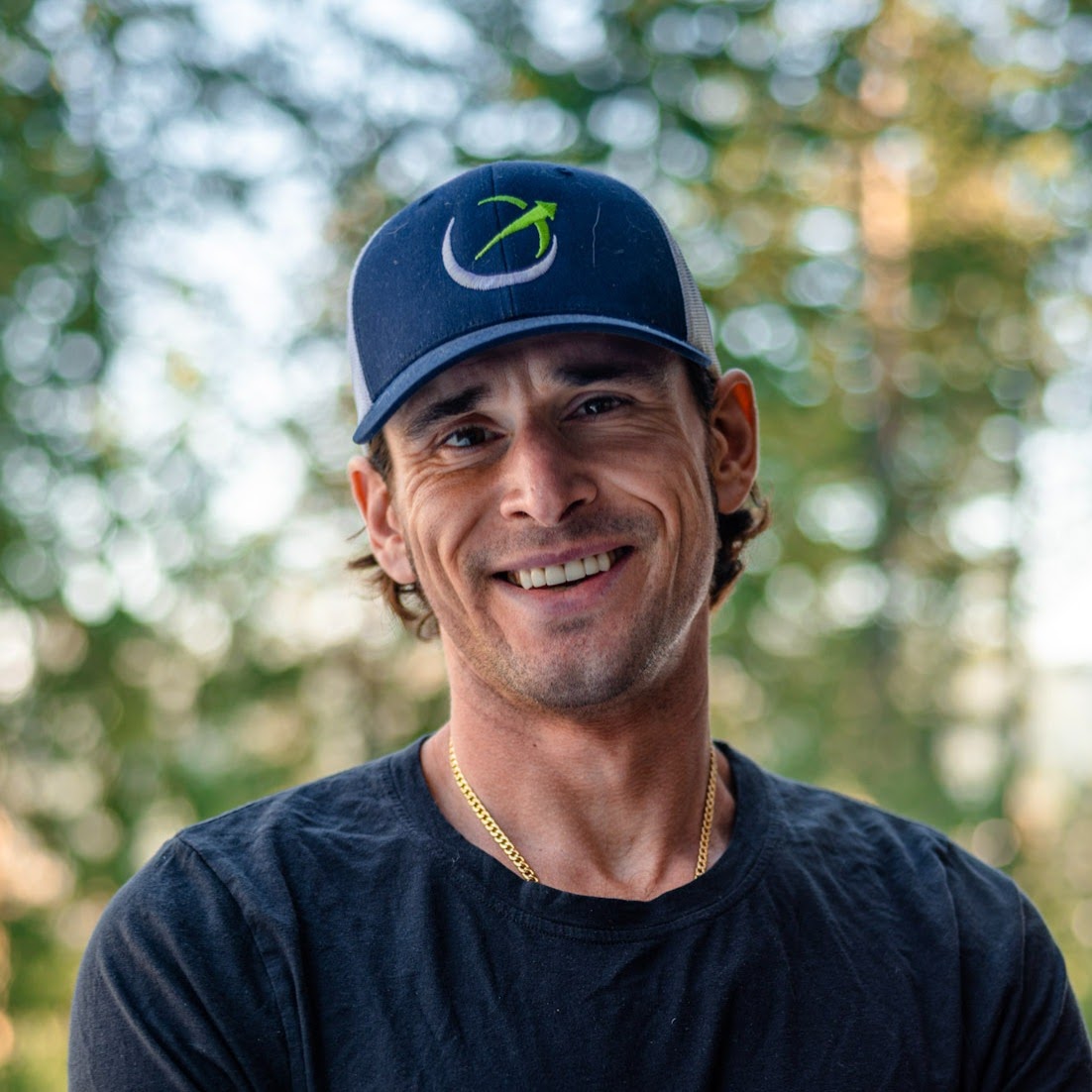
The 2026 Health Optimization Summit in London (Sept 11-13) features a new three-day format with a vetted 'Business of Health' day, plus Bear Grylls as a keynote speaker.
2
A novel, more affordable stem cell protocol (Dr. Toby's method) draws ~8-10M stem cells, lets them multiply via hormesis to ~200M in 4 hours, then re-infuses them, resolving Tim Gray's chronic tennis elbow.
3
Hydrogen inhalation via the Inhale H2 device (highest safe concentration) achieves full-body saturation equivalent to dozens of bottles of hydrogen water in 30 minutes, improving Tim's HRV and sleep by 8-10%.
4
Sulforaphane (from stabilized broccoli sprout extract) may mobilize microplastics from cells via Nrf2 pathway upregulation, offering a non-clinical detox method.
Protocols
Concrete recipes — what, when, how much, and why
6 items
Situational Supplement Selection
WhatChoose supplements daily based on environment, activity, and need rather than a fixed stack. Use muscle testing or intentional self-assessment.
WhenDaily, ideally morning, adjusting for travel, sickness exposure, sauna use, sun exposure, etc.
Dose5-6 supplements per day for Tim (down from 40-60). Ben uses specific items from a 50-bottle pantry as needed.
For whomAnyone with an existing supplement collection, especially those who have been on 'auto-pilot' for years without re-evaluating.
WhyPrevents liver stress and digestive issues from unnecessary chronic intake; matches input to actual demand.
CaveatsRequires knowledge of what each supplement does and when it's indicated. Beginners may lack this intuition.
The core principle is that rigid daily protocols become mindless habits. Tim cites Dr. Dom Nishwitz, who muscle-tests every supplement every day with his family, often taking only 2-3. Ben categorizes his supplements by use case: immune section (AHCC, beta-glucan, vitamin C, oil of oregano) with tiered intensity from whole-food vitamin C to injectable peptides. Methylene blue is reserved for days with significant sun exposure for mitochondrial support. Minerals are added only on heavy sauna days. This mirrors the way one wouldn't eat every food in the refrigerator daily. The risk of doing everything is not just financial but physiological—excessive supplement intake can become counterproductive by burdening the liver and digestion.
Personal experience
Ben injects thymosin alpha-1 before high-exposure travel/conference days, takes oil of oregano after swimming in suspect water, and uses beta-glucan when family members are sick. Tim used to take 40-60 pills, now takes 5-6.
I would say really look at what you need and question everything every day.
Also said
“When a habit becomes a habit and you don't even question why you do it.”— Encapsulates the behavioral trap this protocol addresses.
“You wouldn't eat every single food group in your refrigerator every day.”— Ben's analogy for supplement rotation.
Hydrogen Inhalation for HRV and Sleep
WhatInhale molecular hydrogen gas via a mask (Inhale H2 device) for full-body saturation.
WhenDaily, especially in urban environments with compromised air quality; can be used pre-sleep or post-exercise.
Dose30 minutes for full-body saturation, equivalent to dozens of bottles of hydrogen water.
For whomTim uses it in London for sinus congestion and general city-living oxidative stress. Ben uses it at home.
WhySelective antioxidant and anti-inflammatory; improves sinus clarity, breathing, vasodilation, and HRV, translating to 8-10% better sleep.
CaveatsHydrogen is explosive at high concentrations; the Inhale H2 device is specifically noted as having the highest concentration without risk of explosion.
Tim highlights hydrogen's selectivity—unlike broad antioxidants, it targets only the most damaging free radicals. The inhalation route achieves systemic saturation far faster and more efficiently than drinking hydrogen water or taking tablets. Tim subjectively reports clearer sinuses (which he struggles with in the city), better workouts, improved HRV due to better breathing and vasodilation, and an 8-10% sleep improvement quantified via his wearable. Ben notes that after speaking with the manufacturer, 30 minutes achieves what would require dozens of bottles of water. On the move, Tim uses an Echo hydrogen water flask or tablets as a portable alternative. The device is from Alex Tanava (Inhale H2).
Mechanism
Selective antioxidant: neutralizes hydroxyl radicals and peroxynitrite without affecting beneficial reactive oxygen species. Anti-inflammatory effects improve vasodilation and airway patency, enhancing oxygen delivery and heart rate variability.
Personal experience
Tim: 'My heart rate variability is always better whenever I use the H2 device... I'm breathing better, meaning that I'm more rested, more vaso dilation, and then sleep better as well as a result. So that kind of gives me about 8 to 10% better sleep.'
My heart rate variability is always better whenever I use the H2 device... I'm breathing better, meaning that I'm more rested, more vaso dilation, and then sleep better as well as a result.
Also said
“Within 30 minutes, you get full body saturation. That's kind of the equivalent of drinking like dozens of bottles of hydrogen water apparently.”— Ben's quantification of efficiency vs. water.
“I find that my sinuses and my workouts are better when I've used it quite significantly.”— Adds sinus and exercise benefits beyond HRV/sleep.
Dr. Toby's Hormetic Stem Cell Protocol
WhatBlood draw (~8-10M stem cells), store at cold temperature for 4 hours to trigger hormetic multiplication to ~200M, then re-infuse IV.
WhenAs needed for injury or degenerative conditions; Tim had it twice.
For whomPeople with musculoskeletal injuries, chronic pain, or seeking regenerative support. Tim used it for tennis elbow and hip issues.
WhyMassively amplifies autologous stem cells without culturing (legal issues) or donor cells (immune rejection), at ~$4-5K vs. $20-30K for equivalent cell counts.
CaveatsImmediate post-infusion flare-up of old injuries is normal and expected (inflammatory healing response). Offered by Dr. Toby—availability may be limited to clinics he operates in.
The protocol exploits hormesis—the principle that a mild stressor (cold storage) triggers a protective, proliferative response in stem cells. Dr. Toby's research, now published, confirmed pluripotency markers in the final mix and discovered a large fraction of cells smaller than 1 micrometer (below standard counter detection). Ben connects these to 'Muse cells,' a pluripotent sub-type with no immune rejection risk, high tissue-homing precision, and no carcinogenicity. Tim's experience: immediate flare-up of 6-month chronic tennis elbow and hip clicking post-infusion, which Dr. Toby explained as stem cells 'finding what's broken.' Resolution within 10 days. He's done it twice. This democratizes stem cell therapy because it avoids costly and legally restricted culturing, using only a blood draw and a fridge.
Mechanism
Cold stress (fridge storage) induces hormesis, triggering stem cells to enter a proliferative phase. The final re-infusion includes pluripotent cells and ultra-small sub-micron particles that may include Muse cells. No enzymatic manipulation or culturing is used, preserving natural signaling and avoiding regulatory barriers.
Personal experience
Tim: 'When he drew the blood out for me, he had 8 million stem cells came out and 186 went back in me... within 10 days, my tennis elbow that I've been fighting for six, seven months vanished.' Had the procedure twice.
Without any manipulation or enzymes or anything... you could draw out around 8 to 10 million and put back in about 200 million within 4 hours.
Also said
“As we're walking down the road to go for a steak after the clinic session, I said to him, 'I think I'm probably going to have to go back to my hotel because my hip's clicking and my tennis elbow from 6 months ago is flaring up really badly.' He said, 'No, this is completely fine.'”— Documents the counterintuitive initial flare as part of the healing cascade.
“He said my cell counter only sees cells from one micrometer and up. Apparently the mix has huge amounts of significantly smaller cells too.”— Reveals the hidden ultra-small cell fraction that may explain outsized efficacy.
PEMF for Injury, Relaxation, and Meditation
WhatUse a pulsed electromagnetic field (PEMF) device—low power for meditation/sleep induction, high power for muscle spasms and injuries.
WhenLow power: daily morning meditation or pre-sleep (can place under pillow). High power: as needed for cramps, spasms, or acute injury. Also post-flight for blood cell declumping.
DoseNot specified; Tim uses low-power Cellar 8 daily when in London, skipping it in natural environments.
For whomCity-dwellers, frequent flyers, those with chronic muscle tightness or acute injuries. Low-power for anyone wanting a non-pharmacological relaxation tool.
WhyImproves blood flow, reduces inflammation, depolarizes cells, stimulates osteoblastic activity (bone healing), mobilizes stem cells, and induces relaxation brainwave states.
CaveatsLow-power devices may have a perceived 'placebo' problem because the user doesn't feel a strong physical sensation, despite measurable effects. High-power devices are more immediately gratifying for acute issues. Ben prefers higher-power PEMF (PulseCenters, Hugo) for injuries because the palpable pulse confirms bioactivity.
Ben categorizes PEMF into two tiers. Low-power devices like Cellar 8 create a field measurable 6-8 feet away and are effective for subtle benefits: reduced red blood cell clumping (observable under dark-field microscopy), meditation support (a gentle pulse through a pillow), and daily use. However, because the sensation is subtle, users often doubt efficacy—an 'element of placebo.' High-power devices that produce audible/feelable pulses (Hugo, PulseCenters) are Ben's go-to for acute musculoskeletal issues: low back spasms, cramps, injury sites. Tim cites Bob Dennis (PEMF inventor) and a chicken bone study where PEMF accelerated bone regeneration significantly. Both agree the modality is underrated and part of a broader resurgence of electro-medicine. Grounding produces similar red blood cell declumping but PEMF is 'grounding on steroids.'
Mechanism
PEMF induces electrical changes in cell membranes, promoting depolarization and improved ion exchange. This enhances microcirculation, reduces red blood cell aggregation (Rouleaux formation), and stimulates osteoblasts via piezoelectric-like effects. Low frequencies can entrain brainwaves for relaxation, similar to meditation.
Personal experience
Tim meditates and journals with Cellar 8 daily in London, skips it in Tuscany. Ben uses high-power PEMF for low back spasms and observes red blood cell declumping under dark-field after use.
I find this again it comes back to the electro medicine side of things... after a 10-hour flight how my red blood cells are all clumped together when I look under a dark field microscope... and then you go grounding for an hour, you'll see how different your red blood cells are. Well, actually, I find the same from using a, you know, low frequency.
Also said
“If you're not twitching as as the machine's going off you don't think it's working and yet you can actually measure these things with a device to show that they they actually are.”— Addresses the placebo perception issue with objective measurement.
“Any muscle like let's say the low back that's in a cramped or spasmic state as soon as a higher power PMF... It is probably one of the top things in my toolbox for injuries, cramps, or spasms.”— Ben's tiered recommendation: high-power for acute musculoskeletal issues.
Hands-Free Vagal Nerve Stimulation (Pulsetto)
WhatWear a neckband device (Pulsetto) that delivers gentle electrical impulses bilaterally to the vagus nerve to induce calm.
WhenEvenings after overstimulating days, when wired but needing to wind down. Can be used during meditation or napping.
DoseNot specified; used as needed when feeling 'wired' on the sofa.
For whomPeople with high-stress urban jobs, difficulty winding down, or who prefer hands-free operation over manual devices like Truvaga.
WhyStimulates the parasympathetic nervous system via the vagus nerve, rapidly downregulating stress and promoting relaxation.
CaveatsMost historical vagal nerve stimulation studies used unilateral (one-ear) stimulation; Pulsetto stimulates both sides, which is a deviation from the studied protocol.
Tim highlights the transition from manual, single-ear devices to hands-free, bilateral stimulation. After a highly stimulated office day, when he feels 'wired' and restless, the Pulsetto induces calm rapidly. Ben adds that he pairs vagal nerve stimulation (via Hulest headphones with integrated neck nodes) with audio tracks like NuCalm on flights, describing the effect as 'like smoking a joint without smoking a joint—your whole body just kind of melts.' Both see electrical vagal stimulation as a powerful, non-pharmacological alternative to supplements or drugs for nervous system regulation. The consumer trend is toward wearables that don't require active hand-holding, enabling multitasking (meditation, napping, working).
Mechanism
Electrical stimulation of the vagus nerve (cranial nerve X) activates the parasympathetic nervous system via acetylcholine release, reducing heart rate, cortisol, and sympathetic tone. Bilateral stimulation may achieve broader activation, though most clinical evidence is for unilateral auricular branch stimulation.
Personal experience
Tim: 'After a really overly stimulated day in the office... I sit on the sofa and I'm still wired... I put on the Pulsetto, and it really does work. It gets me into a calm state pretty quickly.'
After a really overly stimulated day in the office... I sit on the sofa and I'm still wired and I don't want to sit down... I put on the Pulsetto, and it really does work. It gets me into a calm state pretty quickly.
Also said
“Most in fact the studies were done on vagal nerve stimulation from one side... but Pulsetto have said well actually... doesn't mean that you shouldn't actually stimulate both sides.”— Addresses the evidence base departure without dismissing efficacy.
Stem Cell Mobilization via StemRegen Supplement
WhatTake StemRegen, an oral capsule supplement, to mobilize endogenous stem cells from bone marrow.
When5-6 days per month, cycled with breaks (not year-round continuous use).
DoseNot specified beyond frequency: 5-6 days/month, with full months off between cycles.
For whomThose curious about stem cell therapy but not ready for invasive procedures like Dr. Toby's protocol.
WhyNaturally increases circulating stem cells without injections or blood draws; a lower-barrier entry to stem cell benefits.
CaveatsNot a replacement for concentrated stem cell therapy (e.g., 200M cells IV). Should be cycled, not taken continuously.
Tim positions StemRegen as a gentle entry point—a way to 'dip your toe' into stem cell support. He takes it 5-6 days per month, with months off, drawing a parallel to Ben's earlier point about peptide cycling. It's an exhibitor at the summit, suggesting growing commercial presence. The concept aligns with the broader theme of endogenous optimization rather than exogenous replacement.
Mechanism
Mobilizes hematopoietic and mesenchymal stem cells from the bone marrow niche into peripheral circulation, where they can home to damaged tissue.
Personal experience
Tim: 'I find stem regen to be awesome.' Uses it 5-6 days a month in cycles.
One of the brands that I really rate that I take probably five or six days a month is stem regen. So that's a a natural supplement that helps you mobilize your own stem cells from your bone marrow.
Also said
“I think it should be you know you do five days a week... and then probably three three weeks a month and then have a couple of months off.”— Specifies cycling protocol, mirroring peptide cycling philosophy.
What's new
Personal practice updates, fresh positions, predictions
6 items
Microplastics in the brain
Recent findings suggest the average person has as much plastic in their brain as 2-3 credit cards, sparking a massive surge in public interest in detoxification methods.
Why this matters: This visual quantification (credit cards) makes microplastic accumulation viscerally alarming, driving demand for solutions from blood filtration to dietary binders.
Background
Prior discourse framed microplastics mainly as an environmental or gut issue. The new brain-deposition angle elevates the urgency, compelling people to consider more invasive interventions.
Tim notes that since the Netflix documentary aired, public awareness has 'gone wild,' with major brands like Lululemon and Nike being called out for 100% plastic clothing. He sees a wave of content creators and companies pivoting to microplastic solutions. Traditional methods like sauna and exercise-induced sweating are baseline, but Tim argues that with this level of exposure, more aggressive clinical filtration (plasmapheresis) is warranted. He is flying to a new Zurich clinic that combines plasmapheresis with hyperthermia and stem cells, suggesting a rising clinical niche for combined detox-replenishment protocols. Simultaneously, food-based binders like kimchi are being explored for gut-level binding, though the mechanism is still under investigation.
Personal experience
Tim is scheduled to visit a new clinic in Zurich for plasmapheresis combined with hyperthermia and stem cell treatments for toxin removal.
People have as much plastic in their brain these days because of all the microplastics as two or three credit cards in terms of the amount of plastic which is nuts when you think about it.
Also said
“I think when there's that level of exposure or in your body, it's probably best to get something done like inferesis or the blood filtering...”— Shifts the recommendation from passive sweating to clinical intervention based on severity.
“I heard yesterday that kimchi specifically is really good at binding microplastics in the gut.”— Introduces a low-cost, accessible dietary binder strategy alongside high-cost clinical solutions.
Sulforaphane mobilizes microplastics out of cells
Ongoing research indicates that sulforaphane upregulates the Nrf2 pathway, mobilizing plastics from outside the gut into feces.
Why this matters: Represents a non-invasive, supplement-based strategy to systemically reduce plastic body burden, contrasting expensive blood filtration.
Background
Nrf2 activation was a hyped concept 5-6 years ago (often via unstable broccoli sprout juice). New stabilization methods from companies like Broccolite (US) and a French firm make it viable again.
Ben relays a conversation with a sulforaphane researcher about an upcoming study. The mechanism is distinct from gut-only binders; it upregulates Nrf2 to mobilize plastics already embedded in tissue, then excretes them fecally. This is significant because most binder strategies (charcoal, clays, kimchi) only address what's in the GI tract. If confirmed, it offers a systemic detox without apheresis. The key hurdle was sulforaphane instability, now solved by new stabilized formulations, making this a 'one to keep an eye on.'
The upregulation of the Nrf2 pathway by sulforaphane... was mobilizing plastics out of cells, not just in the gut, and then allowing for them to pass out via the feces, which is super interesting.
Also said
“Now there's companies... that have kind of figured out how to stabilize sulforaphane to allow for better upregulation of that so-called master antioxidant pathway.”— Explains why this old concept is newly viable (stability).
Dr. Toby's stem cell multiplication via hormesis
Drawing 8-10 million stem cells, storing them for 4 hours, and re-infusing ~200 million without culturing or enzymes, using hormetic stress to trigger multiplication.
Why this matters: Democratizes stem cell therapy by getting ~200M cells from a simple blood draw, reducing cost from ~$20-30K to $4-5K.
Background
Traditional stem cell therapy relies on culturing (often illegal or expensive) or harvesting from bone marrow/fat. This method uses whole blood, a short fridge incubation, and exploits the body's natural hormetic response to stress.
Tim first encountered Dr. Toby, a Swedish handball player, at the Superhuman event in Stockholm. Toby noticed that stem cell counts in stored blood samples increased overnight. The mechanism: drawing blood, spinning it, and storing it at cold temperature for ~4 hours stresses the cells via hormesis, causing them to multiply without any enzymatic manipulation or culturing (which avoids legal issues). Tim's personal draw yielded 8M out, 186M back in. Initially, his chronic tennis elbow and hip clicking flared up immediately after re-infusion (an inflammatory healing response), but within 10 days, the six-month tennis elbow vanished and hip clicking stopped. He's had it done twice and feels 'fantastic.' The published findings show pluripotency markers and a huge fraction of cells smaller than 1 micrometer that standard counters missed—Ben speculates these may be related to 'Muse cells,' a sub-type known for high regenerative capacity and no immune rejection.
Personal experience
Tim flew to see Dr. Toby. His draw: 8M out, 186M back. Immediate flare-up of old injuries (tennis elbow, hip), then complete resolution of 6-month tennis elbow in 10 days. Had the procedure twice.
When he drew the blood out for me, he had 8 million stem cells came out and 186 went back in me... within 10 days, my tennis elbow that I've been fighting for six, seven months vanished.
Also said
“Without any manipulation or enzymes or anything to not culturing the stem cells because that's obviously illegal. But you could draw out around 8 to 10 million and put back in about 200 million within 4 hours.”— Clarifies the legal and practical breakthrough—no culturing, yet massive yield.
“He said my cell counter only sees cells from one micrometer and up. Apparently the mix has huge amounts of significantly smaller cells too.”— Suggests the presence of an ultra-small cell fraction (possibly Muse cells) that adds to the potency, connecting to Ben's later Muse cell discussion.
Mainstreaming of peptides and GLP-1s
GLP-1 agonists (Ozempic, etc.) have normalized peptide use, causing a surge in other research peptides (BPC-157, TB-500) but also rampant quality and education problems.
Why this matters: The peptide market is described as 'early day crypto'—a regulatory free-for-all with products frequently failing purity tests, yet influencer marketing is ubiquitous.
Background
Peptides were niche regenerative compounds. GLP-1s brought peptides to the mainstream, opening the door for others but also attracting unregulated, China-sourced products that often lack active ingredient.
Tim gets 3 pitches per week to advise/invest in peptide companies, mirroring the crypto boom. The issue: many products sold 'for human research only' fail lab tests for purity, yet influencers aggressively promote them with affiliate codes—a practice technically illegal if they give prescriptive advice. Ben adds that sterility and consumer injection technique are additional problems, plus a near-universal need to cycle peptides to avoid receptor saturation (e.g., thymosin alpha-1 loses efficacy with continuous use). Both expect pharma to soon enter the space with FDA-assured quality, crowding out poor manufacturers. The NAD pen (preloaded subcutaneous injection pen) is an example of consumer-friendly innovation reducing needle aversion.
Personal experience
Ben cycles peptides like thymosin alpha-1 and describes specific contexts for each (travel, sickness, sauna days) rather than daily use.
It's kind of like early day crypto. It's a free-for-all. Everyone's running to grab the brand. The manufacturing process isn't necessarily as trustworthy as it should be.
Also said
“A lot of stuff that was tested didn't even have any of the peptide that it claimed to have in it.”— Quantifies the quality crisis—empty vials are common.
“I think what's going to be long before they start saying well actually we're going to start bringing out some of these other compounds ourselves and doing it properly which then you have the FDA assurance of the quality compared to some Chinese lab.”— Predicts pharmaceutical entry as a market correction.
Health Optimization Summit 2026 format evolution
The summit expands to three days, adding a curated 'Business of Health' Friday for investors, influencers, and brands, plus a 'Gym of the Future' and on-site full-body MRI.
Why this matters: Reflects the 30-40% growth of the health optimization industry, moving from consumer festival to a professional/business trade show hybrid.
Background
Previous summits were weekend consumer expos. The space's growth (fueled by figures like Gary Breka, Bryan Johnson, MAHA movement) created demand for a B2B day and more immersive consumer experiences.
Friday is vetted for business purposes only (~700 attendees vs. 4,500 on weekend) to prevent hallway crowding and allow deal-making. Features include a Shark Tank-style investor pitch session (past winner: oral microbiome testing company), scaling workshops, and a headliner they can't yet announce. Weekend additions include a full-body MRI trailer at ~30% below market rate (Tim's 76-year-old mom got scanned and 'is in better shape than me'), and the 'Gym of the Future' showcasing recovery tech expected to become standard in gyms—including a hyperbaric chamber with exercise equipment. Keynote Bear Grylls is a first-time speaker at a hacking event.
Personal experience
Tim can't walk 3 meters at his own show without being stopped, motivating the lower-density business day for actual networking.
I this year for London, I decided to create the first ever three-day format, which is the Friday is the business of health.
Also said
“We're going to have full body MRI screening outside... about 30% of the price that most full body MRIs charges.”— Concrete consumer benefit making advanced diagnostics accessible.
“I want to build the gym of the future. I want to have the technologies, recovery things, everything in one place so that you could expect to see in a gym soon.”— Positions the expo as a preview of coming mainstream gym trends.
Context-dependent biohacking vs. fixed protocols
Both Tim and Ben have moved away from daily, fixed supplement stacks toward adaptive, environment-responsive protocols—using nature when possible, tech when necessary.
Why this matters: Represents a maturation away from the 'more is better' biohacker stereotype toward intentional, minimalist intervention based on context.
Background
Early biohacking culture (7-8 years ago) encouraged 40-60 supplements daily. The pendulum swings back to questioning necessity each day, using muscle testing or zip-code-based decisions.
Tim realized in Tuscany how little tech he used—just Mediterranean food, walking, grounding. In London, he relies on many devices and supplements to counter urban stressors. Ben's approach: a pantry of 50+ supplements, but each deployed situationally (oil of oregano after swimming in questionable water, beta-glucan when family is sick, methylene blue on sunny hike days, minerals on heavy sauna days). This reframes supplements as a toolkit rather than a daily regimen. The risk for newcomers to the health space is doing everything at once and stressing the liver, a caution beyond just wasted money. The Whole Foods example—vitamin C sachets displayed on top of fresh oranges—symbolizes the perverse incentive: the packaged product with claims wins over the whole food without a label.
Personal experience
Tim takes 5-6 supplements now vs. 40-60 seven years ago. Ben treats his supplement pantry like a refrigerator—choosing items based on daily needs, not habit.
I think the problem is... many new people are coming into the space... they're just doing more and more and more and adding in and then taking 30 40 50 supplements a day and stressing their liver and then ruining their digestion.
Also said
“I realized how little biohacking I actually did... sitting on the beach having you know Mediterranean food walking grounding and I realized how much tech I relied on.”— Personal anecdote showing nature reduces need for biohacking tech.
“I would say really look at what you need and question everything every day.”— The core behavioral shift Tim recommends—daily intentionality over autopilot.
Recommendations
Products, supplements, and tools mentioned in the episode
5 items
Cellar 8 PEMF Device
Tool
A compact, low-power pulsed electromagnetic field device with controller and optional mat. Used for daily meditation, sleep induction (can be placed under pillow), and general energetic support. Manufacturer: talks by founder Andy.
Tim uses it every morning while meditating and journaling when he's in London; he skips it when in natural environments like Tuscany, reinforcing his context-dependent protocol. He describes the subtlety: you can feel a very slight contraction, but mostly it's below the perceptible threshold, raising a placebo question he explored with the founder. Andy demonstrated with a measurement device that the field extends 6-8 feet. Ben endorses it for travel—he puts the controller behind his lower back on flights or under a pillow in sleep mode. He distinguishes it from high-power PEMF (which he reserves for injuries), framing the Cellar 8 as a daily wellness/maintenance tool.
vs alternatives
vs. High-power PEMF (Hugo, PulseCenters): lower subjective sensation but more portable and suitable for daily/maintenance use. vs. Grounding: more powerful ('grounding on steroids').
Personal experience
Tim uses it daily in London for meditation. Ben uses it during travel (airplane lower back, hotel sleep mode).
I meditate, journal, whatever every morning with it when I'm in the city. Obviously I don't need it when I'm on the beach or in Tuscany.
Also said
“You can actually feel a little bit of the contraction coming out of it. Very very slightly.”— Addresses the tactile feedback question—it's subtle but present.
A hands-free, neck-worn device that delivers bilateral vagus nerve stimulation for rapid calming. Exhibitor at the Health Optimization Summit.
Pulsetto differentiates by stimulating both sides of the neck (cervical vagus), whereas most research-backed devices stimulate the auricular branch on one ear. Tim was initially skeptical but found it highly effective after overstimulated work days when he's 'wired' and can't settle. He notes it induces calm quickly. Ben uses a similar integrated device (Hulest headphones with neck nodes) combined with NuCalm audio tracks, especially on flights, describing the synergy as deeply relaxing. Both endorse the hands-free format as a usability breakthrough over manual devices like Truvaga that require active holding.
vs alternatives
vs. Truvaga/ear-clip devices: hands-free, bilateral stimulation. vs. NuCalm/audio-only: adds electrical stimulation for faster parasympathetic activation.
Personal experience
Tim: 'I put on the Pulsetto, and it really does work. It gets me into a calm state pretty quickly.'
I put on the Pulsetto, and it really does work. It gets me into a calm state pretty quickly.
Also said
“It's like smoking a joint without smoking a joint. Your whole body just kind of melts, relaxes.”— Ben's vivid description of vagal stimulation experience (on a similar device), reinforcing category efficacy.
An oral capsule supplement that mobilizes endogenous stem cells from bone marrow. Exhibitor at the Health Optimization Summit. Tim takes it 5-6 days per month with cycling breaks.
Tim recommends it as a non-invasive alternative for those interested in stem cell benefits but unwilling or unable to do blood draws and re-infusions. He compares it to the $4-5K Dr. Toby protocol, framing it as the accessible entry point. The cycling protocol mirrors the peptide cycling philosophy: don't use continuously. He finds it 'awesome' and incorporates it into his monthly rhythm.
vs alternatives
vs. Dr. Toby's protocol: far lower stem cell numbers, non-invasive, likely much less expensive. A maintenance/dipping-toe approach vs. therapeutic megadose.
Personal experience
Tim takes StemRegen 5-6 days a month in cycles with full months off. Reports it as 'very good.'
One of the brands that I really rate that I take probably five or six days a month is stem regen. So that's a a natural supplement that helps you mobilize your own stem cells from your bone marrow.
Also said
“If it is something that you do want to dip your toe into the water with but not necessarily have your blood drawn and have hundreds of millions of stem cells put back in, stem regener is a really good one.”— Positions it on the risk/reward spectrum vs. clinical treatments.
A high-end wellness bed (~$150K) that creates a 30,000-volt static electricity field combined with grounding for 'hyper-grounding.' Uses cold atmospheric plasma technology. Available at the summit for demos.
Tim describes it as the kind of device found 'on yachts and in Monaco'—aspirational and expensive but with compelling anecdotes. One user reported warts disappearing after 5 consecutive days when nothing else worked. The mechanism is described as 'hyper-grounding'—flooding the body with free electrons via the static field while the user is grounded, creating a massive electron sink. Ben has used it at previous summits and confirms it 'resets your nervous system for sure' and 'definitely pushes the reboot button' during a busy expo day. Tim connects its effectiveness to his own tendency to get cold sore breakouts after 3 nights of poor sleep, implying the immune-modulating effect is robust enough to prevent stress-induced viral reactivation.
vs alternatives
vs. Standard grounding mats/earthing: far more powerful due to the 30,000V field. vs. Other PEMF/electro-medicine: different mechanism (static field + plasma vs. pulsed electromagnetic).
Personal experience
Ben has laid on it at previous summits and confirms nervous system reset. Tim has not used it extensively but knows people who report dramatic wart resolution.
When you're on the the med bed... you are grounded and then in a 30,000 volt static electricity field which is essentially almost like hyper grounding.
Also said
“I remember one person telling me that they had had... warts all over their hands for years... and then did human regenerator 5 days in a row and for the first time they started vanishing.”— Anecdotal evidence of dramatic dermatological/immune effects.
A consumer-friendly NAD+ injection system using a dial-up pen (similar to growth hormone pens) preloaded with NAD, eliminating the need for reconstitution and manual syringe drawing. Unnamed brand, exhibitor at summit.
Tim describes this as addressing the needle-aversion and complexity barrier for the growing health-conscious-but-not-hardcore consumer market. Traditional NAD+ requires vials, sterile water reconstitution, and insulin syringes—a multi-step process that's intimidating. The pen format: dial the dose, inject, and carry in an ice pack. Ben contextualizes this within the broader peptide/NR trend toward consumer-friendly delivery (also seen in at-home blood draw patches like Tasso). This makes daily subcutaneous NAD+ as easy as an insulin pen for diabetics, potentially expanding the market significantly.
vs alternatives
vs. Traditional vial-and-syringe NAD+: eliminates reconstitution step, dose measurement, and needle anxiety. vs. IV NAD+: no clinic visit, lower cost, daily home use possible.
People are developing pens that you dial them up like the typical FISA growth hormones where you dial up the dose and then you use it with a fresh pin every day... you just use it a pen that you can carry around with you in an ice pack.
Also said
“I think the general consumer that are now becoming more health conscious aren't quite such a fan of having needles in them. So everyone's thinking of all these fancy ways to draw blood or get these compounds into you.”— Market rationale for the pen innovation.
Annual health optimization and longevity conference in London, expanded to a three-day format (Sept 11-13, 2026). Friday is a vetted 'Business of Health' day; Saturday-Sunday is the main expo with 4,500+ attendees, keynotes (Bear Grylls), gym of the future, full-body MRI, and 30-40% more vendors than last year.
DisclosureTim Gray is the founder and CEO. Ben Greenfield promotes it with a discount code at bengreenfieldlife.com/tim2026, benefiting listeners with a registration discount.
Tim frames the summit's evolution as a response to a 30-40% industry growth driven by mainstream figures (Gary Breka, Bryan Johnson) and movements (MAHA, Blue Zones). The new Friday format separates business deals from consumer traffic—limited to ~700 vetted attendees including investors, influencers, and brands. Saturday-Sunday maintain the high-energy consumer expo but with enhanced immersive experiences: full-body MRI at 30% below market rate, a 'Gym of the Future' with hyperbaric workout chambers and recovery tech, and more lounge/breakout spaces. Past Shark Tank winner Victoria Sampson's oral microbiome company and a teen mental health app both scaled post-summit. Ben calls it 'one of the if not the best health event of the year.'
vs alternatives
Positioned as the UK's premier health optimization event, 5-7 years ahead of UK gym trends. Comparable to A4M but more consumer-facing and Europe-based.
Personal experience
Ben has attended multiple years and considers it a top annual event. Tim notes he can't walk 3 meters at his own show without being stopped, motivating the business day innovation.
I consider it to be one of the if not the best health event of the year that I attend.
Also said
“We're going to have full body MRI screening outside... about 30% of the price that most full body MRIs charges.”— Concrete value proposition for attendees.
A hydrogen gas inhalation mask device delivering the highest safe concentration of H2 without explosion risk. Used for 30 minutes for full-body saturation providing antioxidant, anti-inflammatory, sinus-clearing, HRV-improving, and sleep-enhancing effects.
DisclosureAlex Tanava is described as a 'mutual friend' of both Tim and Ben.
Tim uses it to combat London air quality issues, specifically sinus congestion that isn't fully resolved by decongestant sprays (which can't be used continuously). He quantifies an 8-10% sleep improvement based on wearable data, which he attributes to better breathing mechanics and vasodilation from H2. Alex flew devices to Tim's Corfu retreat for a recovery lounge. Ben owns the device and confirms the safety claim—it operates at the highest concentration achievable without hitting the explosive threshold. For travel, Tim uses Echo hydrogen water flasks or tablets as portable alternatives.
vs alternatives
vs. Hydrogen water: inhalation achieves full-body saturation in 30 minutes equivalent to 'dozens of bottles of water.' vs. Tablets: more potent and faster-acting, but less portable.
Personal experience
Tim: 'My heart rate variability is always better whenever I use the H2 device... that kind of gives me about 8 to 10% better sleep.' Sinuses become clearer; workouts benefit. Ben owns and uses the device at home.
It's the highest concentration of hydrogen you can inhale without risk of explosion.
Also said
“Within 30 minutes, you get full body saturation. That's kind of the equivalent of drinking like dozens of bottles of hydrogen water.”— Efficiency comparison to oral hydrogen.
Lines worth pulling out — contrarian, specific, or perfectly phrased
5 items
People have as much plastic in their brain these days because of all the microplastics as two or three credit cards in terms of the amount of plastic which is nuts when you think about it.
Visceral, concrete image that crystallizes the microplastic problem in a way raw data can't. Drives home why aggressive intervention might be needed.
When a habit becomes a habit and you don't even question why you do it.
Concise critique of unexamined supplement routines—a trap Tim sees many biohackers (and newcomers) falling into. Applies far beyond supplements.
It's kind of like early day crypto. It's a free-for-all.
Aptly frames the peptide industry's current state: hype, speculation, regulatory gaps, fraud, and massive opportunity. Both a warning and a prediction of eventual maturation.
I can't imagine sitting on the beach with a red light device.
Humorously captures the absurdity of taking biohacking tech into natural environments where it's unnecessary—a self-aware critique of the optimization mindset.
It's like smoking a joint without smoking a joint. Your whole body just kind of melts, relaxes.
Ben's vivid description of vagal nerve stimulation's effect—accessible, experiential, and memorable. Sells the modality without medical jargon.
Sign in to share feedback
Tell us if this brief hit the mark or missed it — feedback feeds back into the next iteration of the prompt.
Reading is free for everyone. A free account adds the personal layer: save protocols, follow experts, and see how the other experts weigh in on this same topic.
Educational summary of the cited expert source — not medical advice. Open the source recording linked above and consult a qualified physician before acting on any protocol.