UNFUCG
DashboardSearchChatBookmarksNotificationsActivityPremiumProfile
?
Home
Search
Chat
Saved
Profile
Episode
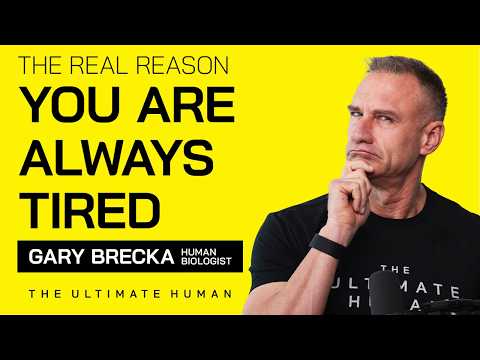
How to Increase Productivity Naturally Without Coffee or Stimulants | TUH #196
~10 min
Episode Brief·YouTube

How to Increase Productivity Naturally Without Coffee or Stimulants | TUH #196

Gary Brecka
Watch on YouTube Add to chat My bookmarks← All sources

TL;DR

The four things you'd lose by not watching

4 items

TL;DR

The four things you'd lose by not watching

4 items
1

Sustainable productivity comes from syncing with your body's circadian and ultradian rhythms, not from forcing energy with caffeine or willpower.

2

Start your day with 24 oz of filtered water with a pinch of Baja Gold salt and lemon, 5 minutes of outdoor sunlight, and delay coffee until after a high-protein, high-fat, low-carb breakfast.

3

Use the 90-15 method: 90 minutes of single-task deep work on your most important creative tasks, then 15 minutes of screen-free recovery (walk, stretch, breathe) to reset attention and neurotransmitters.

4

Prioritize 7–8 hours of sleep, stop eating 2–3 hours before bed, wind down with dim lights and no screens, write down the next day's three top tasks, and keep your personal 'why' visible to anchor motivation.

Protocols

Concrete recipes — what, when, how much, and why

8 items

Morning Activation Protocol

WhatUpon waking: drink 24 oz filtered water with a pinch of unrefined salt (Baja Gold) and a squeeze of lemon; get 5 minutes of outdoor sunlight on the eyes; then have coffee only alongside a high‑protein, high‑fat, low‑carb breakfast (pasture‑raised eggs, grass‑fed butter, collagen, avocado).
WhenImmediately upon waking, before any other ingest or screen time. Coffee delayed until after hydration, sunlight, and food.
DoseWater: 24 oz with pinch of salt and lemon juice. Sunlight: minimum 5 min. Breakfast: high‑protein, high‑fat, low‑carb meal; no specific calorie count but emphasizes pasture‑raised eggs, grass‑fed butter, collagen, avocado.
For whomAnyone seeking sustained morning energy and cognitive clarity; especially those who habitually drink coffee on an empty stomach.
WhyRehydrates and replenishes electrolytes lost overnight; anchors circadian rhythm with early light to set dopamine and cortisol rhythms; delays caffeine to prevent a dehydrated, fasted state that spikes cortisol without blood‑sugar support.
CaveatsUse unrefined salt (e.g., Baja Gold) to get trace minerals; if sensitive to FODMAPs, adjust lemon; sunlight must be outdoors, not through a window; breakfast composition is a suggestion—stable blood sugar is the goal.

Brecka walks through the common mistake of reaching for coffee first thing, explaining that after a night of sleep the body is naturally dehydrated and caffeine acts as a diuretic, compounding that dehydration. He frames the morning as your 'cognitive prime'—the period when your brain is sharpest—and insists it should be reserved for deliberate activation, not passive scrolling or caffeine dependence. The protocol is a sequence that builds on itself: hydrate and mineralize first, then use sunlight to tell the brain it's daytime and trigger the right neurochemical cascade, then finally add coffee as a complementary boost alongside a meal that prevents blood‑sugar crashes. He ends by noting that this sets up the entire day's productivity, and skipping any step leaves you vulnerable to brain fog and energy dips.

Mechanism

Morning light activates the suprachiasmatic nucleus, signaling daytime alertness and aligning the cortisol awakening response and dopamine peak. Water with electrolytes restores blood volume and neural conduction. Pairing coffee with a high‑fat, high‑protein meal buffers blood sugar and avoids an isolated caffeine‑driven stress response, maintaining stable mental energy.

Start your day with 24 ounces of filtered water, a pinch of unrefined salt like Baja Gold, and a squeeze of lemon. This replenishes electrolytes, hydrates your brain, and jumpstarts your metabolism. Then, get outside and expose your eyes to natural sunlight. Just five minutes helps anchor your circadian rhythm.

Also said
“Then, and only then, have your coffee. Pair it with a high protein, highfat, low carbohydrate breakfast. Think pasture-raised eggs, grass-fed butter, and a scoop of collagen, maybe an avocado. That's a meal that supports stable blood sugar and clear mental focus.”— Completes the protocol with the precise condition for coffee and the recommended food composition.
“Most people wake up and reach for the coffee before they do anything else. Big mistake. You're waking up dehydrated and the caffeine, which is a diuretic, is only making things worse.”— Directly explains why the habit of coffee-first undermines energy and why the protocol's ordering matters.

90-15 Deep Work Cycle

WhatWork in a fully focused, single‑task block for 90 minutes, followed by a 15‑minute screen‑free recovery break. Repeat throughout the workday.
WhenDuring cognitive prime windows—typically morning and early afternoon—aligned with ultradian peaks. Use the break immediately after the 90‑minute work block expires.
Dose90 min work; 15 min break. Breaks can also be taken every 60–90 min as a guideline.
For whomAnyone doing cognitive work, especially creatives, strategists, and knowledge workers seeking sustained output without burnout.
WhyAfter ~90 min of intense focus, the brain depletes attention neurotransmitters and performance declines. The break allows neurotransmitter resynthesis, metabolic waste clearance, and mental reset for the next sprint.
CaveatsThe break must be non‑digital—no social media, email, or screens, as those prolong cognitive fatigue. Walking, stretching, box breathing, or mobility work are recommended.

Brecka introduces the ultradian rhythm as a biological reality often ignored in modern work culture. He notes that many people push through fatigue, driven by stress or caffeine, but hit a point of 'cognitive erosion' where effort yields diminishing returns. The 90‑15 method is his antidote: by respecting the brain's natural limit and inserting intentional, active recovery, you can sustain high output across an entire day without the afternoon crash. He contrasts this with the common 'break' of scrolling social media, calling it a 'dopamine fatigue' that tricks the brain into feeling busy while still draining resources. The protocol is also tied to the earlier point about deep, single‑task work—those 90 minutes are meant for one priority task, not fragmented multitasking.

Mechanism

During deep work, dopamine and acetylcholine sustain focus and memory encoding. Their gradual depletion after ~90 min leads to attentional drift and increased error rates. A physical, non‑cognitive break reduces prefrontal cortex load, promotes parasympathetic activity, and allows replenishment of these neurotransmitters, restoring capacity for the next cycle.

Implement the 9015 method. 90 minutes of intense work followed by 15 minutes of recovery. Use that break wisely. Step outside, stretch, breathe, and reset. That's how you build sustainable productivity throughout the day.

Also said
“After about 90 minutes of focused work, your brain needs a reset. Studies have confirmed that pushing beyond that leads to diminished returns. Your attention declines, your error rate climbs, and your brain starts burning through neurotransmitters like dopamine and acetylcholine.”— Explains the biological cost of ignoring the ultradian limit and why pushing through is counterproductive.
“Avoid digital distractions, too. Scrolling Instagram doesn't count as a break. It's a dopamine fatigue. Instead, step outside, practice box breathing, or do some mobility drills.”— Clarifies the crucial distinction between a true recovery break and a pseudo‑break that still taxes the brain.

Single-Tasking Deep Work Immersion

WhatBlock out uninterrupted time for a single, clearly defined task. Turn off all notifications, close other tabs/apps, and work in a clean, dedicated space. At the start of the day, list your three most important tasks and sequence them during your cognitive peaks.
WhenDuring the deepest cognitive prime windows (first few hours after waking) and additional blocks scheduled around ultradian peaks.
DoseOne task per block. Blocks can be 90 min but the principle is undivided attention. Three most important tasks per day.
For whomAnyone whose work requires complex thinking, writing, analysis, or creative output. Especially those who feel 'busy but ineffective' due to constant interruptions.
WhyThe brain incurs a switching cost every time it toggles tasks; single‑tasking eliminates that cost and enables the flow state needed for creativity, strategy, and high‑quality execution.
CaveatsRequires discipline to prevent self‑interruption. Expect initial discomfort if accustomed to multitasking. Use a timer if needed.

Brecka is unequivocal: 'Multitasking is a myth.' He explains that the brain doesn't do two things at once—it rapidly switches, and each switch degrades focus and productivity. Citing Stanford research, he notes that chronic multitaskers become more distractible and less efficient over time. His solution is deep work: a state of complete immersion on a single outcome. He paves the path with actionable steps: write down the day's three most important tasks, break them down into clear steps, align them with your cognitive peaks (morning or whenever clarity is highest), and then execute without partial effort. The workspace protocol and 90‑15 method serve as the physical container for this deep‑work practice. By eliminating interruptions and cognitive toggling, you reclaim the brain's full capacity.

Mechanism

Task‑switching forces the prefrontal cortex to drop one mental model and load another, consuming working memory and metabolic energy. Sustained single‑task attention allows neural networks to stabilize and operate in a low‑friction state, enhancing performance and reducing mental fatigue.

Create blocks of undisturbed time. Turn off notifications. Shut your door. One tab open. One task, one outcome.

Also said
“At the start of each day, write down your three most important tasks. Break them into actionable steps. Align them with your cognitive peaks, those windows of clarity in the morning or in the afternoon. Then execute with focus, not partial effort. Go allin.”— Provides the full daily planning ritual that feeds the single‑tasking session.
“Your mind performs best when it's fully immersed in a single task. That's called deep work, and it's where creativity, strategy, and execution live.”— Connects the behavioral protocol to the mental state that produces high‑value work.

Workspace Environment Optimization

WhatClear your desk of clutter, let in natural light, add a plant, open a window, and change out of pajamas or sleepwear. Use peppermint or rosemary essential oils to boost alertness. The workspace should signal to your brain that it’s time for focus.
WhenAt the start of the workday and maintained throughout. Make it a daily reset ritual.
DoseNo specific time, but a consistent clean‑start habit. Scent use can be a drop of essential oil on a diffuser or pulse point.
For whomRemote workers, anyone with a dedicated desk, or those struggling to 'switch on' at home. Especially relevant for those who work from bed or in pajamas.
WhyThe brain scans the environment for cues; a cluttered, dim, or ‘rest‑mode’ space (working from bed in pajamas) keeps the brain in a non‑alert state and raises cortisol. Conversely, a clean, bright, nature‑accented space cues alertness and calm focus.
CaveatsChanging clothes might seem symbolic, but Brecka emphasizes the neurological signal. Natural light is key—supplement with full‑spectrum lighting if no window. Scent preferences are individual; peppermint and rosemary are specifically cited for memory and alertness studies.

Brecka details how the brain is constantly scanning for environmental cues that tell it whether to be in rest or performance mode. Working from bed or staying in pajamas sends a 'rest' signal, creating a conflict with work demands and raising background stress. He advises clearing the workspace so that the only cue is focus, adding a plant for mood elevation, and using scents like peppermint or rosemary as proven facilitators of alertness and memory. Even opening a window to change air quality and temperature is recommended. He frames these micro‑adjustments as 'rewiring your brain into productivity mode.' The overall message is that your environment is not passive—it either drains or boosts your cognitive performance.

Mechanism

The brain’s reticular activating system is sensitive to environmental novelty and order. A decluttered, bright space reduces cognitive load from visual distraction. Natural light reinforces circadian timing, and plant exposure may lower stress markers. Olfactory input (peppermint/rosemary) can stimulate the limbic system and increase noradrenergic activity linked to alertness and memory.

Clean your workspace. Let in natural light. Add a plant for mood elevation. Even open your window. Just change your clothes. Even if you're working from home, these signals are proven to rewire your brain into productivity mode.

Also said
“Your brain is constantly scanning for environmental cues. So, if you're working from bed, your mind stays in rest mode, but you're in work mode. If you're in pajamas, it assumes it's off duty. If your desk is cluttered, your cortisol climbs.”— Explains the psychological mechanism behind why each element matters, tying clutter to cortisol.
“Even scents matter. Try peppermint or rosemary. Essential oils that are both shown to boost alertness and memory. Turn your space into a trigger for performance.”— Adds the olfactory component with specific oils and cites evidence for alertness and memory.

Screen‑Free Recovery Break

WhatEvery 60–90 minutes, take a break that is completely free of digital screens. Options include stepping outside, walking, static stretching, box breathing, or mobility drills.
WhenImmediately following a focused work block, or whenever you notice mental fatigue. Use it as the recovery phase in the 90‑15 cycle.
Dose15 minutes (minimum). Activities can be 5–15 minutes of movement or breathing.
For whomAny knowledge worker who defaults to phone or social media during breaks. Critical for those experiencing afternoon crashes or eye strain.
WhyDigital breaks (scrolling, checking messages) still tax the prefrontal cortex and drain dopamine, while physical, non‑screen activities promote parasympathetic recovery and true cognitive reset.
CaveatsMust avoid all screens—phone, tablet, TV. Box breathing is specifically mentioned: inhale 4 s, hold 4 s, exhale 4 s, hold 4 s. Walk should be outside if possible.

Brecka stresses that a break is not a license to scroll. He labels social media during breaks as 'dopamine fatigue,' because the quick hits of digital novelty further deplete the brain's reward system rather than restoring it. Instead, he advocates for intentional, restorative actions that reset the nervous system. He gives specific examples: walk outside to get fresh air and natural light, perform mobility drills to loosen the body, and use box breathing to calm the mind. He connects this directly to the 90‑15 method, stating that the break is not optional 'slacking'—it's a biological requirement for sustained high output. The protocol also ties into the workspace and movement themes, encouraging micro‑doses of natural light and physical activity throughout the workday.

Mechanism

Physical movement increases blood flow, reduces cortisol, and boosts endorphins. Gazing at far distances relieves ocular accommodation strain. Box breathing stimulates the vagus nerve, shifting the autonomic nervous system toward parasympathetic dominance, which lowers heart rate and stress markers, creating a state conducive to mental recovery.

Avoid digital distractions, too. Scrolling Instagram doesn't count as a break. It's a dopamine fatigue. Instead, step outside, practice box breathing, or do some mobility drills. Come back recharged and ready to go at it again.

Also said
“Brakes aren't slacking, they're recovery. Every 60 to 90 minutes, pause, stand up, stretch, breathe, take a short walk. Because research shows that short breaks boost productivity. They reduce eye strain and they improve your mental clarity.”— Reinforces the research-backed value of short breaks and frames them as necessary recovery, not laziness.

Daily 15-Minute Morning Walk

WhatIncorporate at least 15 minutes of walking into your day, ideally outside. Use it as a break or as a morning movement practice.
WhenDaily, can be split across breaks or as a single session. Best when energy crashes mid‑afternoon.
Dose15 minutes of walking. Can also include air squats, spine stretches for additional movement.
For whomAnyone experiencing afternoon energy dips, brain fog, or those who want a low‑barrier way to boost cognitive function without intense exercise.
WhyWalking increases BDNF (brain‑derived neurotrophic factor), which supports long‑term learning and memory. It also boosts dopamine, clears cortisol, and sharpens focus—acting as a rapid nervous system reset.
CaveatsMust be actual walking or light movement, not passive standing. Outdoor walking is preferred for sunlight benefits. If you need a stronger reset, add air squats or spine mobility.

Brecka asserts that you don't need a gym to biohack your brain. He points to research showing that just 15 minutes of walking elevates BDNF, a protein critical for learning and memory. He positions movement as a rapid, natural antidote to the mid‑afternoon slump: instead of reaching for another coffee, move. He offers practical alternatives like air squats at the desk, spine stretching, or a brief walk outside. The core idea is that physical movement is not just about fitness—it's a direct lever to reset the nervous system and restore cognitive clarity. This dovetails with the 90‑15 break protocol, making walking one of the key recovery activities to be cycled throughout the day.

Mechanism

Aerobic movement stimulates hippocampal BDNF release, promoting neuroplasticity and memory. It also reduces circulating cortisol and increases dopamine, directly improving mood and motivation. The rhythm of walking can entrain neural oscillatory activity linked to attention.

Just 15 minutes of walking increases BDNF, the brain derived neurotrophic factor, which enhances long-term learning and memory. It also boosts dopamine. It clears cortisol and it sharpens your focus.

Also said
“So, if your energy crashes mid-afternoon, don't grab another coffee. Move. Do air squats. Stretch your spine. Walk outside. It's the fastest way to reset your nervous system.”— Pivots from the theoretical benefit to a concrete when‑to‑use instruction, replacing the caffeine reflex.

Evening Wind‑Down and Next‑Day Closure

WhatSet a firm work cut‑off time. Write down the next day's three top tasks. Then shift into relaxation activities: reading, stretching, prayer, or family time. Dim lights and shut off screens at least an hour before bed. Optionally support sleep with magnesium glycinate or glycine.
WhenEvery evening, starting at a consistent time. Last work‑related activity is writing the next day's tasks.
DoseCut‑off time is personal but should allow 7–8 h sleep. Magnesium glycinate or glycine dose not specified; general supplementation to support deep sleep.
For whomHigh performers, chronic over‑thinkers who bring work to bed, and anyone struggling with sleep onset or morning grogginess.
WhyWriting tasks provides cognitive closure, signaling the brain to let go of work. Dim lights and screen avoidance support natural melatonin release, preparing the brain for restorative sleep, which underpins next‑day productivity.
CaveatsStick to the same cut‑off time. The task list should be a brief outline—not a detailed work session. Avoid blue light from screens; use red‑shift or glasses if absolutely necessary.

Brecka emphasizes that high performers know tomorrow starts the night before. Allowing work to bleed into the evening keeps the brain in an activated state, disrupting sleep architecture. He prescribes a firm cut‑off, followed by a closure ritual of listing the next day's top tasks—this offloads the brain and marks the end of the work period. The transition then moves to rest‑promoting activities like reading, prayer, or family time, all under dimmed lighting and without screens. He specifically mentions stopping eating 2–3 hours before bed and potentially using magnesium glycinate or glycine to deepen sleep. The entire sequence is framed as non‑negotiable groundwork for the next day's productivity.

Mechanism

Writing to‑do lists externalizes working memory, reducing cognitive load and preventing rumination. Dimming lights signals the pineal gland to secrete melatonin. Stopping food 2–3 hours prior prevents digestion‑driven temperature increases that interfere with sleep onset.

High performers know that how you end the day matters as much as how you start it. Have a firm cut off time. Don't let work bleed into your entire evening. Start to create closure by writing down your next day's top tasks. That helps your brain let go and enter rest mode.

Also said
“Then shift into something that signals relaxation. Reading, stretching, prayer, time with your family. Dim the lights. Shut down your screens. This is how you prep your brain for deep healing sleep.”— Completes the wind‑down prescription with sensory and behavioral cues.
“Stop eating two to three hours before sleep to allow your body to wind down and digest. Use magnesium glycinate or glycine to support deep restorative sleep.”— Adds the nutritional/supplement components to the sleep preparation part of the evening routine.

Purpose Anchoring (Write Your Why)

WhatWrite down your core 'why'—your purpose or identity goal—and keep it visible. On hard days, revisit it to reconnect with your deeper motivation.
WhenAs part of planning or environment setup. Review daily, especially before starting work or when motivation wanes.
DoseOne sentence or short statement. Visibility means placing it on a desk, mirror, or digital wallpaper.
For whomAnyone whose work is demanding or who struggles with consistency and burnout. Suitable for both professional and personal drive.
WhyWillpower depletes; a clear purpose provides a renewable source of drive. It anchors behavior to meaning, helping the brain push through difficulty without relying on transient motivation.
CaveatsThe 'why' must be personal and deeply felt—generic statements won't carry the same emotional weight. It is not a substitute for immediate action but a compass.

Near the end of the episode, Brecka shifts from physiology to psychology, acknowledging that even perfect routines won't carry you on days when life is messy. He advises writing down your 'why'—whether it's family, personal future, faith, or the person you're striving to become—and keeping that statement in view. He asserts that 'your why is stronger than your willpower,' meaning that when motivation fades, a deep-rooted connection to purpose can sustain action. This practice serves as the emotional and existential anchor that binds together all the biological protocols he's outlined, ensuring that productivity becomes a meaningful pursuit rather than a hollow grind.

Mechanism

Connecting to a meaningful purpose activates the brain's reward and motivational networks (prefrontal cortex, mesolimbic dopamine pathway) even when tasks are tedious, offsetting the dopamine dip that often derails effort. It also reduces perceived effort by aligning the action with identity.

Your why is stronger than your willpower.

Also said
“Write down your why. Keep it visible. Maybe it's your family. Maybe it's your future, your faith. Maybe it's the version of yourself you're trying to become. On hard days, go back to it. Let it anchor you.”— Operationalizes the abstract advice into a concrete daily practice with examples of what a 'why' can be.

What's new

Personal practice updates, fresh positions, predictions

5 items

You have a rhythm problem, not an energy problem

The core message reframes chronic low energy and burnout as a failure to align behavior with biological rhythms rather than a lack of mental drive or stamina.

Why this matters: It directly counters the hustle-culture assumption that more coffee, more hours, and more willpower are the solution to flagging productivity.

Background

Mainstream productivity advice often treats energy as a finite resource to be topped up with stimulants or grit. Brecka argues the body already has built-in cycles of peak performance and replenishment, and ignoring them causes the burnout people mistake for an energy deficit.

Brecka opens by stating that most people are pushing through burnout, leaning on coffee, multitasking into brain fog, and calling that 'grind mode.' He claims the body was never built for that. The real issue is a rhythm problem: your biology runs on a circadian (24-hour) and an ultradian (90-minute) clock. When you ignore these cycles—skipping breakfast, staying up late, constantly switching tasks—you force your brain to operate outside its natural peaks and troughs. That leads to cognitive erosion, not productivity. The solution is not to 'hack' time but to tune into your body's innate performance rhythm and build your schedule around it. By the end of the episode he encapsulates it: 'Productivity isn't about squeezing out every drop of your day. It's about creating a sustainable rhythm of performance and renewal.'

Let's be clear, you don't have an energy problem. You have a rhythm problem.

Also said
“Your biology wants to work with you, not against you. So, tune in and you'll stop chasing energy. You'll start generating it.”— Reinforces that the shift is internal—generating energy by aligning with biology—rather than chasing external fixes.

The 90-minute ultradian focus cycle is biologically fixed

Productivity isn't linear; after approximately 90 minutes of intense focus, the brain hits a natural wall of diminished returns and requires a deliberate reset.

Why this matters: Many productivity systems encourage brutal grinding without breaks; Brecka ties the limit to hard biology—neurotransmitter depletion and attention decay—rather than personal laziness.

Background

The ultradian rhythm is a well-established biological cycle influencing sleep stages, but Brecka applies it explicitly to waking work. He notes that pushing past 90 minutes leads to 'cognitive erosion' where error rates climb and dopamine/acetylcholine get depleted.

Brecka explains that your body runs on two primary cycles: the circadian rhythm (24-hour internal clock) and the ultradian rhythm, which governs roughly 90-minute periods of heightened alertness followed by a dip. During a 90-minute work block, the brain is capable of deep immersion, but after that window, attention wanes, errors increase, and the brain burns through key neurotransmitters. He then prescribes the 90-15 method: 90 minutes of intense, single-tasked work followed by 15 minutes of recovery. The recovery must be active but non-digital—stepping outside, stretching, breathing—to truly replenish the system. He contrasts this with the common habit of scrolling social media during breaks, calling that a 'dopamine fatigue' rather than a recovery. The implication is that structuring the day around these cycles creates all-day stamina without the afternoon crash.

After about 90 minutes of focused work, your brain needs a reset. Studies have confirmed that pushing beyond that leads to diminished returns. Your attention declines, your error rate climbs, and your brain starts burning through neurotransmitters like dopamine and acetylcholine. That's not productivity, that's cognitive erosion.

Also said
“Implement the 9015 method. 90 minutes of intense work followed by 15 minutes of recovery. Use that break wisely. Step outside, stretch, breathe, and reset. That's how you build sustainable productivity throughout the day.”— Direct prescription with specific actions to take during the recovery window.
“Brakes aren't slacking, they're recovery. Every 60 to 90 minutes, pause, stand up, stretch, breathe, take a short walk.”— Adds the reframing that breaks are a biological necessity, not slacking.

Multitasking is a damaging myth—deep single-tasking is the real performance state

The brain cannot truly multitask; it rapidly task-switches at a cognitive cost, whereas deep work on a single task produces creativity, strategy, and execution.

Why this matters: Many workplaces glorify multitasking, but Brecka cites Stanford research showing multitaskers are more distractible and less efficient, arguing for a radical single-tasking approach.

Background

The term 'multitasking' originally came from computing, but Brecka insists the human brain is a single-channel processor that toggles between tasks, incurring a switching cost each time. This directly opposes the 'busy is productive' culture.

Brecka states bluntly: 'Multitasking is a myth. Your brain doesn't do two things at once. It switches between tasks and each switch comes at a cost.' He references Stanford research that found frequent multitaskers are more distractible and less efficient overall. The alternative he proposes is 'deep work'—a fully immersed state on a single task. He advises creating blocks of undisturbed time: turn off notifications, shut the door, have only one tab open. Start each day by writing down your three most important tasks, break them into actionable steps, and align them with your cognitive peaks (morning or whenever you are sharpest). Then execute with complete focus, not partial effort. He calls this 'one task, one outcome' philosophy. The shift is from being busy to being effective, and he links it to the earlier 90-15 cycle, where those 90 minutes are exclusively devoted to a single deep-work task.

Multitasking is a myth. Your brain doesn't do two things at once. It switches between tasks and each switch comes at a cost. Stanford research has confirmed that frequent multitaskers are more distractable and less efficient.

Also said
“Your mind performs best when it's fully immersed in a single task. That's called deep work, and it's where creativity, strategy, and execution live.”— Names the concept of deep work and ties it to the highest-value cognitive outputs.
“Create blocks of undisturbed time. Turn off notifications. Shut your door. One tab open. One task, one outcome.”— Operationalizes the deep-work prescription with concrete environmental steps.

Coffee first thing in the morning sabotages energy and focus

Reaching for coffee before hydrating and anchoring your circadian rhythm dehydrates you further and misaligns your natural cortisol and dopamine spikes.

Why this matters: Coffee is almost universally the first ingest of the day; Brecka's stance is a direct challenge to a deeply ingrained habit and reframes coffee as a later complement to a proper morning protocol.

Background

Many people wake up and immediately consume caffeine. Brecka points out that the body is already dehydrated after sleep and caffeine is a diuretic, worsening dehydration. Additionally, bypassing sunlight and hydration delays the natural cortisol awakening response and can blunt the dopamine spike that sets the tone for motivation.

Brecka's morning protocol explicitly corrects the coffee-first mistake. He says: 'Most people wake up and reach for the coffee before they do anything else. Big mistake. You're waking up dehydrated and the caffeine, which is a diuretic, is only making things worse.' Instead, he prescribes starting with 24 ounces of filtered water, a pinch of unrefined salt (like Baja Gold), and a squeeze of lemon to replenish electrolytes, hydrate the brain, and jumpstart metabolism. After that, get outside and expose your eyes to natural sunlight for at least five minutes to anchor the circadian rhythm and spike dopamine and cortisol in the right ratios. Only then, have your coffee—and critically, pair it with a high-protein, high-fat, low-carb breakfast (pasture-raised eggs, grass-fed butter, collagen, avocado) to stabilize blood sugar and prevent a later crash. This sequence transforms coffee from a desperate crutch into a supported tool for sharp focus.

Most people wake up and reach for the coffee before they do anything else. Big mistake. You're waking up dehydrated and the caffeine, which is a diuretic, is only making things worse.

Also said
“Start your day with 24 ounces of filtered water, a pinch of unrefined salt like Baja Gold, and a squeeze of lemon. This replenishes electrolytes, hydrates your brain, and jumpstarts your metabolism.”— Gives exact amounts and components of the pre-coffee hydration protocol.
“Then, get outside and expose your eyes to natural sunlight. Just five minutes helps anchor your circadian rhythm. It spikes dopamine and cortisol in the right ratios and tells your body it's time to perform.”— Explains the sunlight step’s hormonal benefit and its role in preparing the brain for productive work.
“Then, and only then, have your coffee. Pair it with a high protein, highfat, low carbohydrate breakfast.”— States the conditional placement of coffee—only after the foundational steps—and the specific macronutrient composition for sustained mental clarity.

Sleep is an active maintenance window, not passive downtime

Sleep is the biological process during which memory consolidation, metabolic waste clearance, and neurotransmitter reset occur; skipping sleep dramatically drops cognitive capacity.

Why this matters: The episode positions sleep as the foundational pillar of all biological optimization, quoting research that one night of poor sleep can reduce cognitive capacity by up to 40%.

Background

In hustle culture, sleep is often sacrificed for productivity. Brecka reframes it as the most critical performance intervention, referencing Dr. Matthew Walker's work without naming a specific book.

Brecka explains that during sleep, the brain consolidates memories, clears metabolic waste via the glymphatic system, and resets neurotransmitters. He quotes research from Dr. Matthew Walker showing that just one night of poor sleep drops cognitive capacity by up to 40%. Sleep‑deprived individuals become more emotionally reactive and less rational, which directly undermines high‑level decision‑making. His prescription: aim for 7–8 hours, shut down screens an hour before bed, stop eating 2–3 hours before sleep to allow the body to wind down and digest, and use magnesium glycinate or glycine to support deep restorative sleep. He makes the strong statement that if you're not prioritizing sleep, nothing else in the episode will matter—it's the foundation for all biological optimization.

Sleep isn't downtime. It's your brain's maintenance window. So during sleep, your brain consolidates memory, clears metabolic waste, and resets your neurotransmitters. Skip sleep and you're skipping recovery.

Also said
“Research from Dr. Matthew Walker shows that just one night of poor sleep drops your cognitive capacity by up to 40%.”— Provides a specific, dramatic quantitative impact to underscore the risk.
“If you're not prioritizing sleep, nothing we talk about today will even matter. It's the foundation for all biological optimization.”— Elevates sleep above all other protocols in the episode's hierarchy.

Recommendations

Products, supplements, and tools mentioned in the episode

3 items

Baja Gold unrefined salt

Product

Recommended as the pinch of salt to add to the 24 oz of morning water for electrolyte replenishment.

Brecka specifically named Baja Gold as the preferred unrefined salt for the morning hydration step. He described it as a 'pinch of unrefined salt like Baja Gold' to replenish electrolytes and support brain hydration. It's positioned as a simple, accessible upgrade over standard table salt, contributing to the broader protocol of morning activation.

vs alternatives

Versus table salt, which is stripped of trace minerals. Baja Gold is implied to provide a fuller mineral profile, though no detailed comparison is given.

Start your day with 24 ounces of filtered water, a pinch of unrefined salt like Baja Gold, and a squeeze of lemon.

Find Baja

Magnesium glycinate (or glycine)

Supplement

Suggested to support deep restorative sleep as part of the evening wind‑down protocol and sleep optimization.

Brecka advises using magnesium glycinate or glycine as a sleep aid, mentioning it after the recommendation to stop eating 2–3 hours before bed. He frames it as part of the foundation for biological optimization, stating that if you're not prioritizing sleep, nothing else matters. No specific dose or brand is given; it's presented as a general supplement strategy to enhance sleep quality.

vs alternatives

Glycine is mentioned as an alternative to magnesium glycinate, giving a choice between a mineral plus amino acid and the amino acid alone. No comparison to other forms of magnesium (e.g., citrate) is made.

Use magnesium glycinate or glycine to support deep restorative sleep.

Also said
“Shut down screens an hour before bed. Stop eating two to three hours before sleep to allow your body to wind down and digest. Use magnesium glycinate or glycine to support deep restorative sleep.”— Shows the supplement is part of a full sleep hygiene protocol, not a standalone fix.
Find Magnesium

Peppermint or rosemary essential oils

Product

Recommended as scents to diffuse in the workspace to boost alertness and memory.

In the workspace environment section, Brecka suggests that even scents matter. He specifically recommends peppermint or rosemary essential oils, stating they have been shown to boost alertness and memory. The idea is to turn your space into a sensory trigger for performance. No brand is specified, so it's a general product category recommendation.

vs alternatives

Other scents are not discussed. These two are singled out for their cognitive benefits, implying they are more effective than generic air fresheners or unscented spaces.

Even scents matter. Try peppermint or rosemary. Essential oils that are both shown to boost alertness and memory.

Find Peppermint
Disclosed sponsorships1speaker disclosed

Ultimate Human VIP Community

Service Sponsored · disclosed

Promoted at the end of the episode as a way to get ongoing personalized guidance and community support for biological optimization.

DisclosureThis is Gary Brecka's own membership community; he invites listeners to join for deeper content, exclusive protocols, and private calls.

After summarizing the actionable checklist, Brecka transitions into a brief pitch for his Ultimate Human VIP community. He describes it as a place where topics like productivity are unpacked every single week, with exclusive protocols, private calls with him, and a tribe of like-minded people. He frames it as a next step for listeners who want to go deeper than surface-level solo learning. The affiliation is clear—it's his platform—and it's presented as a natural extension of the episode's content.

vs alternatives

No direct comparison to other communities or courses. It's positioned as the exclusive, deep-dive companion to the free public content.

If this episode hit home for you and you want to go even deeper, I invite you to join the ultimate human VIP community. Inside, I will unpack topics like this every single week. You'll get exclusive protocols, private calls with me, and a like-minded tribe committed to optimizing every area of your life.

Find Ultimate

Notable quotes

Lines worth pulling out — contrarian, specific, or perfectly phrased

6 items
You don't have an energy problem. You have a rhythm problem.
The episode's core reframe, distilled into a single memorable line that challenges the common diagnosis of burnout.
Multitasking is a myth. Your brain doesn't do two things at once. It switches between tasks, and each switch comes at a cost.
A forceful, unequivocal statement that dismantles a widely held productivity belief and invokes scientific evidence.
Productivity isn't about squeezing out every drop of your day. It's about creating a sustainable rhythm of performance and renewal.
The thesis of the entire episode, encapsulating the shift from hustle to rhythm as the path to high-level output.
Your why is stronger than your willpower.
A sharp, impactful line that bridges the episode's biological protocols with the psychological anchor of purpose.
Sleep isn't downtime. It's your brain's maintenance window.
Vividly redefines sleep as an active, non-negotiable process instead of passive rest, underscoring its foundational role.
In the first few hours after waking, you're operating in what's called your cognitive prime. This is not the time to check your email or scroll social media. It's the time to do your most important creative or strategic work. This period is gold.
Places a high emotional and strategic value on the morning window, making a concrete case for protecting it from low-value tasks.

Sign in to share feedback

Tell us if this brief hit the mark or missed it — feedback feeds back into the next iteration of the prompt.

Topics covered

circadian-rhythmultradian-rhythmproductivitydeep-workmultitasking-mythmorning-routinesleepbreak-optimizationmovementworkspace-environmentevening-routinepurposemotivationcaffeine-timinghydration
Free account

Make this library yours

Reading is free for everyone. A free account adds the personal layer: save protocols, follow experts, and see how the other experts weigh in on this same topic.

Create a free accountSign in

Where the experts disagree — weekly

One email a week: the sharpest new disagreements and protocols from the library. No spam, unsubscribe anytime.

Educational summary of the cited expert source — not medical advice. Open the source recording linked above and consult a qualified physician before acting on any protocol.