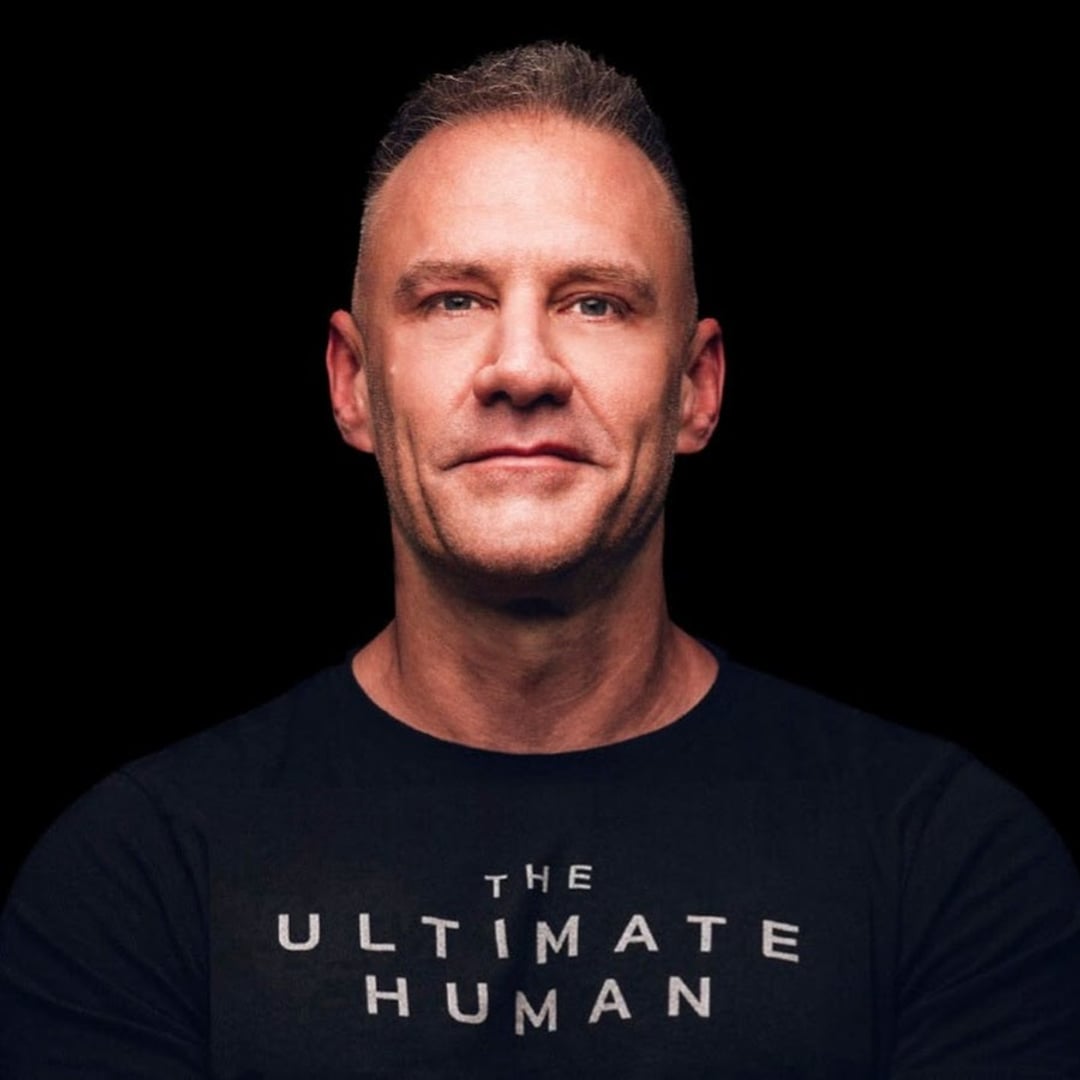
Dr. Daniel Pompa's severe mercury toxicity (from fillings, contact lens solution, and other exposures) caused cascading cellular inflammation and hormone resistance — undetectable by standard blood tests — which he resolved by developing a cellular detox protocol centered on the '5 Rs' (Remove sources, Regenerate membranes, Restore energy, Reduce inflammation, Reestablish methylation).
2
Fasting, particularly feast‑famine cycling and short partial fasts (like the fasting‑mimicking diet), stimulates autophagy, stem cell renewal, and metabolic adaptation, but must be tailored to the individual; too much fasting without adaptation drives thyroid‑adrenal collapse and muscle loss.
3
Biohacks such as cold plunges and saunas operate via hormesis — only beneficial if you adapt; Dr. Pompa warns that forcing too much stress (over‑dosing) can worsen inflammation and hormonal dysfunction, and recommends individual testing (e.g., glucose/ketone tracking for fasting, HRV for cold exposure).
4
His personal journey from near‑complete debilitation to recovery became the basis of his clinical programs (pmpaprogram.com, books 'Beyond Fasting' and 'Cellular Healing Diet'), emphasizing that most chronic illness today is driven by neurotoxins and that removing the interferencre enables the body to heal.
Protocols
Concrete recipes — what, when, how much, and why
7 items
Test your fasting adaptation with glucose and ketones
WhatMeasure fasting glucose and ketones upon waking, then again right before breaking the fast. Over several days, verify that glucose trends downward and ketones trend upward. If they do not, you are not adapting to that fasting window.
WhenEach morning on waking, and immediately before the first meal of the day, over 3-5 days to get an average.
DoseNo specific numeric threshold; the pattern matters: glucose decreasing and ketones increasing from wake to pre-meal.
For whomAnyone practicing intermittent fasting who wants to avoid hormonal harm; especially those with thyroid, adrenal, or weight-loss resistance.
WhyWithout this adaptation, fasting becomes a chronic stress that can damage metabolism, adrenals, and thyroid. The test shows whether the body is genuinely shifting into fat-burning.
CaveatsExercise or acute stress can spike glucose/ketones and obscure the pattern, so test on typical, non-exercise mornings.
Dr. Pompa notes that many people force long daily fasts (e.g., 16-20 hours) without knowing if their body is actually burning fat or just turning down metabolism. The glucose/ketone tracking provides a biomarker of adaptation. He contrasts this with the common 'one meal a day' approach that works initially but eventually leads to muscle loss and hormonal collapse when the body isn't adapting. This protocol allows each person to find their personal feasible fasting window and ensures that they include adequate feast days.
Mechanism
During a true fast-adapted state, lower insulin and rising glucagon promote lipolysis and ketogenesis. Rising ketones signal that the liver is processing fats, while glucose stabilizes or drops. If the organism is under excessive perceived starvation, stress hormones like cortisol keep glucose elevated and suppress ketone production, indicating maladaptation.
Check your glucose and ketones. What you should see is … glucose trending down from your wake glucose and ketones trending up. If you don't see that, you despite how you feel, you're not adapting to that level of stress.
Also said
“So that gives people a better sense of what fast works for them.”— Highlights the practical, individualized nature of the tool.
“If you don't adapt to a stress it becomes negative. … Many people out there, just like the fasting, can't adapt to that.”— Ties the measurement back to the core hormesis principle.
Feast-famine fasting schedule
WhatAlternate days of restrictive feeding (famine) with normal or abundant eating (feast). For most, aim for 1-2 feast days per week; for those with hormone challenges, consider 3 feast days.
WhenIntegrate feast days throughout the week after low-calorie or fasting days.
DoseNo set macronutrient rules; feast days simply mean eating sufficiently to signal abundance, preventing the body from entering long-term starvation mode.
For whomAnyone who has been chronically fasting (especially OMAD) and is experiencing stalled weight loss, cold extremities, low energy, or hormonal symptoms.
WhyPrevents the metabolic slowdown, muscle loss, and thyroid suppression caused by constant caloric restriction or daily intermittent fasting. The feast day reminds the body it is not starving, keeping metabolism elevated.
CaveatsFeast days should not become binge days of processed foods; the cellular healing diet principles still apply (no industrial seed oils).
Dr. Pompa uses the analogy of a wood burner in winter: if wood runs low, the person turns the thermostat down to survive. A delivery of more wood allows them to turn it back up. Similarly, the body throttles metabolism when it perceives chronic famine. The feast day provides that metabolic 'wood delivery', allowing thyroid and sympathetic tone to normalize. He points out that Karen Verde's mouse study showed feast-famine cycles were superior to all other diets for weight loss resistance, and that this pattern mirrors ancestral eating patterns (forced by seasonal availability).
Mechanism
The feast day re-engages the mTOR pathway, which promotes protein synthesis and tissue repair, while periodic fasting activates autophagy. Alternating these prevents the deleterious extremes of either: too much autophagy causes muscle loss; too much sustained mTOR activity may accelerate aging. Cyclic diet variation also preserves microbiome diversity and maintains sensitivity to leptin and insulin.
Personal experience
Dr. Pompa has observed in his clinic that clients who add feast days see a restoration of energy, reversal of hair thinning, and resolution of insomnia that had been blamed on 'thyroid' but were actually driven by chronic underfeeding stress.
The magic is in the feast. … People are forgetting about that mTor pathway. … feast famine feast famine. … If you feast, your body, it reminds your body it's not starving. Simple as that.
Also said
“People are putting themselves too much intermittent fasting daily and their body starts backing into … survival mode screws your metabolism up hormonally … add feast days and watch the metabolism fire up.”— Directly illustrates the corrective power of feast days.
“Switch diets. Make people switch their diet. … diet variation, meaning moving in and out of different diets. … When you change a diet, you actually create a stress on the microbiome and actually create diversity. It's magic.”— Expands the concept beyond feast-famine to broader dietary rotation.
The 5 Rs Cellular Healing Roadmap
WhatA sequential framework for restoring cellular function: R1 – Remove the sources (heavy metals, mold, toxins from water/air/food); R2 – Regenerate cell membranes (essential for hormone receptor function); R3 – Restore cellular energy (ATP production in mitochondria); R4 – Reduce inflammation (dietary and cellular); R5 – Reestablish methylation (to support detox, DNA repair, and hormone balance).
WhenBegin with R1 (identify and eliminate ongoing exposures), then concurrently work on R2-R5 according to the individual's testing and response.
DoseNo universal dose; each step requires specific actions (e.g., for R2: healthy fats, phosphatidylcholine; for R3: nutrients supporting mitochondria; for R5: methyl donors like methylfolate/B12).
For whomAnyone with persistent symptoms despite a clean diet and lifestyle, especially those diagnosed with autoimmune diseases, hormone imbalances, or chronic fatigue.
WhyAddresses the root cause of hormone resistance, chronic fatigue, and neurodegeneration: toxic damage to the cell that cannot be overcome by simple detox or supplementation alone.
CaveatsThe order matters; for example, aggressively pushing methylation (R5) in someone with a high toxic load can backfire. Work with a practitioner trained in the 5Rs.
Dr. Pompa developed the 5 Rs as a teaching tool after feeling that doctors weren't grasping the need to fix the cell. Each R addresses a specific broken component: R1 stops the ongoing insult; R2 repairs the lipid bilayer where all hormonal and nutrient signaling occurs (he quotes Bruce Lipton's work on the intelligence of the membrane); R3 raises ATP, which is required to run the glutathione antioxidant system (Gibbs free energy equation shows two ATPs are needed to make one glutathione molecule); R4 tackles the inflammatory fire that blocks receptors; and R5 recharges the methylation engine that silences bad genes and clears toxic hormones. He stresses that methylation is almost universally depleted in toxic individuals, regardless of their genetic SNPs.
Mechanism
Toxins (mercury, biotoxins) insert into and oxidize membrane lipids, disrupting lipid rafts and receptor proteins. Low ATP from mitochondrial damage reduces glutathione synthesis, increasing oxidative stress and further membrane damage. Inflammation perpetuates this cycle. Methylation is drained by the sustained stress response, leaving estrogen metabolites and heavy metals unconjugated. The 5 Rs break each link: removing sources stops the input; membrane support restores receptor fluidity; ATP regeneration powers detox enzymes; anti-inflammatory strategies cool the cell; re‑methylation re-enables phase II conjugation.
Personal experience
Dr. Pompa traces his own recovery directly to the incremental application of these Rs. He says, 'I got well because I got the mercury safely and effectively out of my brain … I got well for taking the biotoxins that were accumulated in my cells.'
My saying is you have to fix the cell to get well. If you don't do that today … because that's why people don't feel well despite diet change, despite taking hormones, despite name the list, the supplements they take.
Also said
“Life and death begins on the membranes. … Bruce Lipton … showed the intelligence the innate intelligence in the human body literally is in the membrane.”— Provides scientific credibility for the centrality of R2.
“There's something called the Gibbs free energy equation. That means that you need a certain amount of ATP, two molecules to make one molecule of glutathione. … So energy drops, glutathione drops, but here's what the equation says. Inflammation goes up.”— Explains the bioenergetic mechanism linking R3 and R4.
“When people are sick and challenged … I just assume you're methyl depleted because people that are sick and toxic … you are depleted in methylation.”— Underscores why R5 is universally necessary for this population.
Cellular inflammation test (melanondialdehyde)
WhatMeasure urinary melanondialdehyde (MDA) as a marker of membrane lipid peroxidation, reflecting cellular inflammation.
WhenAs an initial assessment to confirm whether cellular inflammation is contributing to symptoms of hormone resistance.
DoseLab test; ideally value under 3 units (units not elaborated).
For whomIndividuals with normal hormone labs but classic hormone deficiency symptoms, or anyone with fatigue and brain fog not explained by standard bloodwork.
WhyMore sensitive than CRP for detecting the specific membrane damage that blunts hormone receptors; normal CRP often gives false reassurance.
CaveatsNone provided beyond that it's a single spot-check.
Dr. Pompa calls this a simple, cost-effective starting point that he teaches doctors. He contrasts it with CRP: unless there is frank illness, CRP often sits in the 'normal' range. MDA directly reflects oxidative damage to the lipid membranes where hormone receptors reside. A high result tells the patient, 'This is why your hormone receptors aren't working.' It becomes a tangible biomarker that motivates the 5 Rs protocol.
Mechanism
Reactive oxygen species attack polyunsaturated fatty acids in cell membranes, producing malondialdehyde. Elevated urinary MDA indicates systemic lipid peroxidation, which rigidifies membranes and impairs receptor and ion channel function.
I always say start with a simple cellular inflammation test you where you measure … melanchelahhide. It looks at basically membrane oxidation … it's better than a CRP for specifically what we're looking for.
Also said
“If that will be like oh yeah well that's why my hormone receptors that's why my hormones aren't working.”— Captures the patient 'aha' moment that this test provides.
Heavy metal urine challenge test
WhatAdminister a water‑soluble chelator (DMSA or DMPS) and collect a subsequent 6- or 24-hour urine sample to provoke and measure hidden heavy metals, particularly mercury from brain tissue.
WhenWhen symptoms suggest chronic neurotoxicity (anxiety, insomnia, tremor, mood swings, fatigue) but standard blood or unprovoked urine tests are negative.
DoseUnder practitioner supervision; no self-dosing protocol discussed.
For whomPeople with multi‑system neurotoxic symptoms, especially if they have a history of amalgam fillings, mold exposure, or known heavy metal contact.
WhyStandard blood/urine tests cannot detect deep‑tissue mercury because it sequesters in the brain and organs; only a provoked urine test gives a reflection of the total body burden.
CaveatsThis is a provocative test, not a treatment; it must be performed by a clinician experienced in chelation. A poor challenge can be dangerous in highly toxic individuals.
Dr. Pompa recounts being misdiagnosed for years because his blood mercury was zero. An endocrinologist recommended a urine challenge, revealing a pattern of multiple metals. He explains that mercury's affinity for sulfhydryl groups in brain tissue makes it 'locked' and invisible without challenge. The test uses a chelator that pulls it into the urine, giving a semi‑quantitative idea of the load. This became the turning point in his personal journey.
Mechanism
Mercury (especially inorganic mercury) binds strongly to selenium and sulfur-containing proteins in tissues. A hydrophilic chelator like DMSA binds mercury in the extracellular fluid, creating a concentration gradient that pulls some intracellular mercury out. The amount excreted in urine correlates with the total mobilized pool.
Personal experience
Dr. Pompa's own test, after years of illness and normal blood work, showed high levels of multiple heavy metals 'that absolutely shouldn't have been there,' confirming chronic mercury toxicity.
He says, 'Well, that's the wrong test. If you were a mad hatter, you'd have poison, acute mercury poisoning … It would show up in the blood, but I don't think that's it. I think it's more chronic. It won't show up in the blood or the urine.' So, he told me, 'Challenge it out. It'll give you some reflection, but I think it's more brain mercury.'
Also said
“There's no perfect test for mercury. … the mercury that really affects us is deep in the tissue and the brain … oftentimes it looks like zero in the urine.”— Highlights the diagnostic dilemma that this test overcomes.
Environmental filtration protocol
WhatInstall a high‑quality air filter (0.1 micron) in every room and filter all drinking and shower water to remove aluminum, heavy metals, and other contaminants.
WhenImmediately as a foundational step to reduce the daily toxic influx.
DoseContinuous use; no maintenance intervals mentioned.
For whomEveryone, especially those with neurotoxic symptoms (brain fog, anxiety) or family history of neurological disease.
WhyAluminum from jet fuel and industrial sources is now ubiquitous in air and water; even if you can't control outdoor exposure, you can control your home environment where you spend most hours.
CaveatsDr. Pompa emphasizes that air tests for mold are unreliable; air filtration helps but does not replace proper mold remediation if you're living in a water‑damaged building.
Dr. Pompa notes that aluminum is being used as an additive in jet fuel for efficiency, resulting in acid rain that deposits aluminum into water and food. Combined with the mercury from dental amalgams and other sources, the synergistic effect is far more toxic than either alone. He has 0.1-micron air filters in every room of his house and filters all his water. He argues that without controlling these inputs, no cellular healing protocol can succeed because 'if the water's flowing in more than the drain can drain, then we're not going to get well.'
Mechanism
Particle filtration (0.1 micron) captures airborne aluminum particulates; water filtration (multiple stages) removes dissolved metals and chemicals. Reducing continuous low‑level exposure lowers the daily methyl‑depleting stress burden and prevents reaccumulation during detox.
Personal experience
Dr. Pompa states he has a filter in every room and filters all his water, saying it's one of the first things he tells patients.
0.1 micron air filter in every room in my house. … Because I mean we are exposed whether you like it or not. You go outside on certain days, you're going to be exposed to higher levels of aluminum, but regardless, it's in the water. You're filtering all your water. So am I. But how many people aren't?
Also said
“If we had a bathtub upstairs, all of a sudden overflowing, that's the symptoms we don't like. … we can open up the drain, but if the water's flowing in more than the drain can drain … we're not going to get well until we slow down what's going in.”— Provides the overarching rationale for environmental controls.
Biohack adaptation calibration
WhatFor cold plunges, start with 10 seconds of cold water at the end of a shower. If that is tolerated without next‑day fatigue or sleep disruption, gradually increase. Monitor heart rate variability (HRV) or subjective energy; if HRV drops or fatigue worsens, reduce duration/temperature.
WhenDaily if desired, but always scale on the basis of adaptation markers, not arbitrary times.
DoseStart: 10 seconds cold at end of shower. Build slowly; his personal protocol is 3 minutes at 48°F, but he warns that 'more is not better' for the unadapted.
For whomAnyone interested in cold exposure, especially those with existing hormone or adrenal issues.
WhyCold exposure works through hormesis; without adaptation, it becomes an inflammatory stress that can crash adrenals and thyroid. Consistent small stress that one adapts to yields greater and safer benefits than a forced extreme plunge.
CaveatsPeople with uncontrolled thyroid or adrenal dysfunction should not force cold plunges; the 10-second shower protocol may be enough. Saunas: similarly, if you feel wiped out after, you are not adapting.
Dr. Pompa frames all biohacks — cold, heat, exercise — under the hormetic principle. The goal is to stress the system just enough to trigger a beneficial response, but not so much that the body fails to recover. He explains that the common 3‑minute cold plunge promoted on social media is too much for many, and cites a recent study where 10 seconds of cold after a daily shower produced better outcomes than a 3‑minute plunge in the average population. The same applies to sauna: he himself could not tolerate a hot shower when he was sick. He advises using HRV or subjective energy the next day as feedback.
Mechanism
A well‑adapted cold stress raises norepinephrine and growth hormone, activates brown fat, and improves insulin sensitivity. In the maladapted state, the cold triggers excessive cortisol and sympathetic activation without the subsequent parasympathetic recovery, leading to hormonal exhaustion.
Personal experience
When he was mercury toxic, even warm showers crashed him. He learned to take lukewarm showers. Now, he does 3 minutes at 48°F but emphasizes individualization.
The key is adaptation. And if you don't adapt, you end up causing more inflammation later. … More is not better and potentially even devastating for you.
Also said
“A 10‑second shower or … 10 seconds of cold before your shower every day worked out better than the big cold plunge. … Put the average person in a 3‑minute cold plunge, when they looked at the results, it was not as good as the less stress consistently.”— Cites specific evidence for starting small.
What's new
Personal practice updates, fresh positions, predictions
5 items
Real detox is a cellular issue
early-mid
Detox isn't just about sweating or taking binders; you must upregulate the cell's own detox pathways (membranes, mitochondrial energy, methylation) to get lasting results.
Why this matters: Challenges the popular idea that saunas, supplements, or standard chelation alone are sufficient — the cell itself must be restored.
Background
Conventional detox approaches (sauna, occasional binders) often fail because they don't address the cellular damage caused by toxic burden.
Dr. Pompa explains that cells naturally produce toxins as a byproduct of energy production (ATP). When the cell membrane is inflamed, those endogenous toxins cannot exit, creating a perpetual cycle of intracellular toxicity. His entire '5 Rs' roadmap is built around addressing this at the cellular level — repairing membranes, restoring ATP production, reducing inflammation, and re‑establishing methylation — so that the cell can resume its own detox functions. He contrasts this with mere biohacks: 'If you don't upregulate cell function, then you're never truly going to have a lasting detox effect.' The approach is sequential but not necessarily linear; each R reinforces the others.
Personal experience
Dr. Pompa's own recovery from mercury toxicity only began when he focused on getting the mercury out of his brain and repairing his cell membranes; previously, his hormones remained dysfunctional despite normal blood levels.
Real detox is a cellular issue. … If you don't upregulate cell function, then you're never truly going to have a lasting detox effect.
Also said
“You have to fix the cell to get well. If you don't do that today … people don't feel well despite diet change, despite taking hormones, despite name the list, the supplements they take.”— Reinforces that cellular dysfunction underlies failed conventional and alternative treatments.
“Life and death begins on the membranes. … These membranes that get inflamed … determine … hormone receptors are in the membranes.”— Explains the central role of cell membranes in hormone sensitivity and overall cellular health.
Hormone resistance pandemic
early-mid
Not just insulin resistance — thyroid, testosterone, and other hormones also become resistant because inflamed cell membranes block receptor function, even when blood hormone levels appear normal.
Why this matters: Reframes the epidemic of fatigue, brain fog, and unexplained symptoms as a receptor sensitivity problem, not a deficiency that can be fixed by exogenous hormones alone.
Background
Mainstream medicine measures serum hormone levels and often prescribes replacement when they're low; when they're normal, patients are told there's nothing wrong.
Dr. Pompa details how toxins (mercury, lead, biotoxins) embed in lipid rafts of the cell membrane, physically blocking hormone receptors. As a result, even optimal blood levels of testosterone or thyroid hormone cannot exert their effects. This creates a clinical picture where someone has all the symptoms of hormone deficiency but normal labs. He notes that this often takes 10–20 years before labs finally become overtly abnormal. His own blood work was repeatedly normal, yet he suffered severe mental and physical symptoms. He calls hormone resistance 'an epidemic or a pandemic.' The solution is not more hormones but restoring membrane integrity and reducing cellular inflammation.
Personal experience
Dr. Pompa had every symptom of thyroid and testosterone deficiency — hair thinning, fatigue, anxiety — yet his blood levels were normal. He realized his hormone receptors were blocked by cellular inflammation from mercury toxicity.
If there's an epidemic there or a pandemic, it is hormone resistance. … We really need to be considering how do we get ourselves more sensitive to hormones?
Also said
“I knew my testosterone wasn't functioning right. I knew my thyroid hormone. But when my blood work kept coming back normal, what I learned later is I had so much inflammation of the cell because toxins make their way into the membranes.”— Personal testimony that directly links cellular inflammation to measured hormone dysfunction.
“You're looking at the serum concentration in the blood and then you're assuming that the cellular metabolism is … that's why … things don't make sense on the labs, modern medicine just gives up.”— Highlights the diagnostic blindspot that leads to patient dismissal.
Feast-famine and diet variation
mid
Constant daily intermittent fasting or staying on one diet (keto, carnivore, plant‑based) leads to metabolic adaptation and harm; alternating feast and famine days, and varying dietary approaches, forces metabolic flexibility and avoids catabolic setbacks.
Why this matters: Counters the dominant biohacker advice that strict daily intermittent fasting or a single 'optimal' diet is best — Dr. Pompa argues that periodic feasting is as crucial as fasting for hormone optimization and avoiding metabolic slowdown.
Background
Many people adopt extended daily fasts or rigid diets and initially lose weight, but eventually plateau or develop hormonal issues.
Dr. Pompa shares that every healthy culture naturally cycled in and out of different diets, and that long‑term adherence to one diet (keto, plant‑based, etc.) can cause toxic accumulations (e.g., 4‑hydroxynonenal from prolonged keto) or gut inflammation from too many plant anti‑nutrients. He advocates deliberate diet variation, switching between strategies, to create a hormetic stress that enhances microbiome diversity and metabolic flexibility. In fasting, he emphasizes that 'the magic is in the feast.' The feast day reminds the body it is not starving, preventing the metabolic down‑regulation that turns fasting into a muscle‑wasting, hormone‑disrupting stressor. He suggests one or two feast days per week for most, and up to three feast days for those with hormone challenges.
Personal experience
His clinical observation: many clients who do one‑meal‑a‑day for months end up with adrenal and thyroid collapse; adding feast days restores metabolism. He mentions that the feast‑famine approach outperformed all other diets in Karen Verde's mouse study for breaking weight‑loss resistance.
The magic is in the feast. … People are forgetting about that mTor pathway. The feast is the magic.
Also said
“If you feast, your body, it reminds your body it's not starving. Simple as that.”— Concise explanation of the physiological signal behind feast days.
“Any diet too long causes problems. When you change a diet, you actually create a stress on the microbiome and actually create diversity. It's magic.”— Extends the principle from fasting/famine to any dietary pattern.
Methylation priority principle
mid
All stress (physical, chemical, emotional) depletes methyl groups; the body prioritizes methylation for the stress response, leaving inadequate methyl groups for DNA protection, detoxification of toxic hormones (like 4‑OH‑estrone), and gene regulation — a principle formalized by Dr. Alan Vininsky.
Why this matters: Provides a mechanistic explanation for why stressed individuals accumulate dangerous estrogen metabolites and cannot clear them, linking stress directly to cancer risk and hormone imbalances.
Background
Mainstream medicine rarely evaluates methylation status, yet its depletion underlies many chronic conditions.
Dr. Pompa learned from Dr. Alan Vininsky that all stressors — physical, chemical, emotional — tap the body's pool of methyl groups to mount the stress response (cortisol, adrenaline) and to turn it off. Because the stress survival mechanism takes priority, methylation for other critical tasks like DNA repair, neurotransmitter synthesis, and phase‑II detoxification of hormones gets sidelined. This explains why patients with heavy toxic loads or chronic stress often show dangerous levels of 4‑hydroxyestrone (a cancer‑driver) on a Dutch test, even if they're taking B vitamins. He emphasizes that in sick, toxic people, methylation is almost universally depleted regardless of their genetic SNPs, and that re‑establishing methylation (R5 of his protocol) is non‑negotiable.
Personal experience
His wife, during perimenopause, had a tanked methylation pathway and a buildup of 4‑hydroxyestrone (her mother died of breast and uterine cancer). Despite supporting methylation, it didn't improve until they addressed her massive lead load.
The body doesn't know the difference of stress, physical, chemical, or emotional. Once it builds up and that bucket is full, your methylation is being tagged … now we're not protecting our DNA. Now we're not making proteins. Now we're not getting rid of toxic estrogen.
Also said
“Methylation and glutathione parallel each other. One's down the other's down. One's up the other's up.”— Connects methylation to the master antioxidant system, reinforcing its importance.
“Alan Vaninsky. The methylation priority principle. … first of all all stress physical, chemical or emotional deplete methyl groups.”— Credits the originator and defines the principle succinctly.
Inherited lead toxicity across generations
mid-late
Lead stored in maternal bone is mobilized during pregnancy and menopause, transferring to the fetus; four generations can inherit lead in utero, plus the epigenetic changes, predisposing them to disease.
Why this matters: Reveals a hidden route of metal exposure that explains why seemingly health‑conscious women and their children can have sky‑high lead levels and corresponding health problems.
Background
Lead is known to be a neurotoxin, but most people assume it was a historical problem (paint, gasoline) that no longer affects them.
Dr. Pompa explains that lead accumulates in bone over a lifetime. During pregnancy, normal bone remodeling releases lead into the bloodstream, and it crosses the placenta. This means a mother's lead burden — often inherited from her own mother — is passed to her child. He observed this in his own family: his wife's lead was 'off the chart' during perimenopause; two of his sons had their own massive lead loads (one with GI issues, another with skin problems) inherited from her. He emphasizes that this multigenerational transmission explains the rising rates of neurological and autoimmune conditions even in children raised in 'perfect' environments. Addressing it requires targeted heavy metal detox.
Personal experience
His wife's mother died of breast and uterine cancer; his wife was heading down the same hormonal path until they discovered extreme lead toxicity. His sons were also affected.
Four generations inherited lead in utero. Four generations. … My wife during perimenopause … her lead was off the chart. … My son … tested his lead off the chart. My next one … off the chart. They got their lead from the mother. She got her lead from the mother.
Also said
“A lot of lead is stored in the bone. Matter of fact, most of it. Many women dump lead. … It's normal to lose bone during pregnancy, but out comes the lead.”— Explains the physiological mechanism of intergenerational transfer.
Recommendations
Products, supplements, and tools mentioned in the episode
3 items
Prolon Fasting‑Mimicking Diet (box)
Product
Dr. Pompa recommends partial fasting (fast‑mimicking) as a gentler alternative to water fasts, especially for metabolically challenged individuals. He mentions Prolon as the convenient boxed version of this approach (developed by Dr. Valter Longo).
Dr. Pompa agrees with Dr. Longo's view that pure water fasting can be too stressful for many people today, who are already metabolically compromised. Prolon provides a 5‑day program of precisely formulated low‑protein, low‑calorie meals (~800-1100 kcal/day) that mimics the fasting state while mitigating the risks of muscle loss and severe metabolic stress. He sees it as an ideal entry point for those who want the benefits of a prolonged fast without the difficulty and potential harm of total caloric deprivation.
vs alternatives
Compared to pure water fasting, Prolon reduces the stress of complete deprivation, making it safer for the majority who may be metabolically fragile. It is also easier to adhere to than a DIY partial fast, as it eliminates decision‑making.
The Prolon … box. It's easy. I I love it. I mean, it's it's easy because people go, 'Well, what do I eat here? Here's a box.' And I think it's easier to go to 800, 1100 calories a day than it is to go to zero calories for five days.
Also said
“The average person, a pure water fast is too stressful for them. … So he's gravitated to partial fasting. But I like starting with partial fasting.”— Explains why this product aligns with his clinical approach.
An inexpensive dual meter to measure blood glucose and ketones for assessing metabolic adaptation to fasting.
Dr. Pompa recommends these meters as a practical, at‑home tool for anyone practicing intermittent fasting. By tracking the morning vs. pre‑meal values over several days, individuals can objectively see whether their current fasting window is working or pushing them into a stress state. He notes they are widely available and inexpensive.
vs alternatives
Compared to simply guessing based on hunger or energy levels, this provides objective biomarker feedback to prevent hormonal damage.
Check your glucose and ketones. … And they sell meters, very cheap, inexpensive meters for this.
High‑efficiency air filtration to remove aluminum particulates, mold spores, and other airborne toxins indoors.
Dr. Pompa emphasizes that modern air is contaminated with aluminum from jet fuel and other sources, and that indoor air can be a major vector for neurotoxins. He uses 0.1‑micron filters in every room and considers it mandatory alongside water filtration for anyone attempting cellular healing. He also warns that standard air tests for mold are frequently false‑negative, so proactive filtration is the best defense.
vs alternatives
Portable HEPA filters often capture down to 0.3 microns; 0.1 micron filtration captures smaller particles, including many aluminum‑containing aerosols.
Personal experience
Dr. Pompa runs a 0.1-micron air filter in every room of his home.
0.1 micron air filter in every room in my house. There's one right there. … Because I mean we are exposed whether you like it or not.
A dietary framework designed to down‑regulate cellular inflammation by eliminating industrial seed oils and supporting membrane health, as part of the 5 Rs roadmap.
DisclosureWritten by Dr. Pompa himself.
The diet bans vegetable and canola oils, which incorporate into cell membranes for months and directly blunt hormone receptors. It aligns with the R2 (regenerate membranes) and R4 (reduce inflammation) steps. Dr. Pompa credits this diet with being a cornerstone of his own recovery and his clinical protocol.
vs alternatives
Compared to generalized anti‑inflammatory diets, this one specifically targets membrane lipid composition and is paired with the 5 Rs for a synergistic effect.
Personal experience
Dr. Pompa follows this diet himself, avoiding those fats at restaurants by claiming an 'allergy' to ensure compliance.
My cellular healing diet was coined that just because I'm like, 'Okay, let's control what we can control. … vegetable and cano oils. Get rid of those.' … Those fats stay in your cell membranes for months, not hours, not days, but months, driving cellular dysfunction, inflammation, those hormone receptors blunts them.
Also said
“When I go to restaurants, I'm allergic, right? … I don't make exceptions there.”— Illustrates his personal strictness with the principle.
Dr. Pompa created this program to bring the cellular healing approach directly to individuals, bypassing the need to train doctors one‑by‑one. It includes education, testing, and customized detox protocols.
DisclosureDr. Pompa's own comprehensive cellular healing program, offering free webinar and direct‑to‑consumer coaching based on the 5 Rs.
After years of training physicians with limited reach, Dr. Pompa's children convinced him to create a scalable, direct‑to‑consumer program. It guides users through identifying their 'perfect storm' of stressors, testing for cellular inflammation and heavy metals, applying the 5 Rs, and tailoring fasting and biohacking practices. The free webinar (at pmpaprogram.com) distills the same content he taught doctors for 20 years.
vs alternatives
Unlike generic detox programs, this one is built on his own recovery journey and uses the 5 Rs framework with personalized support, though it remains a paid program with the free webinar as entry.
If they go to pmpaprogram.com, there's a webinar there that's free. It's what I taught doctors, same information I taught doctors for 20 years.
Lines worth pulling out — contrarian, specific, or perfectly phrased
5 items
Living my life the way I was was scarier to me than dying.
Conveys the profound despair of severe neurotoxicity and the motivation behind his relentless search for answers.
Thyroid is the canary in the coal mine, meaning it's the first to go.
A vivid, memorable metaphor explaining why thyroid dysfunction is such a common early sign of toxic burden.
Life and death begins on the membranes.
Encapsulates his core thesis about the primacy of cell membrane health in hormone function and overall vitality.
More is not better and potentially even devastating for you.
A direct counter‑cultural jab at the biohacking 'more is better' mentality, applicable to cold plunges, fasting, and sauna use.
I didn't get well because of a specific vitamin. I got well because I got the mercury safely and effectively out of my brain.
Bluntly asserts that removing underlying causes — not adding supplements — was the key to his recovery, challenging the supplementation‑heavy alternative medicine narrative.
Sign in to share feedback
Tell us if this brief hit the mark or missed it — feedback feeds back into the next iteration of the prompt.
Reading is free for everyone. A free account adds the personal layer: save protocols, follow experts, and see how the other experts weigh in on this same topic.
Educational summary of the cited expert source — not medical advice. Open the source recording linked above and consult a qualified physician before acting on any protocol.