UNFUCG
DashboardSearchChatBookmarksNotificationsActivityPremiumProfile
?
Home
Search
Chat
Saved
Profile
Episode
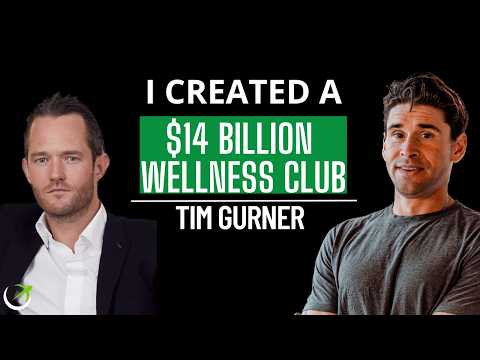
Inside the $14B Visionary Wellness Club Redefining Longevity, Health & Human Potential
~226 min
Episode Brief·YouTube

Inside the $14B Visionary Wellness Club Redefining Longevity, Health & Human Potential

Ben Greenfield
Watch on YouTube Add to chat My bookmarks← All sources

TL;DR

The four things you'd lose by not watching

4 items

TL;DR

The four things you'd lose by not watching

4 items
1

Tim Gerner, Australian entrepreneur behind the $14B Gerner Group, built Saint Haven, a private wellness club merging biohacking tech (red light, cryotherapy, hyperbaric, ice baths) with ancient practices (meditation cave, sound healing) and community, currently with 5 Melbourne locations, 30,000+ waitlist, and global expansion planned for New York, Dubai, and more.

2

Gerner’s personal protocol includes 9:30pm–5:30am sleep on a chili pad at 18.5°C, morning breath work/meditation/gratitude, a 7am family circle, training 4 days/week plus Sunday surrender with ice bath/sauna, and a 2:30pm NSDR nap; he tracks HRV via Aura/Whoop and adjusts his day through a custom app.

3

Ben Greenfield, a longtime friend and now advisor to Gerner Group, shares his own top recovery protocol: 90-minute yoga nidra inside a hyperbaric chamber, calling it the best way to restore a frayed nervous system after travel or stress.

4

The conversation pushes back on over-optimization — Gerner tests NAD levels before IVs after finding many under-40s already have high NAD, warns high-stress states can flip hormone precursors (DHEA) into estrogen, and argues community, not tech, is the number-one longevity intervention.

Protocols

Concrete recipes — what, when, how much, and why

8 items

Tim Gerner's morning routine (sleep to family circle)

WhatSleep 9:30pm–5:30am on a chili pad at 18.5°C, 10-min breath work, 20-min meditation (including somatic HRV training), gratitude journal, 20-min stretching, then 7am family circle with wife and kids.
WhenDaily, upon waking until 7:45am.
DoseSleep: 8 hours; Breath work: 10 min; Meditation: 20 min (somatic portion: 4-5 rounds of visualizing stress and calming); Gratitude journal: ~5 min; Stretching: 20 min; Family circle: 10 min.
For whomTim Gerner (and any high-stress executive seeking balance).
WhyCreates a calm, connected start to the day, trains HRV via somatic meditation, reinforces family bonds, and establishes mental clarity before work.
CaveatsHe acknowledges it's 'a pretty regimented protocol' that may not suit everyone, but the components are modular.

Tim details each component: he uses a chili pad to keep body temperature at 18.5°C for deep sleep. Upon waking at 5:30, he does breath work followed by meditation that includes a somatic practice — intentionally conjuring stressful situations and then calming the body, repeating 4-5 times, which he describes as an HRV trainer. He then writes in a gratitude journal (8-year habit, most useful on tough days). After 20 minutes of stretching, the family gathers at 7am around their baby daughter India; they do prayer, meditation, devotion, and chat about the day ahead. This routine bookends the day with another family gathering at 6pm. Ben shares his own version — his 'family circle' practice at 7am, which Tim adopted directly from Ben after hearing him decline a call saying 'I've got my family circle at 7am'.

Mechanism

Somatic meditation is described as an HRV trainer: intentionally activating the sympathetic nervous system (stress recall) and then practicing parasympathetic down-regulation, which trains autonomic flexibility. Cold sleep temperature (18.5°C) enhances melatonin and deep sleep efficiency.

Personal experience

Tim: 'I've been doing that for about eight years and I find it really really important probably not so much on the days you're feeling good, but more on the days I'm not feeling great.'

I wake up in the morning 5:30. I'm straight down into my practice... 10-minute breath work followed by 20-minute meditation... I do a bit of a thing called a somatic meditation, which is actually it's an HRV trainer where you actually think about stressful situations and feel it throughout your body and then calm yourself and do that about four to five times.

Also said
“I then use a gratitude journal every single day. I've been doing that for about eight years.”— Shows the long-term consistency of the practice.
“one day you said to me, I think I was trying to get you on a call and you said, 'No, I can't. I've got my family circle at 7:00 p.m. or 7 a.m.' ... And so every morning we've got this... my wife and I sit around the baby and their gratitude around the circle... 100% from you and has been an absolute gamechanger for our family.”— Demonstrates the origin of the family circle practice from Ben, and its impact.

Tim Gerner's weekly training + Sunday surrender split

WhatWeights Mon/Wed/Fri/Sat, 45-min Zone 2 cardio Tue, Zone 4-5 Thu, and Sunday as full recovery day combining ice bath, sauna, red light, PEMF, grounding, nature walks, and all biohacking.
WhenEvery week.
DoseWeights: 4x/week. Zone 2: 45 min. Zone 4-5: 1 session. Sunday: full day for biohacking and recovery modalities.
For whomTim Gerner (busy entrepreneur, 43).
WhyBalances strength, aerobic base, and high-intensity with a dedicated day to 'surrender' and multisensory recovery, avoiding overtraining and overhacking during the week.
CaveatsHe combines training with post-workout breath work and meditation on a PEMF mat under red light. This may be too regimented for some.

After the morning routine, he trains at 7:45am. The split is designed to avoid chronic cardio and overexertion; he credits Ben with helping him train less but get better results. After every workout, he adds breath work and meditation again, this time on a PEMF mat with overhead red light therapy. On Sundays, he consolidates all biohacking — ice baths, sauna, red light, PEMF, grounding sessions, nature walks — so the other days aren't cluttered. He also added exercise with oxygen therapy (EWT) on Tuesdays and Thursdays. This structure came from a conversation with Ben about balancing training stress with recovery.

Personal experience

Tim: 'I'm actually training less and probably getting more results. And you know it's about bringing that real... science that you have into the brand.'

Sunday's what I call surrender Sunday... all of my bio hacking which involves anything from ice bars, sauna, red light, PMF, grounding, nature walks, everything happens on a Sunday.

Also said
“every single day after I have trained, um I've actually just bought in thanks to you as well is the EWT. So the exercising with oxygen has been really interesting add-on that we've just added on Tuesdays and Thursdays.”— Shows the integration of a specific biohacking tool into his weekly routine.

Afternoon non-sleep deep rest (NSDR) / nap

WhatA nap or NSDR session around 2:30–3pm, often combined with hyperbaric oxygen or yoga nidra.
WhenDaily if possible, typically around 2:30pm.
DoseApproximately 30-90 minutes. Ben does 90-min yoga nidra; Tim naps for unspecified duration (he logged 210 naps last year).
For whomThose with high stress, travel, or sleep deprivation; both speakers use it.
WhyRestores nervous system, compensates for sleep debt, increases afternoon productivity and mood.
CaveatsTim notes it doesn't always fit perfectly schedule-wise but he prioritizes it. Ben adds that combining it with hyperbaric oxygen amplifies the effect.

Tim tracks his naps; his Aura data shows 7h51m average sleep and 210 naps last year. He says this afternoon rest is 'really really important'. Ben shares his own extreme version: on a day of heavy travel, he did a 90-minute yoga nidra in a hyperbaric chamber (medical grade, 1.35-2.4 kPa) and felt fully recovered. He calls it his top recovery protocol. The conversation suggests that hyperbaric chambers (which Tim has in Saint Haven's 'Haven' biohacking zone) facilitate a deeper NSDR state. This is both a science-backed practice and a personal anecdote.

Mechanism

NSDR (yoga nidra) shifts brainwaves toward theta/delta states similar to sleep, lowering sympathetic tone. Hyperbaric oxygen increases plasma oxygen saturation, reduces inflammation, and may enhance parasympathetic activation; the combination synergizes.

Personal experience

Ben: 'from just wrecked from all the travel to on top of the world when I climbed out. So for anybody who has the ability to combine those two, some kind of oxygen with the yoga nidra or non-sleep deep rest, there's something about being in the hyperbaric that shifts you even deeper.'

I sleep on average 7 hours and 51 minutes have for the last 5 years and I had 210 naps last year out of 365 days. So that afternoon nap is really really important to me if I can get it in.

Also said
“there's something about being in the hyperbaric that shifts you even deeper into that sleeplike state is it's incredible.”— Ben's observation on the synergy of the two modalities.

Limitless testing protocol at Saint Haven

WhatQuarterly DEXA scan, every-6-months full-body MRI (via Prenuvo), plus blood panel with 297 biomarkers and urine testing (mold, etc.), all integrated into a personalized plan.
WhenEvery 3 months (DEXA), every 6 months (MRI), lab frequency not specified but implied regular.
DoseNot a dose; it's a periodic testing regimen.
For whomSaint Haven members (currently at capacity for the protocol).
WhyProvides comprehensive biomarker data to tailor sleep, supplementation, IV routines, and training precisely to the individual, avoiding guesswork.
CaveatsCurrently in high demand; the program hasn't been publicly announced yet due to capacity. Cost tiers: 7,000 to 24,000 (currency not stated, likely AUD).

Limitless is a tiered testing program that Tim calls 'our ultimate human protocol.' It was not officially launched because it spread via word-of-mouth and reached capacity. The testing includes full-body MRI (via a newly opened Prenuvo location, first in Melbourne), DEXA body composition, 297 blood biomarkers, and urine profiles including mold toxin analysis. All results are fed into the club's team (doctors, physios, nutritionists) to create a hyper-personalized program covering sleep, supplements, IVs, and training. Tim designed it by taking the best testing he'd encountered globally and packaging it under one roof. This sits within Saint Haven's broader ecosystem of app-integrated data, wearables, and staff who know members' habits.

That's a testing protocol from 7,000 15,000 to 24,000 and it goes to full extremes... every quarter you'll do a DEXA scan. You'll do a V2 max 297 biomarkers in bloods and we do urine testing. Literally the whole works.

Somatic meditation for HRV training

WhatDuring morning meditation, intentionally recall a stressful situation, feel it in the body, then calm the nervous system, repeating 4–5 times.
WhenDaily, part of 20-minute meditation after breath work.
Dose4–5 cycles within the meditation.
For whomTim Gerner (and by extension anyone wanting to improve stress resilience).
WhyTrains the autonomic nervous system to recover from stress more efficiently, potentially raising HRV.
CaveatsMay not be suitable for those with trauma without guidance; requires willingness to evoke stressful sensations.

Tim describes this as an HRV trainer. He visualizes a stressful scenario, allows the physiological response (heart rate increase, tension), then consciously employs breath and relaxation to down-regulate, repeating several times. This is akin to exposure with response prevention and mirrors heart rate variability biofeedback training. He does this daily after breath work and before gratitude journaling. The practice is part of the larger morning stack he credits with maintaining his resilience through high-stakes business life and long COVID struggles.

Mechanism

Repeated stress recall+calm cycles improve vagal tone and autonomic flexibility, which is directly reflected in HRV. This is a form of interoceptive exposure that builds stress inoculation.

Personal experience

Tim integrates it daily: 'It's actually an HRV trainer where you actually think about stressful situations and feel it throughout your body and then calm yourself and do that about four to five times.'

I do a bit of a thing called a somatic meditation, which is actually it's an HRV trainer where you actually think about stressful situations and feel it throughout your body and then calm yourself and do that about four to five times.

Evening wind-down and sleep hygiene

WhatAt 8pm, put on blue light blocking glasses, slow down, aim for 9:30pm sleep; use chili pad, room temp 18.5°C.
WhenNightly.
DoseBlue blockers from 8pm, sleep by 9:30pm; chili pad set to maintain 18.5°C.
For whomTim Gerner (and anyone wanting to optimize sleep).
WhyReduce blue light exposure to support melatonin production, lower core body temperature for deep sleep.
CaveatsIndividual temperature preferences vary; some may find 18.5°C too cold.
Mechanism

Blue light suppresses melatonin; blocking it in the evening allows natural melatonin rise. Cooling the body facilitates sleep onset and deep sleep by supporting the natural drop in core temperature.

Personal experience

Tim: 'I still use a chili pad. I'm a big believer in cooling body at night. So I sleep at about 18 and a half degrees.'

it's trying to start to slow down for the night and by 9:30 I'm asleep.

Also said
“blue light goggles are glasses are on. it's trying to start to slow down for the night.”— Details the specific tool used.

Calorie and macronutrient targets

What2700 calories/day, 40% protein, 30% carbs, 30% fat, with strict meal timing: first meal at 10:30am, lunch daily, dinner with family at 6:30pm.
WhenDaily.
Dose2700 kcal, 40P/30C/30F.
For whomTim Gerner (43, active, 4x weights/week).
WhySupports lean mass maintenance and energy for his training schedule, while fitting within a structured day.
CaveatsHighly individual; he mentions he is 'religious on that', implying strict adherence, and works with a team.

Tim's diet is part of the overall Saint Haven ecosystem; the club provides organic, no-bad-oils, no-sugar food throughout the day for members. For himself, he has a set supplement protocol designed by Ben and the Saint Haven team, with supplements timed at breakfast, lunch, dinner. He tries to take 20 minutes to eat lunch mindfully. The nutritional approach is framed as a contrast to overexertion: one member case study involved a 50-year-old man who went from 130kg, 42% body fat, and crippling back pain to a transformed state not through extreme measures, but through 'very calm traditional things — focused on sleep, getting cortisol down, diet and restriction... proper routines of training that actually worked,' including addressing that he was overexerting and never getting into a fat-burning state.

I'm very specific on calories. So 2700 calories a day. um 40% protein, 30% carbs, 30% fat. I'm religious on that.

Microdosing psilocybin for calm and creativity

WhatMicrodose psilocybin every 3-4 days in very small amounts.
WhenEvery 3 or 4 days.
DoseMicrodose level ('very small amount'), not specified further.
For whomTim Gerner (anecdotal, in a jurisdiction where medical psilocybin is emerging).
WhyProvides a sense of calm and enhanced creativity, with potential for business ideation.
CaveatsLegal status varies; Tim notes it's 'becoming a bigger thing' in Australia, where psilocybin is approved for depression in limited settings. Not recommended without legal guidance.

Tim shares that he microdoses psilocybin regularly and finds it gives him a differentiated level of calm and creativity. He describes having his best three business ideas while emerging from a lucid state (though that was from hospital medication after hip surgery, he ties it to psychedelic states). He hopes Saint Haven will one day offer psychedelic-assisted therapies. Ben adds his own experimentation with Amanita muscaria microdosing as a GABAergic alternative to alcohol, noting it enhances sleep, lucid dreaming, and sex without liver toxicity. The conversation touches on the emerging trend of psychedelics and alternatives to alcohol and antidepressants.

Personal experience

Tim: 'I micro dos psilocybin quite a lot every every 3 or 4 days... I just feel it does give me that that sense of calm and creativity at a different level.'

I micro dos psilocybin quite a lot every every 3 or 4 days. Um very small amount but I just feel it does give me that that sense of calm and creativity at a different level.

Also said
“I came out when I when I had that medication and I had I reckon the three best business ideas I've ever had when I was coming out of that lucid you know that period of lucidness.”— Reinforces his belief in the creativity-enhancing potential of altered states.

What's new

Personal practice updates, fresh positions, predictions

6 items

NAD testing before IV therapy to avoid over-supplementation

latter half of episode

Saint Haven tests members' NAD levels prior to administering NAD IVs or injections, after discovering that many people under 40 already have high NAD and that excess NAD causes exhaustion and stress.

Why this matters: Challenges the widespread trend of blindly using NAD+ precursors, and introduces a data-backed gate that few clinics implement.

Background

NAD+ boosting — via IVs, injections, or precursors like NR/NMN — became a cornerstone of biohacking and longevity. Most providers do not test for baseline NAD before treatment.

Tim Gerner explains that Saint Haven introduced both weekly NAD injections and later IVs after high demand. However, the team noticed a pattern: younger members (under 40) were arriving with already high NAD levels. By testing everyone pre-treatment, they found that giving additional NAD to those with sufficient levels actually caused more exhaustion and created additional stress on the body — essentially overwhelming methylation pathways. This has led them to now screen all members before NAD therapy, an unusual practice that reflects their broader philosophy of avoiding fads without evidence. Ben Greenfield adds the mechanistic layer: excess NAD can deplete methyl groups, though taking TMG or SAMe can partly compensate; the larger point is that young, healthy individuals rarely need aggressive NAD protocols unless dealing with extreme stress, high inflammation, or elite athletic demands. The conversation frames this as an example of 'overhacking' — where stacking interventions without testing can backfire.

What people weren't realizing is a lot of them actually have excess NAD. So we actually test people now prior to doing any IVs or injections for NAD levels which isn't really done anywhere.

Also said
“And what we found is typically people under 40 actually had very high NAD levels and then they overs supplementing and actually causing more exhaustion and more stress on their body.”— Shows the demographic most at risk and the specific harm.
“Yeah. Yeah. You get basically exhaustion of methylation groups which you can skirt to a certain extent if you're supplementing with trimethoglycine or Sammy or something like that. But the bigger picture is you're right young healthy individuals especially people under 40 they don't necessarily need like hefty NAD protocols.”— Ben Greenfield provides the biological mechanism for why excess NAD becomes problematic.

The 'overhacking' phenomenon — too many biohacking modalities may impair mitochondrial function

middle of episode

A mitochondrial testing expert calls the trend of excessive biohacking 'overhacking', finding paradoxically exhausted and inefficient mitochondria in biohackers due to too much red light, PEMF, oxygen, etc., creating excess reactive oxygen species.

Why this matters: Directly confronts the popular biohacking mindset that more is better, and introduces a counter-narrative from emerging mitochondrial function testing.

Background

In longevity and biohacking circles, many enthusiasts layer multiple modalities — red light therapy, PEMF mats, hyperbaric oxygen, cold plunges — daily. This conversation suggests a new frontier of testing is revealing downsides.

Ben Greenfield shares an insight from a practitioner who runs a new mitochondrial function test called the MIC screen. He describes 'overhacking' as a state where biohackers, by chasing every recovery gadget, end up creating excess reactive oxygen species that exhaust mitochondria. This creates a paradox: the people most diligent about recovery tech may be the most metabolically compromised. Tim Gerner connects this to Saint Haven's philosophy: despite offering all the gadgets (red light, cryo, HBOT, PEMF), the club emphasizes foundational ancestral principles — sleep, sunlight, grounding — and tailors tech to the individual rather than pushing maximum exposure. They also saw tangible proof of this philosophy when an HRV specialist (Kim) ran a program focused on purpose, gratitude, and spiritual connection, and members' HRV improved more than from any biohacking modality.

He calls it overhacking. He tests a lot of these biohackers and finds that paradoxically they have almost like exhausted mitochondria, inefficient mitochondria because they are doing too much red light, PMS, oxygen almost creating excess RO through this this idea of overhacking.

Also said
“And then we brought in this guy Kim... actually out of everything we've done, his course, which is all focused on purpose and self-identity... we actually saw more results in HRV through that programming and gratitude and simplifying life and getting connected to spirit. We actually saw better results in HRV outcomes there than we've seen in anything else in the club.”— Provides a concrete counter-example where non-tech intervention outperformed tech-heavy approaches in a measurable biomarker.

DHEA supplementation in high-stress states can aromatize to estrogen

latter half of episode

Tim Gerner shared that due to high stress and cortisol, supplementing DHEA — an upstream hormone — funneled into estrogen instead of testosterone, causing estrogen dominance and fat gain.

Why this matters: A personal anecdote that illustrates a common endocrine trap: hormone precursors can backfire depending on systemic state.

Background

DHEA is often sold over-the-counter as a prohormone for testosterone support or anti-aging. It's a precursor that can go down either the androgen or estrogen pathway depending on enzymatic environment.

At 43, Tim's testosterone was mid-range, but his DHEA was low, so he tried DHEA. Instead of raising testosterone, his estrogen skyrocketed, his body fat increased, and his latest DEXA scan showed a significant rise in fat mass. He explicitly ties this to his high-stress, high-cortisol environment. Ben Greenfield explains the mechanism: when you dump upstream precursors into a stressed-out body, you get a 180-degree opposite response — aromatization to estrogen — whereas the same precursors in an anabolic state (good sleep, low stress, lifting weights, sunshine, etc.) yield a more desirable testosterone boost. They use this as a cautionary tale about context-specific interventions and the necessity of holistic balance before tinkering with hormones.

Personal experience

Tim Gerner describes his own lab results: 'my estrogen went through the roof... my latest DEXA as you saw it's actually increased a lot because my estrogen just went out of control.'

Interestingly, I went on DHEA for a period of time cuz my DHEA was really low and because of my stress and my cortisol, it actually flipped everything not to testosterone but actually to estrogen and estrogen went through the roof.

Also said
“So it's, you know, it's always about finding that balance because one thing and it might be good for one thing, but it's actually pushing something else up in another area as well.”— Tim's takeaway about the need for holistic view.

Alcohol-free socialization as a design principle for wellness clubs

middle of episode

Tim Gerner built Saint Haven partly to offer Australian men an alternative to alcohol-fueled socializing, replacing Friday night bars with training, sauna, ice bath, and clean food.

Why this matters: Addresses a cultural pain point — especially in Australia — and turns it into a business and community model.

Background

Australia has a heavy drinking culture, and Tim observed that men socialized almost exclusively over alcohol, pool tables, and beer.

Tim describes how, as someone who doesn't drink much, he felt there was no social infrastructure for connecting with friends that didn't revolve around alcohol. Saint Haven was designed to fill that void: members can meet at 4pm, do a training session, sauna, ice bath, eat incredible organic food, and wake up feeling energized instead of hungover. He sees this as a crucial missing piece in Australian society, especially for men. This evolved into two club tiers: Saint Haven (no alcohol, surrender-focused, average age 39.6) and Saint (alcohol Thu-Sat nights, high-octane, average age 32), catering to different lifestyles but both offering a 'third space' for connection. Ben Greenfield adds that even as a moderate drinker, he's experimenting with Amanita muscaria microdoses as a GABAergic alternative to alcohol that enhances sleep and lucid dreaming without liver toxicity.

So now to be able to say to a mate, hey, forget about it. We're not going to the bar on Friday night, let's meet at 4:00, let's do a training session, let's do a sauna, ice bath, and grab some incredible food after and wake up the next day feeling incredible.

Wearable-data-driven personalization in a physical club environment

middle of episode

Saint Haven's app pulls HRV, sleep, and activity data from Aura, Apple Watch, and Whoop, then automatically adjusts a member's scheduled class (e.g., moving from HIIT to breath work) when recovery metrics are poor.

Why this matters: Bridges the gap between consumer wearables and real-time, in-person coaching—a working example of biometric-feedback-driven wellness routing.

Background

Most gyms and wellness clubs offer fixed class schedules; members self-select based on preference rather than physiological readiness. Some digital coaching platforms suggest training adjustments, but none execute it physically.

Tim explains that the app, which cost millions to develop, ingests data from multiple wearables and processes it to guide the member's entire day at the club. For example, if HRV drops from a typical 85 to 70-75 due to late eating or alcohol, the app automatically swaps a HIIT booking for a breath-work or fire-and-ice session. The next iteration, launching soon, will add supplementation advice, meal recommendations, and holistic guidance throughout the day. This personalization extends to the staff: when Ben walks in, they know his coffee order and whether he wants methylene blue with creatine. The system is part of a broader vision where members' Aura sleep data, genetic reports, and regular testing (Limitless protocol: DEXA quarterly, MRI every 6 months, 297 blood biomarkers, mold/urine testing) feed into a continuously updated wellness path.

So if you, you know, overnight you've woken up, typically your HRV is sitting at 85 and it's dropped down to 75 or 70 because you've eaten too late or you've drunk alcohol at night, our app will actually automatically take you out of your HIT class and move you into a breath work or fire and ice in our ancient bath house.

Yoga nidra combined with hyperbaric oxygen as a top recovery protocol

latter half of episode

Ben Greenfield shares that after heavy travel, he performs a 90-minute yoga nidra inside a hyperbaric chamber and emerges feeling fully restored, calling it his #1 non-sleep recovery tool.

Why this matters: Offers a powerful, actionable stack that synergizes two evidence-backed modalities for nervous system restoration, backed by personal experience.

Background

Yoga nidra is a guided meditation that induces a hypnagogic state similar to sleep; hyperbaric oxygen therapy raises plasma oxygen saturation and has been used for recovery and wound healing. Combining them is uncommon.

Ben describes being 'wrecked' from travel and documentary filming, then doing a 90-minute yoga nidra session inside a hyperbaric chamber (medical grade, up to 2.4 kPa at Saint Haven) from 2:00 to 3:30pm. The combination, he says, shifts him into an even deeper sleep-like state than either modality alone, and he climbed out feeling on top of the world. This echoes Tim Gerner's emphasis on the afternoon nap/NSDR — Tim averages 7 hours 51 minutes of sleep and had 210 naps last year, viewing the afternoon deep rest as critical for sustaining his high-stress lifestyle. The synergy of hyperbaric and yoga nidra is presented as a likely future offering or protocol to be codified.

Personal experience

Ben Greenfield: 'I just got back from some pretty hefty travel... I did a 90-minute yoga nidra in the hyperbaric. went from just wrecked from all the travel to on top of the world when I climbed out of there at 3:30.'

So from 2 to 3:30 p.m. today I did a 90-minute yoga nidra in the hyperbaric. went from just wrecked from all the travel to on top of the world when I climbed out of there at 3:30.

Also said
“there's something about being in the hyperbaric that shifts you even deeper into that sleeplike state is it's incredible. It's probably my top recovery protocol right now.”— Ben explicitly ranks it as his top recovery protocol.

Recommendations

Products, supplements, and tools mentioned in the episode

5 items

Chili pad (cooling mattress pad)

Product

Tim Gerner uses a chili pad to cool his bed to 18.5°C (approx 65°F) for sleep.

Personal experience

Tim: 'I still use a chili pad. I'm a big believer in cooling body at night. So I sleep at about 18 and a half degrees.'

I still use a chili pad. I'm a big believer in um cooling body at night.

Find Chili

PEMF mat with red light therapy

Tool

Tim uses a PEMF mat with an overhead red light after every workout for breath work and meditation.

Personal experience

Tim: 'after that I'll do a breath work and meditation again on a PMF mat with a red light therapy that comes over the top of me.'

on a PMF mat with a red light therapy that comes over the top of me.

Find PEMF

Ammonita muscaria microdosing as alcohol alternative

Practice

Ben Greenfield shares that he and his wife are experimenting with low-dose Amanita muscaria (Mario mushroom) as a GABAergic substitute for alcohol, reporting improved sleep, no liver toxicity, and enhanced sex.

Ben describes it as a mushroom that at high doses is psychedelic but at microdoses acts similarly to alcohol on GABA, without the downregulation of liver enzymes or nervous system depression. He notes it's gaining traction in the US as an alternative to alcohol, antidepressants, and opioids, though legal status is gray. Tim responds that he sticks to small amounts of tequila (1-2 per week max) as the cleanest alcohol, but is excited by mushroom alternatives. The segment ties into the broader conversation about creating social spaces without alcohol.

vs alternatives

Compared to alcohol: 'no toxicity or upregulation of liver enzymes... great sleep, great sex.'

ammonita mascaria... in low doses micro do it causes a very similar gabaurgic effect as alcohol but also induces lucid dreaming, great sleep, great sex, no toxicity or upregulation of liver enzymes. It's a very interesting compound.

Find Ammonita

NSDR (yoga nidra) inside hyperbaric chamber

Practice

Ben Greenfield's top recovery protocol: 90-minute yoga nidra in a hyperbaric oxygen chamber after travel/sleep deprivation.

Personal experience

Ben: 'I just got back from there some pretty hefty travel and documentary filming. That is probably the number one thing I do for restoring a frayed nervous system when it comes to sleep deprivation, travel or inflammation.'

from 2 to 3:30 p.m. today I did a 90minute yoga nidra in the hyperbaric. went from just wrecked from all the travel to on top of the world when I climbed out of there at 3:30.

Find NSDR

EWT (Exercising with Oxygen Therapy)

Product

Tim added EWT sessions on Tuesdays and Thursdays, following Ben's recommendation.

Personal experience

Tim: 'I've actually just bought in thanks to you as well is the EWT. So the ex exercising with oxygen has been really interesting add-on.'

I've actually just bought in thanks to you as well is the EWT.

Find EWT
Disclosed sponsorships3speaker disclosed

Saint Haven (and Saint) private wellness clubs

Service Sponsored · disclosed

Private members' club integrating biohacking, fitness, dining, community, and holistic wellness, launched in Melbourne with 5 locations and 30,000+ waitlist, expanding to Sydney, Gold Coast, New York, Dubai.

DisclosureTim Gerner is founder and CEO of Gerner Group which owns Saint Haven and Saint. Ben Greenfield is an advisor and partner in the alliance.

Saint Haven is a high-end wellness club that attempts to holistically combine the best elements of Soho House (community), Equinox (fitness), Remedy Place/Next Health (biohacking), and luxury retreats like Badrutt's Palace. It includes a secret entrance via sensory cube, a cafe and full organic restaurant (no seed oils, no sugar), a business club for co-working, a 'path of life' corridor from meditation cave to HIIT studio, a biohacking zone ('Haven') with red light (94% occupancy), cryotherapy, medical-grade hyperbaric chambers (1.35–2.4 kPa), IV therapy, lymphatic drainage, and a full suite of practitioners (doctor, physio, osteo, psychologist, nutritionist, naturopath). The ancient bath house features a 6°C ice bath, 10°C ice bath, 38°C magnesium pool, and large sauna/steam room. Each club costs $15-20 million to build and runs with 90 full-time staff, offering extreme personalization. The second brand, Saint, is for younger demographic (avg 32, 60% female) and includes alcohol Thu-Sat. Memberships sold out in weeks. Ben Greenfield is involved to ensure science-backed protocols. Both speakers heavily endorse it.

vs alternatives

Tim compares to Remedy Place, Next Health, luxury retreats, Equinox, Soho House — saying no one has integrated fitness, recovery, dining, business club, community, and medical-grade testing under one roof with this level of architectural investment and staff ratio.

Personal experience

Ben Greenfield: 'I've been able to kind of peek into and see behind the scenes in Australia... I'm actually about to hop on a plane in a couple of weeks to see what he's building.' Tim: 'I remember sitting at the bar with my wife on the first night saying wow it's kind of everything that I always imagined it would be.'

I started to think, how do we create this place where I can get away from the world... surrender into this serene environment... I've got the best access to the best food, best drinks, best recovery, best practitioners, I can train, I can eat, I can work.

Also said
“these clubs cost 15 to 20 million to start up from a capital perspective. You got to be able to design it. You got to be able to build it. You got to be able to operate them, which is a very very difficult thing.”— Highlights the barrier to entry and uniqueness.
“the thing that actually sets us apart is what we call our software, which is our people... each club's got 90 people... typically when you're there as a member, they'll actually be more team members than there will be members in the space.”— Emphasizes the high-touch service model.
Find Saint

Aura Ring (wearable) and partnership integration

Product Sponsored · disclosed

Saint Haven partnered with Aura to allow staff to view members' sleep and HRV data (with consent) to personalize their club experience.

DisclosureTim states 'we've done a partnership with Aura for Saint Haven'.

The partnership is explicitly for Saint Haven (the wellness brand) and feeds into the club's custom app, which also accepts Apple Watch and Whoop data. Members can opt in; the staff then sees sleep metrics and can tailor recommendations. For example, a poor sleep night might prompt the staff to suggest a recovery session instead of a planned HIIT class. This is part of the broader 'software' layer that makes the club more than just a space with equipment.

vs alternatives

The app is designed to be agnostic, taking data from Aura, Apple, Whoop, but the Aura partnership is exclusive for Saint Haven's personalization layer.

we've done a partnership with Aura for Saint Haven at this stage... we can see your Aura sleep data if you want us to see your Aura sleep data.

Find Aura

Prenuvo full-body MRI (first Melbourne location)

Service Sponsored · disclosed

As part of Limitless testing protocol, members get a full-body MRI every 6 months via Prenuvo, newly opened in Melbourne through the partnership.

DisclosureTim says 'we've just did a partnership with Prouvo who's the first full body MRI. It's the first location in Melbourne which we literally opened last week.'

we've just did a partnership with Prouvo who's the first full body MRI. It's the first location in Melbourne which we literally opened last week.

Find Prenuvo

Notable quotes

Lines worth pulling out — contrarian, specific, or perfectly phrased

6 items
Community is actually the number one longevity thing. And when you look at Melbourneians and you know people all the way around the world, we've really lost that sense of community.
Prioritizes social connection over all biohacking tech, backed by Blue Zones science, and frames the entire club philosophy.
He calls it overhacking. He tests a lot of these biohackers and finds that paradoxically they have almost like exhausted mitochondria, inefficient mitochondria because they are doing too much red light, PMS, oxygen almost creating excess RO through this this idea of overhacking.
A rare cautionary note in the biohacking space, attributing mitochondrial damage to excessive use of recovery tools.
I sleep on average 7 hours and 51 minutes have for the last 5 years and I had 210 naps last year out of 365 days.
Quantifies his extreme commitment to sleep and napping, demonstrating the discipline behind his business success.
So if you, you know, overnight you've woken up, typically your HRV is sitting at 85 and it's dropped down to 75 or 70 because you've eaten too late or you've drunk alcohol at night, our app will actually automatically take you out of your HIT class and move you into a breath work or fire and ice in our ancient bath house.
Illustrates the cutting-edge, wearable-integrated personalization that separates Saint Haven from typical gyms.
We want to take the male or female who's been doing yoga their whole lives... and after a year we want them to be doing yoga, meditation, breath work, hardcore squats, hardcore deadlifts, a bit of Pilates, bit of hit training and eating beautifully. We want to take the weightlifter and get him or her doing one to two yoga sessions a week.
A compelling vision of holistic movement that challenges siloed fitness identities.
My well-being was not good. And you know it was interesting like I lived that from 20 to 30 I lived that very hardpaced entrepreneurial life where I really just smashed myself... the era when you know all the bankers were the guys having red wine and steak at lunch and the entrepreneurs were proud of themselves sleeping two to four hours a night.
Raw reflection on the toxic hustle culture that burned him out before his pivot to wellness.

Sign in to share feedback

Tell us if this brief hit the mark or missed it — feedback feeds back into the next iteration of the prompt.

Topics covered

saint-havenwellness-clubsbiohackingoverhackingcommunitylongevitypersonalized-healthwearable-datahrvsleep-optimizationbreath-workmeditationsomatic-meditationgratitude-practicefamily-circlecold-thermogenesissaunared-light-therapypemfhyperbaric-oxygen
Free account

Make this library yours

Reading is free for everyone. A free account adds the personal layer: save protocols, follow experts, and see how the other experts weigh in on this same topic.

Create a free accountSign in

Where the experts disagree — weekly

One email a week: the sharpest new disagreements and protocols from the library. No spam, unsubscribe anytime.

Educational summary of the cited expert source — not medical advice. Open the source recording linked above and consult a qualified physician before acting on any protocol.