UNFUCG
DashboardSearchChatBookmarksNotificationsActivityPremiumProfile
?
Home
Search
Chat
Saved
Profile
Episode
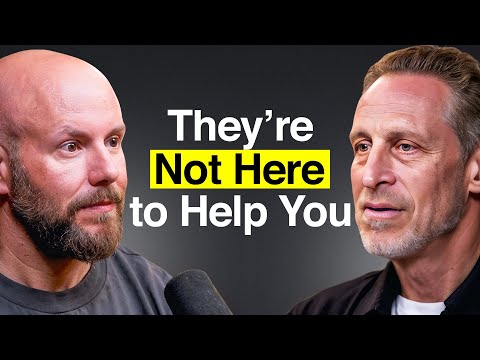
Pharma Whistleblower Reveals Who Really Runs American Healthcare
~91 min
Episode Brief·YouTube

Pharma Whistleblower Reveals Who Really Runs American Healthcare

Mark Hyman
Watch on YouTube Add to chat My bookmarks← All sources

TL;DR

The four things you'd lose by not watching

4 items

TL;DR

The four things you'd lose by not watching

4 items
1

Insurance-owned pharmacy benefit managers (PBMs) collude with drug companies to inflate list prices and collect rebates, driving up premiums while blocking cheaper alternatives like compounded peptides, topical pain creams, and proactive testing.

2

The FDA is captured by industry—10 of the last 11 commissioners went to pharma jobs; it fast-tracked addictive OxyContin with a fraudulent safety label, yet denied MDMA-assisted therapy for PTSD despite overwhelming data, and is now clamping down on affordable peptides right as Merck patents 200 of them.

3

The entire healthcare system profits from sickness: hospitals do more surgeries as reimbursements are cut, insurers refuse to pay for nutrition or prevention because patients may switch plans, and short-term quarterly thinking blocks any investment in reversing chronic disease.

4

Real change requires patient-level sovereignty—using HSAs to fund proactive care, demanding front-of-package food labeling, compounding pharmacies, and grassroots advocacy that floods lawmakers' phone lines.

Protocols

Concrete recipes — what, when, how much, and why

7 items

Proactive, Predictive, Preventive Health Approach

WhatTake sovereignty over your health by using comprehensive biomarker testing, lifestyle changes, and personalized interventions to prevent chronic disease, rather than relying on a system that only manages symptoms.
WhenAs a foundational philosophy for all health decisions.
For whomEvery adult, especially those with early signs of metabolic dysfunction or family history of chronic disease.
WhyThe current healthcare model profits from treating sickness, not creating health; the only way to avoid being caught in that machine is to become proactive yourself.
CaveatsRequires out-of-pocket spending if using advanced lab testing or health coaches, as insurance typically won't cover prevention.

Both speakers argue that the system is designed to treat acute catastrophes well but fails completely at prevention and reversal of chronic conditions. Brigham notes that the average American is on four or more prescription drugs, and if you follow the standard path you'll end up with the standard diseases. The solution is to 'look under the hood' with sophisticated blood work, nutritional guidance, and lifestyle interventions that address root causes. Mark points to his company Function Health as onramp for that kind of data-driven personal health ownership. Brigham emphasizes that HSA expansion would allow people to pay for these services tax-free, effectively decoupling their health decisions from insurance company approval. The long-term payoff is avoiding the cascade of metabolic disease, joint replacements, and polypharmacy that the system profits from.

Mechanism

By monitoring markers like insulin, A1C, inflammatory cytokines, and advanced lipids early, individuals can correct metabolic dysfunction through diet, exercise, sleep, and targeted supplements before irreversible organ damage occurs. This disrupts the fee-for- service model that only intervenes once a diagnosis is made.

Personal experience

Mark Hyman founded Function Health precisely to give patients access to their own comprehensive lab data without needing a doctor's gatekeeping. Brigham's company, Ways2Well, similarly uses peptides, hormone optimization, and proactive bloodwork to treat root causes.

If you live the average American lifestyle, you eat the average American diet, you go to the average American doctor, don't be surprised when you get diagnosed with the average American chronic disease.

Also said
“We are really, really good at treating and triaging major catastrophic events. We are really, really bad at proactive, predictive, preventative care, at stopping chronic disease from developing. Or even reversing it once it occurs.”— States the core problem that the proactive protocol addresses.

Hyperbaric Oxygen Therapy (HBOT) for Post-Surgical Healing

WhatUse hyperbaric oxygen sessions after surgery to accelerate wound healing and recovery.
WhenImmediately following surgery, for the duration of wound healing.
DoseMultiple sessions; exact frequency not specified, but Mark sought it after back surgery.
For whomPatients undergoing surgery, especially those with high healing demands.
WhyIncreases oxygen delivery to tissues, which can speed healing and reduce infection risk.
CaveatsCost and access via insurance can be prohibitive; cash pricing is often dramatically lower than the amount billed to insurance.

Mark describes his own post-surgical experience: he wanted hyperbaric oxygen to speed recovery but was quoted $5,000 per session when asking as an insured patient. When he offered to pay cash, the price dropped to $175. This massive disparity illustrates the insurance billing distortion. He ultimately stayed in a hotel and hired a private physical therapist, which was cheaper than the $7,000/day rehab facility that insurance wouldn't cover. The HBOT cash-price revelation shows that many effective recovery modalities are inaccessible through insurance because of misaligned billing, but affordable if paid out-of-pocket. Brigham nods in agreement about the systemic nonsense.

Mechanism

Hyperbaric oxygen therapy saturates tissues with oxygen, which promotes angiogenesis, reduces edema, enhances fibroblast activity, and supports collagen deposition—all critical for wound repair.

Personal experience

Mark Hyman directly recounts wanting HBOT after his back surgery and being quoted $5,000 per session, then getting a cash price of $175. He used it to aid his recovery and found it effective.

I found a hyperbaric center and they said, Well, yeah, we can come in. I said, How much is it? He says, 5,000 a session. Like, 5,000 a session? That's insane. He's like, Can I talk to the medical director? And he says, Yeah, yeah, that's what we charge Medicare, but paying cash is a $175.

Compounded Peptides for Tissue Repair and Metabolic Health

WhatUse compounding pharmacies to obtain peptides like BPC-157 (for injury recovery) and GLP-1 agonists (for weight/glucose control) at a fraction of brand-name cost, enabling customised dosing.
WhenFor BPC-157, as needed for orthopedic or soft-tissue injuries. For GLP-1s, under medical supervision for metabolic syndrome, obesity, or diabetes.
DoseBPC-157: injection near injury site, daily for several weeks. GLP-1: titrated up from a low dose, then down for maintenance, exact protocols per clinician.
For whomPatients who need peptide therapy but cannot afford brand-name drugs, or who want to minimize side effects through lower doses.
WhyCompounded versions are orders of magnitude cheaper and allow flexible dosing not possible with fixed auto-injectors, reducing side effects and cost.
CaveatsFDA and big pharma are actively trying to shut down compounding of these peptides; availability may be threatened. Only use reputable, regulated compounding pharmacies with a prescription.

This protocol is positioned as a direct counter to the capture of the peptide market. Brigham explains that big pharma's GLP-1 injectables cost thousands monthly because of the patented delivery device, while the active peptide itself is pennies. Compounding pharmacies allow patients to access the same molecule at ~$250 per vial, with the ability to start at micro-doses and increase gradually, which reduces nausea and muscle loss often seen with the high, fixed doses in brand pens. For BPC-157, which promotes healing, the FDA effectively banned compounding by placing it on a dangerous substance list, but Brigham argues this was without safety justification and done to clear the path for pharma's peptide patents. Mark adds his personal endorsement, and Brigham’s company has used BPC-157 extensively with excellent results. The protocol is predicated on the belief that patients have a right to these natural or bioidentical molecules and that current regulatory actions are protectionist.

Mechanism

BPC-157 is a pentadecapeptide that upregulates growth factors, promotes angiogenesis, and accelerates tendon-to-bone healing. GLP-1 agonists are incretin mimetics that slow gastric emptying, increase insulin secretion, and reduce appetite via central nervous system effects.

Personal experience

Mark Hyman: 'I've used them. I've had various injuries and it's amazing. BP 157, which you're talking about, is a peptide that's been around for a long time...' Brigham's clinicians reported phenomenal feedback with minimal to no side effects over five years.

Compounding pharmacies were compounding That's $20 a year or less. Dirt cheap. Like a whole vial for $250, male dude, which allowed you to titrate up and titrate down, allowed you to customize your treatment plan.

Opioid Prescribing Safety Net: Pharmacogenetic Testing, Toxicology Screening, and Topical Alternatives

WhatBefore prescribing an opioid for pain, perform a pharmacogenetic test to assess addiction risk and a toxicology screen to rule out other substance use; preferentially prescribe non-addictive topical compounded creams (e.g., ketamine-based) for localized pain.
WhenAt the point of any new opioid prescription, especially for acute orthopedic injuries.
DosePharmacogenetic test: once per patient. Toxicology screen: periodic or before initial prescription. Topicals: as needed for localized pain.
For whomAny patient being considered for opioid therapy, post-surgical or injury-related pain.
WhyThese steps were recommended by the CDC and Obama-era opioid guidelines as safety nets. Insurers have systematically dropped coverage for all three, leaving only the most addictive pill option, which generates rebates.
CaveatsInsurance will likely deny coverage for these tests and topicals; patients may need to pay cash.

Brigham describes losing his brother to the opioid crisis and pivoting his career to educating clinicians on safer pain management. The three safety layers—pharmacogenetic testing to identify slow/fast metabolizers at risk of addiction, urine toxicology to catch poly-substance use, and topical non-addictive creams—were all covered by insurance at one point, then systematically removed. This left patients with only the most addictive oral opioids, which happen to generate huge rebates for PBMs. Brigham argues that if those safety nets had remained, countless deaths could have been prevented. The protocol is thus a direct antidote to the profit-driven restriction of safer options.

Mechanism

Pharmacogenetic testing examines cytochrome P450 enzymes (e.g., CYP2D6) that metabolize opioids; slow metabolizers accumulate drug and are at higher risk of respiratory depression, while ultra-rapid metabolizers convert codeine to morphine too quickly. Toxicology screens prevent co-prescribing to someone already using benzodiazepines or illicit fentanyl. Topical compounded creams deliver analgesics locally, avoiding systemic absorption and euphoria.

Personal experience

Brigham's brother died during the opioid epidemic, which fueled his mission to promote safer prescribing. He saw firsthand how the removal of these safety measures devastated communities.

You should pharmacogenetic test. You should do a test to identify, Is this patient a slow, fast, or moderate metabolizer? Are they at an increased risk of addiction? Insurance quit covering that. So that safety net was removed.

Also said
“Non abusive, non addictive, topical, or any orthopedic related injury… a topical was a solution to avoid that. Insurance quit covering that.”— Completes the picture of the three safety nets insurers dismantled.

Medically Tailored Meals for Chronic Disease Reversal

WhatProvide patients with advanced chronic conditions (heart failure, diabetes, kidney disease) free, nutrient-dense meals designed to reverse those diseases, instead of relying solely on medications.
WhenUpon diagnosis of a costly chronic condition, and continuously as a covered benefit.
DoseAs the primary nutritional source, ongoing.
For whomThe five percent of Medicare patients who account for fifty percent of costs, typically with multiple chronic conditions.
WhyClinical studies show that medically tailored meals can dramatically reduce healthcare costs and improve outcomes—one Cleveland Clinic study saved $12,000 per patient—yet the system still views it as an unreimbursable cost.
CaveatsLargely unavailable outside pilot programs because Medicare and insurers don't fund it; policy change needed.

Mark Hyman presents this as a proven, scalable intervention that the system refuses to pay for because it doesn't fit the drug-and-procedure billing model. He notes that if a patient's annual copay for diabetes drugs is $20,000, that same money could purchase a year of therapeutic meals and possibly reverse the disease entirely, eliminating further costs. The Cleveland Clinic pilot demonstrated the savings, yet there is no mechanism to fund it at scale. Mark argues this is a perfect example of how the lack of shared risk pools in insurance prevents investment in preventive health: the insurer paying for the meals likely won't capture the long-term savings because the patient may switch plans. The protocol requires policy reform to make food a reimbursable medical expense, which aligns with the MAHA movement's goals.

Mechanism

Metabolic diseases are driven by ultra-processed, high-sugar diets that cause insulin resistance, inflammation, and gut dysbiosis. Replacing those with whole-food, anti-inflammatory, low-glycemic meals directly addresses the root cause, reducing HbA1c, blood pressure, and inflammatory markers rapidly, often within weeks.

Personal experience

Mark cites the Cleveland Clinic study and his own clinical observations that food is more powerful than medication for chronic disease reversal.

Five percent of the Medicare population accounts for fifty percent of the cost. And if you take those people… and you provided them meals that were designed to treat or reverse or optimize their health, that you would save thousands of dollars. In one study in Cleveland Clinic, they saved $12,000 just in a small cohort that was given free food.

Shared Medical Visits for Chronic Disease Management

WhatConduct group visits where patients with the same condition (e.g., diabetes, obesity) are seen together by a provider and health coach, combining medical management with peer support and education.
WhenAs an alternative to rushed one-on-one appointments, scheduled monthly or quarterly.
Dose60-90 minute group sessions.
For whomPatients with common chronic conditions who need lifestyle education and support.
WhyShared visits have been shown to be three times as effective as individual visits for the same condition, while costing far less.
CaveatsRequires administrative set-up and billing that Medicare/insurers may not support directly; Mark's implementation had to include a physician billing for a visit even though a health coach could likely deliver the intervention.

Mark recounts that his own team proved shared medical visits worked—triple the outcomes for the same disease treated by the same clinician, at much lower cost. However, to get reimbursed by Medicare, they had to structure it so a physician was involved and could bill for a visit, even though a health coach would have been equally effective. This gaming of the system highlights how valuable innovations are stifled by billing codes that fail to recognize non-physician-delivered care. The protocol is thus both a clinical recommendation and a policy advocacy point: redefine reimbursement to allow non-MD facilitators for lifestyle group interventions.

Mechanism

Group visits leverage social support, peer accountability, extended education time, and the normalization of health-promoting behaviors. They also allow the clinician to address common questions once, increasing efficiency.

Personal experience

Mark Hyman’s team conducted the study internally and saw the results firsthand. He notes the frustration of having to 'game the system' to get paid.

We found out that group shared medical visits worked three times as well for the same disease treated by the same doctor at far less cost. And we actually had to use a physician in the process even though I think it would be equally effective if it was delivered by a health coach who wasn't paid a fraction of what a doctor repaid. But we had to do it because we had to game the system in order to get reimbursed.

HSA-Funded Proactive Health

WhatMax out Health Savings Account contributions and use the funds to pay for comprehensive lab testing, nutritionists, gym memberships, red light therapy, peptides, and other evidence-based preventive modalities not covered by insurance.
WhenAnnually, and with every health spending decision.
DoseContributions up to the legal maximum per year.
For whomAnyone with a high-deductible health plan and HSA eligibility, or policy expansion to all.
WhyHSAs provide tax-free money that can be used for true health optimization, bypassing insurance hurdles and allowing patients to drive their own choices.
CaveatsCurrent IRS rules limit what qualifies as a medical expense; policy change to broaden HSA-eligible services (as TrueMed advocates) is needed to fully realize this.

Brigham points to Cali Means' company TrueMed, which enables HSA/FSA spending on health and wellness products that traditional insurers won't touch. The broader idea is that if HSAs were expanded—say to $15,000/year with tax benefits—and allowed to be spent on quarterly blood work, nutrition counseling, gym fees, and innovative therapies, it would shift power from insurance middlemen to the patient. This would align financial incentives with health, because individuals would choose what works, and the HSA would function like a personal health investment account. Brigham argues this is a free-market solution that could break the PBM-insurance stranglehold without requiring a full government takeover of healthcare.

Mechanism

Tax-advantaged accounts change the marginal cost of preventive services to the patient, encouraging more use of early interventions. Broadening eligible expenses directs funds away from the sick-care system and into the wellness economy.

Personal experience

Brigham references conversations with Cali Means and his own company's efforts to integrate similar models.

If we could give the power back to the patient… there's got to be a way to incentivize being healthy. Rather than incentivizing chronic disease, can we give tax incentives or quality care incentives that allow patients accessibility to being predictive, proactive, and preventative?

Also said
“If somebody could have $300 to sit with their clinician for an hour and really talk.”— Illustrates the scale of what even a modest HSA could fund compared to the current 6-minute visit.

What's new

Personal practice updates, fresh positions, predictions

5 items

PBM rebate kickbacks and insurer profiteering

Brigham Bueller reveals that the big five insurance-owned pharmacy benefit managers went from negotiating drug prices down to negotiating them up, taking rebates from pharma that incentivize keeping people on expensive chronic disease drugs while denying cheaper alternatives.

Why this matters: Explains the hidden financial pipeline that makes insurance companies money when drug costs rise, directly contradicting their stated purpose of lowering costs.

Background

PBMs were originally created as middlemen to aggregate purchasing power and negotiate lower drug prices for employers and patients. Over time, the five largest insurers—United, Cigna, Aetna, Blue Cross Blue Shield, and CVS Caremark—acquired the PBMs and now control 90% of prescription drug benefits.

Brigham walks through the perverse flow: an insurer's PBM tells a drug manufacturer to charge $300 instead of $130 for a vial of insulin and give them a $150 rebate, which sits at the PBM. The insurer then shows the employer a higher drug cost and raises premiums, even though it paid far less. This same mechanism applied to the opioid crisis, where PBMs pocketed nearly 30% of the profits because they negotiated rebates on branded opioids while discontinuing coverage for pharmacogenetic testing, toxicology screens, and non-addictive topical alternatives. Employers are then told that a GLP-1 user cost $12,000 and that premiums must rise, yet the insurer's actual cost was a fraction. This closed loop ensures insurers profit when drug spending—and chronic disease—grows, and they have no incentive to support preventive care or cheaper compounded versions.

Personal experience

Brigham saw this firsthand when educating clinicians on opioid safety measures: insurance stopped covering the pharmacogenetic test meant to identify patients at high risk of addiction, stopped covering toxicology screens to prevent diversion, and stopped covering compounded topical ketamine creams for orthopedic injuries. All three safety nets were removed, leaving only the most addictive, rebate-generating pills.

They went from negotiating down the cost of drugs to negotiating up the cost of drugs… because they wanted rebates.

Also said
“Almost 30% of the profitability of the opioid crisis ended up in the hands of the insurance company's pharmacy benefit managers.”— Quantifies the extent to which PBMs profited directly from the opioid epidemic.
“The insurance company still paid for it because even if they paid the markup… at the end of each year, I have to sit down with the insurance companies and renegotiate our contracts… they say, well, Joe Bob was on a GLP one all year. It cost us $12,000. We're raise premiums.”— Illustrates how employers and patients end up footing the inflated bill.

FDA revolving door and regulatory capture

Ten of the last eleven FDA commissioners left to work for the pharmaceutical industry, and the agency's decisions—from approving OxyContin as 'less addictive' to rejecting MDMA-assisted therapy—consistently align with corporate interests.

Why this matters: Provides a direct line from government approval to industry employment, undermining trust in the agency's independence.

Background

The FDA receives substantial funding from pharma user fees to expedite reviews, which creates a dependency relationship. Commissioners who rotate into industry can benefit from decisions they made while in office.

Brigham details how the FDA's head at the time met privately with Purdue Pharma executives and signed off on labeling OxyContin as 'less likely to be addictive,' despite it being eight times more addictive than hydrocodone. Eighteen months later, that commissioner went to work for Purdue. Mark Hyman connects this to the recent FDA denial of MDMA-assisted therapy for PTSD—a treatment that showed dramatically better outcomes than any existing drug, with no significant side effects, yet was rejected by an advisory panel of experts, many with pharma ties. He argues that the only explanation is corporate capture, as the data was so strong it would disrupt the market for daily psych meds. Brigham adds that the same pattern is playing out with peptides: the FDA put them on a dangerous substance list right as Merck filed patents on 200 different peptides, clearing the field for pharma to monopolize what would otherwise be a low-cost, safe alternative.

Personal experience

Mark Hyman describes his shock at the MDMA denial: 'I'm like, wait a minute, the data was so strong. I mean, imagine if you have Lipitor that reduces your risk of heart attack by twenty to thirty percent and then you have another therapy that reduces the risk by five hundred percent or a thousand percent. And it's safe. And there's no side effects. And it works better than anything else ever discovered, and yet you're not gonna approve it. That to me is just the ultimate in corporate capture.'

10 out of the last 11 heads of the FDA went to go work for industry.

Also said
“The head of the FDA at a time gives them that golden goose label. Eighteen months later, the head of the FDA went to go work for Purdue Pharma.”— Specific example of the revolving door in action.
“FDA, your war on peptides, stem cells, red light, is over. I have a message for you: save your records and pack your bag.”— RFK Jr.'s direct statement, cited by Brigham, signals political recognition of the bias.

Perverse incentives across the healthcare supply chain

Hospitals, insurers, device makers, and pharma all profit more when patients stay sick; this misalignment discourages any investment in prevention or cures, from joint replacement innovation to nutrition counseling.

Why this matters: Shows that the system is intentionally structured to profit from illness, not just accidentally inefficient.

Background

The shift from fee-for-service to HMOs and employed physicians eroded clinician autonomy. Value-based care was attempted under Obamacare but failed to scale.

Brigham uses the example of orthopedic joint surgery: every year insurance companies cut reimbursement by around eight percent, so hospitals increase surgical volume to maintain revenue. That pressures manufacturers to compete on price, not on durability, because a longer-lasting joint would reduce repeat surgeries and revenue. No one in that chain has an incentive to innovate a joint that lasts twenty years. Similarly, insurers won't pay for a prediabetic to see a nutritionist or take metformin, because in 24 months that patient will likely switch employers and the insurer won't recoup the investment, even though preventing diabetes would save the system a fortune. When the patient does eventually suffer a heart attack, the cost shifts to Medicare—the taxpayer. The short-term focus on quarterly earnings makes health-promoting interventions unfinanceable.

Personal experience

Mark shares the story of a patient who had a $20,000 annual copay for medications for diabetes and heart failure. He notes that if that money were instead spent on medically tailored meals, the diseases could be reversed at a net savings. Brigham related that his orthopedic surgeon colleagues saw innovative cash-pay clinics as a threat and would dismiss them as pseudoscience, not because the techniques didn't work, but because they threatened surgical volume.

There's no money in diet, lifestyle, nutrition, sunshine, grounding, being outdoors, taking care of yourself, spending time with your family.

Also said
“If you look at the dollars spent by pharma, there's a disproportionate amount spent on marketing both on television ads, on marketing doctors and continuing, quote, medical education conferences.”— Highlights that pharma's innovation narrative is misleading; they spend more on marketing than R&D.
“Why would you act against your own interest if you were a pharmacy company or a pharmaceutical company?”— Frames the systemic inaction as rational self-interest, not malevolent conspiracy.

Food industry capture and front-of-package labeling resistance

Big food companies, like Big Tobacco before them, use addictive formulations and government partnerships to push cheap, disease-causing products, while lobbying against simple transparency measures like front-of-package warnings.

Why this matters: Makes the direct link between the food system and healthcare costs, demonstrating how taxpayer money subsidizes the very products that drive chronic disease.

Background

In the 1970s, tobacco companies bought food manufacturers and engineered hyper-palatable, biologically addictive products. The dietary guidelines and USDA checkout programs have long been influenced by industry.

Mark unpacks the 'true cost' of a cheap soda: corn is subsidized by crop insurance and farm programs, its production causes environmental damage (dead zones, carbon release), the calories are then sold as processed food often purchased with SNAP benefits ($125 billion/year, 75% junk food), and the resulting chronic disease is covered by Medicaid and Medicare. He estimates the real cost of a Coke could be $100. Despite this, food industry giants like Buc-ee's and H-E-B mobilised to block a simple label disclosure bill in Texas, and the American Heart Association—which receives $192 million annually from food and pharma—testified against the health-promoting bill. Mark's nonprofit Food Fix is pushing for front-of-package labeling akin to cigarette warning labels, which dramatically changed smoking behavior without banning the product.

Personal experience

Mark Hyman recounts his experience testifying at the Texas State Senate and seeing multi-billion-dollar companies fight simple disclosure. He also notes his frustration that even highly educated people he knows don't understand what's in their food and trust that if it's on the shelf, it's safe.

It's not freedom if you're gonna hide and mislead the American people on what you're feeding them and their children.

Also said
“The Rockefeller Foundation did a report called the true cost of food which says that for every dollar we spend on food, there's $3 that's spent in collateral damage.”— Quantifies the hidden economic burden of the current food system.
“The American Heart Association gets a $192,000,000 from food and pharma companies, right, a year. And then I go back to show me the incentives and I'll show you the outcomes.”— Underscores that even health-focused nonprofits can be captured.

Pharma's peptide suppression strategy

The FDA's sudden restriction on peptides like BPC-157 coincides with Merck patenting 200 peptides and the blockbuster success of peptide-based GLP-1 drugs, suggesting a coordinated effort to eliminate cheap, unpatentable competition.

Why this matters: Exemplifies how regulatory action can be timed with corporate IP strategy to monopolize an entire class of natural molecules.

Background

Peptides are short-chain amino acids that function as signaling molecules in the body. BPC-157 had been compounded safely for years with an excellent safety profile. GLP-1 agonists like semaglutide are also peptides, and compounding pharmacies could produce them for pennies per dose.

Brigham explains that his company had been making BPC-157 for five years with zero reported side effects beyond injection site irritation, yet the FDA placed it on a dangerous substance list just as Merck filed 200 peptide patents. Simultaneously, brand-name GLP-1s cost thousands monthly, while compounded versions cost about $250 per vial, allowing customized titration and reducing side effects. The FDA's deadline threatened to shut down compounding of these molecules, forcing patients to buy the expensive patented versions. Mark notes that NAC, a natural amino acid supplement used in emergency rooms for Tylenol overdose, was also targeted by the FDA. He believes the agency's actions are not about safety but about clearing the field for pharma to commercialize peptides. The pattern mirrors the playbook for synthetic vs. natural hormone replacement: patent a slightly modified version and crush natural alternatives.

Personal experience

Mark Hyman states he has personally used BPC-157 for various injuries and calls it 'amazing.' Brigham's network of clinicians reported phenomenal results with minimal side effects, far exceeding standard orthopedic recovery.

What happened is Merck has applied for a patent on 200 different peptides. Peptides are the future of big pharma. They are attempting to capture and monetize peptides.

Also said
“We were making BPC for the last five years. To my knowledge, never had a single side effect other than injection site agitation. Like, there's not a big catastrophic… This isn't an opioid crisis.”— Underscores the safety record and the absurdity of the FDA crackdown.
“Compounding pharmacies were compounding That's $20 a year or less. Dirt cheap. Like a whole vial for $250, male dude, which allowed you to titrate up and titrate down, allowed you to customize your treatment plan.”— Quantifies the cost difference and clinical advantage of compounded peptides.

Recommendations

Products, supplements, and tools mentioned in the episode

1 item

Contacting Lawmakers to Demand Health System Accountability

Practice

Repeatedly, the episode stresses that grassroots pressure—calls, emails, petitions—is what drives political change, citing RFK Jr.'s confirmation and Kellogg's reversal on dyes.

Brigham recounts that a flood of phone calls to Senator Cassidy's office secured the HHS secretary confirmation, and that the 100,000-signature petition forced Kellogg's to change its cereal formulations. Mark adds that when he asks lawmakers what moves them, they always say calls to their office. The practice is a direct call to action: don't just be angry, engage. Specific issues to raise include PBM reform, FDA independence, HSA expansion, and front-of-package labeling.

vs alternatives

Passive hope that the system will fix itself is described as futile; organized, persistent constituent contact is the only proven lever.

Personal experience

Mark and Brigham both testified in front of the Texas Senate and saw how industry lobbyists outnumbered citizen voices. They urge listeners to flip that ratio.

People think that politicians drive chain. People drive chain. And it starts with people having a voice.

Also said
“Whenever I talk to lawmakers about what actually moves the needle on what they're gonna do, they're gonna say calls to my office.”— Directs energy to the most effective action.
Find Contacting
Disclosed sponsorships4speaker disclosed

Function Health

Service Sponsored · disclosed

Function Health is a platform that provides comprehensive, direct-to-consumer lab testing and data analytics, allowing individuals to track over 100 biomarkers and gain actionable insights into their health outside the insurance system.

DisclosureMark Hyman is the founder and an owner of Function Health.

Mark mentions Function Health in passing as an example of the kind of tool that empowers people to take control of their health. Brigham also acknowledges the platform. It aligns with the episode's theme of bypassing the broken, reactive system by providing the 'knowledge is power' data that individuals need to practice proactive, predictive medicine. While not a deep dive, the service is positioned as a direct response to the corporate capture of healthcare.

vs alternatives

Unlike conventional annual physicals that only run basic chemistries, Function Health offers deep metabolic, inflammatory, hormonal, and nutritional panels comparable to those used by functional medicine practitioners, but at a lower, transparent price point.

Personal experience

Mark says, 'one of things I appreciate about what you're doing at Function Health, and what we do at our company is we try to look at you and say, Hey, let's give you the knowledge and the tools to drive your own health.'

Knowledge is power, that's one of things I appreciate about what you're doing at Function Health.

Find Function

TrueMed

Service Sponsored · disclosed

TrueMed is a platform that enables consumers to use Health Savings Account (HSA) and Flexible Spending Account (FSA) funds to purchase healthy food, supplements, gym memberships, and other wellness products, by providing the necessary medical necessity documentation.

DisclosureBrigham Bueller has collaborated with Cali Means, the founder of TrueMed, and mentions the company as part of his policy discussions.

Brigham brings up TrueMed as a mechanism to increase the power of the HSA and direct funds toward proactive health. The idea is that if HSAs are expanded and TrueMed-like models are normalized, patients can exit the insurance-gated system. This is a practical solution offered alongside the larger policy critique, bridging the gap between the current broken reality and the vision of patient sovereignty.

vs alternatives

Currently, many HSAs are underused or spent on reactive medical costs. TrueMed flips that by allowing funds to be spent on preventive lifestyle interventions that traditional plans exclude, effectively making 'eating healthy' a tax-deductible medical expense.

Personal experience

Brigham says he discusses with Cali Means how to increase HSA amounts and use TrueMed to turn the HSA into a tool for health autonomy.

One of the things that in my talks with Callie is how do you with his company, TrueMed, how do you increase HSA amount?

Find TrueMed

BPC-157 and Compounded Peptides

Tool Sponsored · disclosed

BPC-157 is a peptide used for tissue repair, available through compounding pharmacies, with a strong safety record. It is recommended for orthopedic injuries as a non-surgical intervention.

DisclosureBrigham's company, Ways2Well, compounds and uses BPC-157, but he recommends it broadly. Mark Hyman personally uses it.

The episode didn't dive deep into purchasing details, but both speakers endorse BPC-157 as a powerful, overlooked tool. Mark notes he has used it himself for injuries, and Brigham's clinics have seen remarkable results. They caution that the FDA is trying to restrict access, so patients should source from reputable compounding pharmacies while they still can.

vs alternatives

Compared to surgery or long-term NSAID/corticosteroid use, BPC-157 promotes healing with minimal risk, offering a regenerative rather than a palliative approach.

Personal experience

Mark: 'I've used them. I've had various injuries and it's amazing. BP 157.' Brigham: 'We use a ton of BPC, and we also compound it. It was phenomenal.'

I've used them. I've had various injuries and it's amazing. BP 157, which you're talking about, is a peptide that's been around for a long time.

Also said
“It really is phenomenal. For an orthopedic injury, a knee, shoulder, elbow, you know, something that's been bothering you for does a phenomenal.”— Emphasizes the practical, real-world efficacy from a clinical network.
Find BPC-157

Front-of-Package Food Labeling Advocacy

Practice Sponsored · disclosed

Pushing for clear, mandatory front-of-package labels that warn consumers about high sugar, saturated fat, and sodium, similar to those used in South America and proposed in several U.S. states.

DisclosureMark Hyman runs the nonprofit Food Fix, which advocates for transparent food labeling.

Mark points out that most Americans don't know what's in their food and trust that FDA approval means safety. Front-of-package labels cut through the confusion, much like cigarette warning labels did. He argues that it is not about banning foods but informing choices, and that industry opposition proves its power. The recommendation is both a personal action (support bills, vote with wallet) and a policy goal.

vs alternatives

Current back-of-package nutrition facts require literacy and are largely ignored. Front-of-pack warnings have been proven in Chile and other countries to reduce purchases of junk food.

Personal experience

Mark's Food Fix nonprofit is actively campaigning for this. He testified in Texas where labels disclosure was blocked by major retailers.

It shouldn't have to be a PhD in nutrition science to figure this out.

Also said
“They're working behind the scenes to block something as simple as labeled disclosure.”— Highlights the industry resistance and therefore the importance of citizen advocacy.
Find Front-of-Package

Notable quotes

Lines worth pulling out — contrarian, specific, or perfectly phrased

7 items
It's not freedom if you're gonna hide and mislead the American people on what you're feeding them and their children.
Cuts through the corporate-speak about consumer choice to define true freedom as transparency.
10 out of the last 11 heads of the FDA went to go work for industry.
Stark, memorable statistic that encapsulates the revolving door problem.
There's no money in diet, lifestyle, nutrition, sunshine, grounding, being outdoors, taking care of yourself, spending time with your family.
Crystallizes why the healthcare industry ignores the most powerful determinants of health.
If you live the average American lifestyle, you eat the average American diet, you go to the average American doctor, don't be surprised when you get diagnosed with the average American chronic disease.
A blunt, quotable warning that places responsibility and expectation on the patient to deviate from the norm.
Show me the incentives and I'll show you the outcomes.
Axiomatic rule that Brigham uses repeatedly to explain both corporate behavior and clinical decision-making.
The head of the FDA at a time gives them that golden goose label. Eighteen months later, the head of the FDA went to go work for Purdue Pharma.
Specific, horrifying example of the revolving door that directly led to mass addiction.
To a hammer, everything's a nail.
Succinctly captures how specialist surgeons and the procedure-based payment system drive over-treatment.

Sign in to share feedback

Tell us if this brief hit the mark or missed it — feedback feeds back into the next iteration of the prompt.

Topics covered

corporate-capturepharmacy-benefit-managersfda-revolving-doorinsurance-profiteeringopioidsmedical-ethicsfood-industrydietary-guidelinespeptideschronic-diseasehealthcare-incentivespreventive-carecompounding-pharmaciesmdma-therapyhyperbaric-oxygenmedically-tailored-mealsshared-medical-visitshsafunction-healthtruemed
Free account

Make this library yours

Reading is free for everyone. A free account adds the personal layer: save protocols, follow experts, and see how the other experts weigh in on this same topic.

Create a free accountSign in

Where the experts disagree — weekly

One email a week: the sharpest new disagreements and protocols from the library. No spam, unsubscribe anytime.

Educational summary of the cited expert source — not medical advice. Open the source recording linked above and consult a qualified physician before acting on any protocol.