UNFUCG
DashboardSearchChatBookmarksNotificationsActivityPremiumProfile
?
Home
Search
Chat
Saved
Profile
Episode
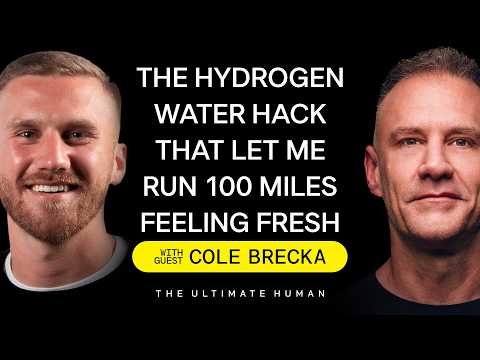
Cole Brecka: The Great World Race, 100-Mile Ultras & Why Hydrogen Water is a Recovery Tool TUH #242
~74 min
Episode Brief·YouTube

Cole Brecka: The Great World Race, 100-Mile Ultras & Why Hydrogen Water is a Recovery Tool TUH #242

Gary Brecka
Watch on YouTube Add to chat My bookmarks← All sources

TL;DR

The four things you'd lose by not watching

4 items

TL;DR

The four things you'd lose by not watching

4 items
1

Cole Brecka, a non-runner, completed seven marathons on seven continents in seven days (the Great World Race) and a 100-mile ultra in just over a year, using a recovery stack of hydrogen water, sauna, cold plunge, hyperbarics, and red light therapy to survive and thrive.

2

Gary Brecka argues the next frontier in athletic performance is connective tissue recovery, stating that 'the vast majority of athletes are not overtrained, they're underreovered,' and that molecular hydrogen is a selective antioxidant that can reduce DOMS by over 75%.

3

During the Great World Race, Cole nearly died of hypothermia in Antarctica, ran four marathons completely fasted with double stress fractures, and entered a 'primal' state where all material desires vanished, leaving only the need for sleep, food, water, and shelter.

4

The Breckas are planning a 10-day, 10-Ironman distance challenge (24-mile swim, 112-mile bike, 262-mile run) to push the limits of recovery science, targeting joints, ligaments, and tendons to reset to baseline daily.

Protocols

Concrete recipes — what, when, how much, and why

4 items

Hydrogen Water Loading for Endurance Events

WhatTake hydrogen tablets before the event and use 'hydrogen bombs' during the effort.
WhenPre-race: 5 tablets. During race: dissolve 3 tablets in 500 ml water and chug when soreness or fatigue spikes.
Dose5 tablets pre-event; 3 tablets per hydrogen bomb as needed.
For whomEndurance athletes, especially those competing in multi-day events. Cole used it for the 100-miler and Great World Race.
WhyMolecular hydrogen reduces oxidative stress, restores redox homeostasis, and dramatically decreases DOMS, enabling repeated high outputs without debilitating soreness.
CaveatsTablets must fully dissolve; hydrogen water is a selective antioxidant and does not break a fast.

Gary developed this protocol based on a research article showing a 76% reduction in DOMS. He integrated it into Cole's training for the Great World Race and the 100-miler. Cole was not sore after 7 marathons despite structural damage, which he attributes to hydrogen. The protocol is now central to Gary's recovery philosophy and his company's product. He also bathed Jon Jones and Joe Rogan in hydrogen water for recovery. The upcoming 10-Ironman documentary will further test it.

Mechanism

H₂ molecules are the smallest in existence, rapidly diffusing into cells and mitochondria. They selectively react with and neutralize the hydroxyl radical (•OH), a highly damaging ROS, without affecting beneficial signaling molecules like hydrogen peroxide. By reducing oxidative damage and inflammation in muscles and connective tissue, hydrogen water lowers DOMS and accelerates recovery between exertions. It also supports mitochondrial efficiency and gene expression related to cytoprotection.

Personal experience

Cole: I took five hydrogen tablets before the race and then I would do these little hydrogen water bombs where I put like three tablets and like half a liter of water. I'd let it fully dissolve and I'd chug it back ... I wasn't sore. And I ran seven marathons on seven continents in seven days and I wasn't sore.

I wasn't sore. And I ran seven marathons on seven continents in seven days and I wasn't sore.

Also said
“I found a research article on delayed onset muscle soreness or doms and it it showed a reduction in DOMS by like 76% or something.”— Scientific basis for the protocol.

Multi-Modal Recovery Stack

WhatAfter every training session, use sauna, cold plunge, hydrogen water, hyperbaric chamber, and red light therapy.
WhenImmediately post-workout during intense training blocks.
DoseNot specified; assumed to be as tolerated.
For whomAthletes in heavy training, especially those preparing for ultra-endurance events.
WhyTargets recovery of muscles, joints, ligaments, tendons, and nervous system, preventing overuse injuries and allowing high training volume.
CaveatsRequires access to specialized equipment (hyperbaric chamber, red light, sauna, cold plunge).

Gary insists that most athletes are under-recovered, not overtrained. This stack addresses the full spectrum of recovery, from heat shock proteins to cold-induced vasoconstriction to cellular repair via hydrogen and red light. Cole credits this stack—mandated by Gary during his 100-mile build—as a key reason he felt so good during the race, contrasting sharply with his battered state after the Great World Race. The stack is the foundation of Gary's coaching and will be featured in the documentary as they attempt 10 Ironmans in 10 days.

Mechanism

Sauna induces heat shock proteins and cardiovascular conditioning; cold plunge reduces inflammation and promotes vasoconstriction/vasodilation cycles; hydrogen water acts as selective antioxidant; hyperbaric oxygen saturates tissues with oxygen, aiding repair; red light therapy stimulates mitochondrial ATP production and collagen synthesis in connective tissues.

Personal experience

Cole: after every workout it was sauna, cold punch, hydrogen water. We were doing hyperbarics with you. We were doing red light. I made sure of it ... I think that's why I felt so good running this last 100 miles.

the vast majority of athletes are not overtrained, they're underreovered.

Also said
“I made sure I did all that and I think that's why I felt so good running this last 100 miles.”— Cole's direct attribution of success to the stack.

Caffeine & Advil Boost for Ultra Races

WhatDelay caffeine until you are nearly falling asleep while moving, then take a small dose of caffeine (e.g., quarter can of Bang energy, ~80 mg) plus two ibuprofen.
WhenDuring an ultramarathon when energy crashes and pain becomes overwhelming.
Dose~80 mg caffeine from a quarter Bang energy drink; 2 Advil (likely 200 mg ibuprofen each).
For whomUltra-endurance athletes in a depleted state; not for casual exercise.
WhyProvides a dramatic mental and physical revival, shifting perceived pain from 8/10 to 6/10 and restoring alertness.
CaveatsUse only in extreme scenarios; caffeine can cause GI distress; ibuprofen carries kidney risks in severely dehydrated athletes. The speaker acknowledges it's 'nasty' fuel and not for regular use.

Cole and his group were running through the night in the desert, with mood progressively dipping until they were silent and struggling. Cole delayed caffeine intentionally to give himself a psychological target. The effect was instantaneous: energy returned, pain dimmed, and the group became chatty again. Gary viewed this as a demonstration of how small interventions in a primal, depleted state can massively shift perspective. He noted that later, other aids like Advil were dosed strategically. The protocol is a scrappy, real-world example of biohacking in extremis.

Personal experience

Cole: I wanted to delay it. So it gave me something to look forward to. It gave me energy. Gary: you guys lit up like Christmas trees and then the two Advil just hold a little bit of the pain.

you guys lit up like Christmas trees and then the two Advil just hold a little bit of the pain.

Also said
“I was like, I'm gonna fall asleep while I'm running ... I was like, okay, this is probably the time I should have it.”— Shows the precise trigger for administering the protocol.

Strict Training Plan Adherence

WhatFollow a coach-designed training plan exactly—never miss a mile, and add extra if desired—while prioritizing recovery modalities.
WhenDuring the entire training block for a goal race.
DoseNot specified; athlete follows plan to the letter.
For whomAny athlete with a specific endurance goal.
WhyBuilds physical preparedness and mental confidence that the body won't fail, so the only question is mental fortitude on race day.
CaveatsMust be combined with diligent recovery to avoid overuse injuries.

Cole emphasizes that following Matt Johnson and Andy Glaze's 100-mile program exactly gave him the confidence to trust the process. He didn't miss a single mile, often doing extra. Even when the unknown mental pain cave loomed, he knew he was physically qualified. This contrasts with his earlier Great World Race preparation where he rushed in and suffered rabdomyolosis. The protocol reflects a philosophy that you cannot train past a certain point (plateau of miles), but you can ensure you arrive at the start line robust and recovered.

Personal experience

Cole: I followed the training program to a tea. I didn't miss a single mile. If anything, I did extra miles. ... That also gave me confidence, I think, going into this race that I could just kind of trust in the process.

I followed the training program to a tea. I didn't miss a single mile. If anything, I did extra miles.

What's new

Personal practice updates, fresh positions, predictions

3 items

Recovery as the next performance frontier

Gary Brecka claims that while strength and conditioning have been optimized, athletes and teams have largely neglected recovery of connective tissues (joints, ligaments, tendons), leading to avoidable non-contact injuries. The biggest gains will come from targeted recovery modalities.

Why this matters: Shifts the paradigm from 'train harder' to 'recover smarter' for elite athletes, with a specific focus on tissues that typically receive less blood flow and oxygen.

Background

Professional sports invest heavily in training but still see non-traumatic injuries like Achilles tears or ACL ruptures. Recovery science is underdeveloped compared to exercise science.

Gary explains that the vast majority of athletes are not overtrained but under-recovered. He points to the high rate of non-contact injuries in the NFL as evidence that current protocols fail to maintain connective tissue integrity. He proposes that by targeting recovery modalities specifically at those tissues—using red light, hydrogen, hyperbarics, and PEMF—athletes can reset to baseline each day, even after extreme efforts. This philosophy underpins the upcoming 10-Ironman documentary where they aim to prove that optimized recovery can allow superhuman feats.

Personal experience

Cole's training for the 100-mile race incorporated this exact recovery stack after every session, and he felt remarkably fresh during the race, unlike his battered state during the Great World Race. Gary observed that Cole looked great throughout the 100-miler and even went to the gym the day after.

the vast majority of athletes are not overtrained, they're underreovered.

Also said
“strength and conditioning ... is a field that has where there is just absolute excellence ... but we haven't gotten anywhere near the threshold on recovery.”— Highlights the asymmetry between training and recovery development in sports science.
“you look at the number of non-cont injuries in the NFL ... blowing an Achilles seal, running off the sideline ... Those are injuries that professional teams and athletes should not have to tolerate.”— Gives a concrete, high-profile example of the recovery gap.

Molecular hydrogen as a potent recovery tool

Gary Brecka discovered that molecular hydrogen tablets dramatically reduce delayed onset muscle soreness (DOMS), allowing Cole to complete seven marathons without muscle soreness despite stress fractures. The gas is a selective antioxidant that restores redox homeostasis without breaking a fast.

Why this matters: Hydrogen water is emerging as a novel recovery aid, and Gary provides both mechanistic explanation and personal proof-of-concept from extreme endurance events.

Background

Gary stumbled onto a research article showing a 76% reduction in DOMS with hydrogen tablets while preparing for the Great World Race. He contacted the patent holder and began using them himself and with clients like Jon Jones and Joe Rogan.

Gary explains that molecular hydrogen is the smallest molecule in the universe, allowing it to diffuse into mitochondria and selectively neutralize hydroxyl radicals—the most damaging reactive oxygen species—without affecting beneficial signaling ROS. This restores redox homeostasis. He distinguishes hydrogen from other antioxidants that can blunt adaptations; hydrogen is 'selective' and doesn't break a fast. Cole validated this by taking five tablets before the 100-mile race and 'hydrogen bombs' (3 tablets in half a liter) during, feeling far fresher than expected. Gary's company produces these tablets, so he has a financial interest, but he emphasizes he was a user first.

Personal experience

Cole: I took five hydrogen tablets before the race and then I would do these little hydrogen water bombs where I put like three tablets and like half a liter of water. I'd let it fully dissolve and I'd chug it back. If you go back and watch how I felt throughout the entire race like... I wasn't sore. And I ran seven marathons on seven continents in seven days and I wasn't sore. Gary: I wasn't sore. And I ran seven marathons on seven continents in seven days and I wasn't sore. Like I could have walked out and hit a back squat.

I wasn't sore. And I ran seven marathons on seven continents in seven days and I wasn't sore.

Also said
“I found a research article on delayed onset muscle soreness or doms and it it showed a reduction in DOMS by like 76% or something.”— Provides the initial evidence that sparked the investigation.
“I got my hands on some of these tablets and I took them on the Great Race and other than the physical ailments ... I wasn't sore.”— Confirms that the effect persisted despite severe structural damage like stress fractures.

Strategic caffeine and NSAID timing in ultras

Gary and Cole discovered that delaying caffeine intake until an energy crash and then administering a small dose (quarter can of Bang, ~80 mg) plus two Advil can dramatically revive mood, energy, and pain tolerance in an ultramarathon.

Why this matters: Shows how tiny pharmacological interventions in a depleted state can have outsized effects, turning a low point into manageable highs.

Background

The group running the 100-miler went from animated to suppressed after hours in the desert darkness. Cole was drifting off while running.

Cole explains he wanted to delay caffeine as long as possible to 'give myself something to look forward to.' When he finally consumed the caffeine and Advil, the effect was immediate: his energy spiked, mood lifted, and his perceived pain dropped from an 8 to a 6. Gary observed the whole group lighting up like Christmas trees, with Kyle Forgard spontaneously starting to rap. The transformation underscores the psychological power of small reliefs in a state of extreme depletion—a metaphor for life's highs and lows.

Personal experience

Cole: I felt myself like going to sleep. I was like, I'm gonna fall asleep while I'm running... I was like, okay, this is probably the time I should have it. But I wanted to delay it. It gave me something to look forward to. It gave me energy. Gary: you guys lit up like Christmas trees and then the two Advil just hold a little bit of the pain. So your pain cave went from an eight to a six.

you guys lit up like Christmas trees and then the two Advil just hold a little bit of the pain. So your pain cave went from an eight to a six.

Also said
“I wanted to delay it. So it gave me something to look forward to. It gave me energy.”— Reveals the psychological strategy behind the timing.
“two sips of a bang and two go primal once you're in primal. It's crazy. Like you get a little bit of water and like you get to put your feet up for a second and that's like changes your perspective.”— Extends the concept of minimal recovery giving maximal mental boost.

Recommendations

Products, supplements, and tools mentioned in the episode

4 items

Bang Energy Drink

Product

Quarter can used as a precise caffeine dose (approx. 80 mg) during an ultra race to revive energy.

Cole and his group used it after hours of running in the desert when they were becoming delirious and falling asleep. The small amount caused a massive surge in alertness and mood. It's not an endorsement of Bang as a daily drink, but as a tool in extreme contexts.

vs alternatives

Other caffeine sources could work, but Bang is what they had on hand.

Personal experience

Cole: two sips of a bang and two go primal once you're in primal. ... quarter of a bang energy ... hit my soul.

two sips of a bang and two go primal once you're in primal.

Find Bang

Advil (ibuprofen)

Product

Used in combination with caffeine during an ultra to lower perceived pain from an 8 to a 6.

Gary administered two Advil when the runners were in severe pain. The effect was immediate. Caveats are highlighted: NSAID use in dehydrated ultra athletes is risky for kidneys, so this is a situational tool, not a recommendation for regular use.

vs alternatives

Other pain relief like acetaminophen might work, but Advil was chosen.

Personal experience

Cole: the two Advil just hold a little bit of the pain. So your pain cave went from an eight to a six.

the two Advil just hold a little bit of the pain. So your pain cave went from an eight to a six.

Find Advil

Whoop Strap

Product

Wearable that tracked Cole's recovery during the Great World Race, showing a consistent 1% recovery score each day.

Cole's Whoop data demonstrated the extreme stress his body was under, with zero recovery. The data point is used to illustrate how brutal the event was. No explicit endorsement, but serves as an example of objective tracking.

Personal experience

Cole: your Whoop score had a recovery of one percent every day.

your Whoop score had a recovery of one percent every day.

Find Whoop

Misogi Challenge (Jesse Edler concept)

Practice

Once a year, attempt an endeavor so difficult that you have only a 50% chance of success, to build mental resilience and reap psychological benefits all year.

Cole learned about misogi from Jesse Edler and applied it by attempting the Great World Race with 100 days of preparation. The concept justifies tackling seemingly impossible physical challenges as a way to strip away distractions and discover true capability. It applies to any area: starting a business, writing a book, losing 10 pounds—so long as the chance of failure is real.

Personal experience

Cole: that's like one day a year you do something that's so impressive that you can reap the benefits of it for the rest of the year ... you're supposed to only have a 50/50 shot at a ... I think for some people it doesn't have to be seven iron or seven marathons ... It could be starting a business.

one day a year you do something that's so impressive that you can reap the benefits of it for the rest of the year ... you're supposed to only have a 50/50 shot at a

Find Misogi
Disclosed sponsorships1speaker disclosed

Molecular Hydrogen Tablets (Echo H2 / HUTAB)

Product Sponsored · disclosed

Used to eliminate muscle soreness during extreme endurance events and accelerate daily recovery.

DisclosureGary Brecka owns the hydrogen water company that manufactures these tablets.

Gary discovered their DOMS-reducing effect when researching for the Great World Race, contacted the patent holder, and integrated them into Cole's protocol. Cole used them before and during the 100-miler and Great World Race, feeling remarkably unsore despite huge damage. Gary also uses them with elite athletes like Jon Jones.

vs alternatives

Unlike conventional NSAIDs or antioxidants, hydrogen is selective and doesn't blunt training adaptations or break a fast.

Personal experience

Cole: I took five hydrogen tablets before the race and then ... hydrogen water bombs ... I wasn't sore. Gary: I wasn't sore. And I ran seven marathons on seven continents in seven days and I wasn't sore.

I wasn't sore. And I ran seven marathons on seven continents in seven days and I wasn't sore.

Find Molecular

Notable quotes

Lines worth pulling out — contrarian, specific, or perfectly phrased

6 items
If you sweat, you die.
A chilling, unforgettable rule from the Antarctica race briefing that encapsulates the life-or-death stakes.
the more pain you're in, the easier it is for you to find something that you're grateful for.
Distills a profound psychological truth from extreme suffering into a simple, actionable mindset.
I've never run a marathon before.
Cole's shocking admission to a room of Olympic athletes and world-record holders at the Great World Race, capturing his improbable entry into the event.
Everything that could go wrong just started going wrong.
A brutally honest summary of the cascading failures mid-race that reveals the depth of adversity.
you can't walk on and fake that.
Starkly contrasts a 100-mile ultra with shorter influencer-friendly events, underscoring the authenticity of extreme endurance.
the vast majority of athletes are not overtrained, they're underreovered.
Gary Brecka's core thesis that flips the traditional training narrative and prioritizes recovery above additional work.

Sign in to share feedback

Tell us if this brief hit the mark or missed it — feedback feeds back into the next iteration of the prompt.

Topics covered

great-world-race100-mile-ultrahydrogen-water-recoveryconnective-tissue-recoveryunder-recovered-athletesprimal-staterabdomyolysiscaffeine-timing-ultraadvil-ultra-painmulti-modal-recovery-stacktraining-plan-adherencemisogi10-ironmans-challengeantarctica-hypothermiafather-son-dynamic
Free account

Make this library yours

Reading is free for everyone. A free account adds the personal layer: save protocols, follow experts, and see how the other experts weigh in on this same topic.

Create a free accountSign in

Where the experts disagree — weekly

One email a week: the sharpest new disagreements and protocols from the library. No spam, unsubscribe anytime.

Educational summary of the cited expert source — not medical advice. Open the source recording linked above and consult a qualified physician before acting on any protocol.