UNFUCG
DashboardSearchChatBookmarksNotificationsActivityPremiumProfile
?
Home
Search
Chat
Saved
Profile
Episode
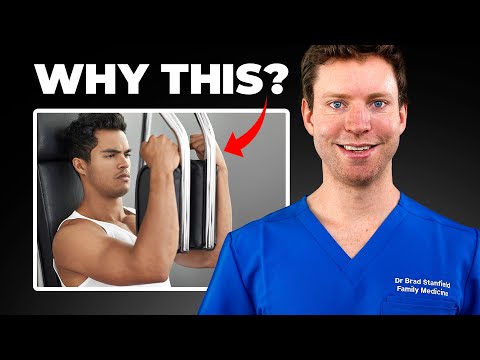
New Study Reveals the BEST Exercise to Reverse Skin Wrinkles
~11 min
Episode Brief·YouTube

New Study Reveals the BEST Exercise to Reverse Skin Wrinkles

Brad Stanfield
Watch on YouTube Add to chat My bookmarks← All sources

TL;DR

The four things you'd lose by not watching

4 items

TL;DR

The four things you'd lose by not watching

4 items
1

Resistance training twice a week for 16 weeks increased dermal thickness in middle-aged women by reducing chemicals that suppress blyan, a key collagen regulator, while aerobic exercise released IL-15 to boost skin mitochondrial health.

2

Both aerobic and resistance training improved skin elasticity and dermal structure, but only resistance training thickened the dermis — so combining both types gives the most complete skin rejuvenation.

3

The 2015 discovery that exercise-induced IL-15 travels from muscles to skin and ramps up mitochondrial function provided the first causal link between physical activity and younger-looking skin.

4

Collagen peptides (found in products like microvitamin plus) can boost collagen production in the skin, but the speaker warns that his personal use doesn’t mean everyone should supplement.

Protocols

Concrete recipes — what, when, how much, and why

1 item

Combine aerobic and resistance training for skin rejuvenation

WhatEngage regularly in both aerobic exercise (e.g., cycling, running) and resistance training (e.g., weight machines, bodyweight exercises).
WhenTwice per week each (as used in the study — e.g., two resistance sessions and two aerobic sessions, or alternating). The speaker does not prescribe a specific frequency but implies consistency; the study used 2×/week for each modality.
DoseThe study showed measurable benefits after 16 weeks. Ongoing maintenance likely required.
For whomBased on a study in initially inactive middle‑aged women; likely beneficial for older adults and possibly younger individuals as well.
WhyDifferent exercise modalities produce distinct blood‑borne factors that complement each other: aerobic exercise releases IL‑15 to improve mitochondrial health and skin moisture; resistance training reduces blyan suppressors, increasing dermal thickness. Combining both ensures comprehensive skin anti‑aging effects (elasticity, structure, thickness, hydration).
CaveatsThe 16‑week trial was limited to women. Long‑term effects and applicability to men and other ages require further study. Overtraining risk not discussed. Individual skin response may vary.

The speaker walks through a series of studies culminating in the new head‑to‑head trial. He notes that while all exercise is beneficial, the smartest approach is to not ditch aerobic training even though resistance training adds a unique benefit for skin thickness. He underscores that each type of exercise changes the cocktail of circulating factors uniquely — like IL‑15 from aerobic and blyan boost from resistance. Relying solely on one would miss the full spectrum of skin anti‑aging benefits. He thus recommends a combined regimen, aligning with general exercise guidelines for health. He also hints that this may be a general principle for other organ benefits, but focuses on skin. The message is actionable: incorporate both modalities into a weekly routine.

Mechanism

Aerobic exercise triggers muscle release of IL‑15, which travels via blood to skin fibroblasts and enhances mitochondrial function, boosting collagen synthesis and cell turnover. Resistance training reduces levels of circulating inhibitors that suppress blyan, a proteoglycan crucial for collagen fibrillogenesis and dermal thickness. By lowering these suppressors, blyan activity increases, promoting a thicker dermal layer. Both modalities also improve blood flow and reduce oxidative stress, contributing to elasticity and moisture. The dual pathway explains why combination yields more complete rejuvenation.

So the smartest approach is to combine both.

Also said
“Different forms produce different results. Specifically, resistance training seems to have an edge when it comes to increasing thickness of the dermal layer.”— Highlights the modality‑specific advantage for dermal thickness.
“We saw that it makes its own unique contribution in terms of circulating in our blood.”— Reinforces that aerobic exercise adds distinct circulating factors, supporting the case for combination.

What's new

Personal practice updates, fresh positions, predictions

3 items

IL-15 as exercise–skin messenger

The 2015 study provided the first direct evidence that exercise boosts interleukin-15, which travels to skin cells and ramps up mitochondrial function, rejuvenating the skin.

Why this matters: Established a causal mechanism linking physical activity to skin anti-aging, not just correlation.

Background

Prior research showed exercise benefits muscle and cardiovascular health, but its effect on skin was unexplored. Skin aging is driven by loss of collagen, elastin, and mitochondrial decline.

The speaker explains that the 2015 cross‑sectional study found habitually active people had a thinner outer dead‑skin layer and a thicker underlying dermis — signs of youthful skin. To test causation, they enrolled elderly inactive adults in a 3‑month endurance program, which reproduced the skin changes and boosted collagen content and mitochondrial health. The researchers hypothesized a circulating factor, and narrowed it down to IL‑15, a myokine produced by skeletal muscle during exercise. In mice, they confirmed that exercise increases IL‑15, which acts on skin fibroblasts to enhance mitochondrial function and rejuvenate the dermis. This was the first direct demonstration that exercise‑derived signals can remodel skin aging at a cellular level.

Exercise boosts production of interlucan 15 and interlucan 15 travels to the skin cells that maintain skin structure where it ramps up mitochondrial function.

Also said
“They also observed boosted collagen content and signs of improved mitochondrial health.”— Reinforces the mitochondrial and collagen improvements seen in the skin.
“The outer layer of the skin in those who completed the program got thinner, matching what the researchers saw in the active adults.”— Demonstrates that the skin changes were causally replicated in a controlled intervention.

Exercise improves skin moisture

A 2023 study and a more recent one found that regular exercise can increase skin hydration, another marker of youthful skin.

Why this matters: Adds skin moisture to the list of skin parameters improved by exercise, beyond thickness and elasticity.

Background

Earlier studies focused on skin thickness, collagen, and mitochondrial health, but moisture/hydration was not examined.

The speaker references a 2023 study where an 8‑week exercise program improved skin moisture compared to non‑exercising controls. A more recent (unspecified) study also noted a link between more exercise and improved skin hydration. This suggests that exercise may support the skin’s barrier function and water retention, which decline with age. While the exact mechanism wasn’t detailed, it may relate to improved blood flow, sweat gland function, or systemic anti‑inflammatory effects. The speaker presents it as another dimension of benefit, reinforcing that exercise is a comprehensive anti‑aging skin strategy.

The exercise group seemed to have improved skin moisture.

Also said
“A more recent study also noted a link between more exercise and improved skin hydration.”— Confirms the finding was replicated in a separate investigation.

Resistance training uniquely thickens dermal layer via blyan

A 16‑week head‑to‑head trial in middle‑aged women found that resistance training, but not aerobic training, increased dermal thickness by reducing chemicals that suppress blyan, a key collagen regulator.

Why this matters: Shows that the type of exercise matters for specific skin anti‑aging outcomes; resistance training has an edge for skin thickness.

Background

Prior studies only tested aerobic exercise. This study directly compared aerobic (cycling) and resistance (weight machines) training, measuring skin elasticity, structure, and thickness.

The study included 60 inactive middle‑aged women, randomized to aerobic training or resistance training, both twice per week for 16 weeks. Both groups improved skin elasticity and the structural organization of the dermal layer to a similar extent. However, only resistance training significantly increased dermal thickness. The researchers identified the mechanism: resistance training reduces certain blood‑borne chemicals that suppress blyan (a proteoglycan critical for collagen formation and dermal thickness). By lowering these suppressors, blyan levels increased, promoting thicker skin. Aerobic exercise did not have this effect, but it boosted other factors like IL‑15. The speaker emphasizes that this doesn’t mean we should ignore aerobic exercise; each type confers unique circulating factors, so the optimal strategy is to combine both. This study is the first to dissect modality‑specific skin aging benefits.

So resistance training ended up boosting by blyan and promoted thicker skin.

Also said
“These chemicals suppress blyan and blyan is critical for regulating collagen formation and dermal thickness.”— Clarifies the biological target of the resistance‑training effect.
“Aerobic exercise also boosted certain factors in the blood that resistance training didn't, so one of those was interlucan 15.”— Shows that aerobic exercise makes a complementary contribution via a different circulating factor.
Disclosed sponsorships1speaker disclosed

Collagen peptides (in microvitamin plus)

Supplement Sponsored · disclosed

The speaker explains that as skin ages, it produces less collagen and elastin, leading to wrinkles and loss of firmness. Collagen peptide supplementation has been consistently shown in research to boost collagen production in skin.

DisclosureThe speaker says he includes collagen peptides in his own product, microvitamin plus, which he presumably sells.

The speaker notes that while exercise improves many skin aging markers, collagen production can also be supported by supplementation. He personally takes collagen peptides as part of his microvitamin plus formulation. He cites research showing that collagen peptides can boost collagen synthesis in the skin. However, he adds a clear disclaimer: his personal use does not constitute a blanket recommendation for everyone. This suggests he views it as an adjunct, not a substitute for exercise. He does not discuss dosing, specific product details, or potential side effects, keeping the mention brief but impactful given his product affiliation.

Personal experience

I include collagen peptides in microvitamin plus.

That's the main reason why I include collagen peptides in microvitamin plus.

Also said
“The research has consistently shown that they're able to boost collagen production in our skin.”— Provides the evidence basis for the collagen‑production claim.
“But just because I take a supplement does in no way mean that you should as well.”— Disclaimer that distances personal practice from generalized advice, transparent about personal vs. general recommendation.
Find Collagen

Notable quotes

Lines worth pulling out — contrarian, specific, or perfectly phrased

6 items
But the type of exercise matters.
Succinctly captures the central thesis of the video and the new study’s finding.
Specifically, resistance training seems to have an edge when it comes to increasing thickness of the dermal layer.
Clear, actionable distinction between exercise modalities for skin aging.
The key mechanism is that resistance training reduces certain chemicals in the blood. These chemicals suppress blyan and blyan is critical for regulating collagen formation and dermal thickness.
Explains the novel biological mechanism linking resistance training to skin thickness with precision.
So the smartest approach is to combine both.
The final takeaway recommendation distilled into a memorable, simple phrase.
That's the main reason why I include collagen peptides in microvitamin plus.
Reveals the speaker’s personal practice and product tie‑in, notable for transparency.
But just because I take a supplement does in no way mean that you should as well.
Rare disclaimer that separates personal habit from generalized advice, building trust.

Sign in to share feedback

Tell us if this brief hit the mark or missed it — feedback feeds back into the next iteration of the prompt.

Topics covered

skin-agingaerobic-exerciseresistance-trainingcollagenelastinmitochondriainterleukin-15blyandermal-thicknessskin-elasticityskin-hydrationcollagen-supplementationexercise-and-skinred-light-therapy
Free account

Make this library yours

Reading is free for everyone. A free account adds the personal layer: save protocols, follow experts, and see how the other experts weigh in on this same topic.

Create a free accountSign in

Where the experts disagree — weekly

One email a week: the sharpest new disagreements and protocols from the library. No spam, unsubscribe anytime.

Educational summary of the cited expert source — not medical advice. Open the source recording linked above and consult a qualified physician before acting on any protocol.