
UNFUCG
DashboardSearchChatBookmarksNotificationsActivityPremiumProfile
?
Home
Search
Chat
Saved
Profile
Episode
1,394 Person Study on Taurine Proves What We Suspected
~13 min
Episode Brief·YouTube

1,394 Person Study on Taurine Proves What We Suspected

Brad Stanfield
Watch on YouTube Add to chat My bookmarks← All sources

TL;DR

The four things you'd lose by not watching

4 items

TL;DR

The four things you'd lose by not watching

4 items
1

A 2024 longitudinal study found taurine levels do not decline with age, undermining the 2023 cross-sectional study that fueled anti-aging hype and caused despair in the longevity community.

2

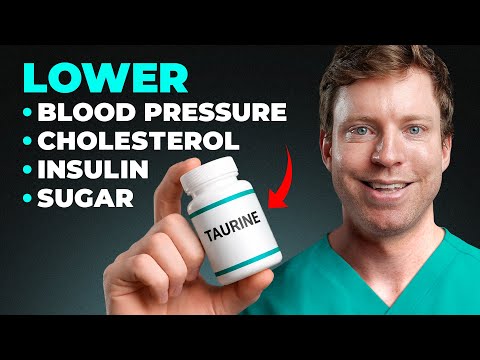
A new meta-analysis of 34 RCTs (1,394 participants, published Nov 2025) shows taurine supplementation significantly improves fasting blood sugar, insulin, lipids, blood pressure, and markers of inflammation and oxidative stress—regardless of aging theories.

3

The speaker continues to take ~2.45 g of taurine daily (1,449 mg from magnesium taurate + 1,000 mg pure taurine in his microvitamin supplement), based on human RCT data and the safety range of 1–3 g/day.

4

He explicitly rejects mouse/animal studies as reliable evidence for human health decisions, citing the reproducibility crisis (only 11% of cancer studies replicated) and prioritizes human randomized controlled trials and clinical guidelines.

Protocols

Concrete recipes — what, when, how much, and why

2 items

Daily taurine supplementation via magnesium taurate plus pure taurine

WhatTake magnesium taurate providing ~1,449 mg of taurine (along with 126 mg elemental magnesium) plus an additional 1,000 mg of pure taurine, totaling approximately 2.45 g of taurine per day.
WhenDaily, presumably with or without food; specific timing not mentioned.
Dose~2.45 g taurine per day (1,449 mg from magnesium taurate + 1,000 mg pure taurine). Magnesium taurate material is 1,575 mg total, 8% elemental Mg (126 mg).
For whomThe speaker (personal), not a blanket recommendation; he cautions others to consult a physician.
WhyHuman RCT meta-analyses show taurine improves glycemic control, blood lipids, blood pressure, and inflammation. Magnesium taurate offers better absorption than other magnesium forms, and the pair is safe at 1–3 g/day.
CaveatsNot everyone should take it based on his example alone. Taurine supplementation’s benefits are metabolic, not necessarily anti-aging per current evidence. The speaker is affiliated with microvitamin, the product containing this exact blend.

The speaker had been taking magnesium for years, but switched to magnesium taurate for superior absorption. He then recognized taurine’s own metabolic benefits through the accumulating RCT evidence. The 2024 meta-analysis already showed reductions in blood pressure, fasting glucose, triglycerides, LDL, and insulin. The new 2025 meta-analysis adds inflammation and oxidative stress improvements, reinforcing his decision. He currently sources the taurine from two components in his microvitamin brand: capsules containing magnesium taurate yielding ~1,449 mg taurine, and the powder version adding 1 g pure taurine. He emphasizes that doses of 1–3 g are safe and that he personally sees value in combining magnesium and taurine in a single routine. He explicitly separates his personal choice from a universal recommendation, underscoring that individual health status must guide supplementation.

Mechanism

Taurine is an amino acid concentrated in the brain, heart, and muscles, essential for energy metabolism, nervous system function, and heart health; deficiency causes cardiomyopathy. Magnesium’s absorption is often limited, but bonding it to taurine (an amino acid) allows it to ‘ride’ amino acid transporters for enhanced gut uptake. This dual benefit—taurine for systemic metabolic support and improved magnesium delivery—justifies the combined form. Even if taurine levels do not decline with age, supplementation at these doses appears to optimize cardiovascular and metabolic markers beyond what diet alone may provide.

Personal experience

He states, 'I've been taking magnesium for a number of years, and you have to pair magnesium with something, which is why you've got different forms of magnesium... but you can also bond magnesium to torate, which is the form that I've taken.' He then details the exact amounts in his microvitamin product and the recent addition of pure taurine.

So, I continue to take torine supplements, especially since a new human study of 1,394 people was just published on the 23rd of November, 2025 that reinforces my decision.

Also said
“magnesium torate is 8% elemental magnesium. And I have 126 milligs of elemental magnesium in micro vitamin. So there's 1575 mg of total magnesium torate material in micro vitamin leaving a total of about 1,449 mg of torine in the micro vitamin capsules. microvitamin powder has got an additional 1 gram of pure torine on top of that existing magnesium torate.”— Provides the precise dosage calculation and the two-component source of his daily taurine intake.
“At doses between 1 to 3 g, it appears to be safe. It appears to have metabolic benefits from the human randomized control trial data and it pairs nicely with magnesium.”— Confirms the safety range and dual rationale for choosing magnesium taurate.

Evidence hierarchy for supplement decisions

WhatIgnore animal and preliminary studies; base all supplement and health decisions solely on human randomized controlled trials and clinical guidelines.
WhenAlways, when evaluating new research or making personal/patient recommendations.
For whomSpeaker himself and his patients.
WhyThe reproducibility crisis means most animal and early-stage findings fail to translate to humans (only 11% replication in a major cancer study set). Human RCTs and meta-analyses provide more reliable causal evidence.
CaveatsThis approach may cause one to miss early signals, but he deems the risk of acting on false positives far greater.

The taurine saga perfectly illustrates why he adheres to this rule. The 2023 mouse and monkey lifespan study generated massive hype and supplement sales, but when the longitudinal human data contradicted the aging-decline hypothesis, the community panicked. The speaker never wavered because his decision was grounded in human RCTs showing cardiometabolic improvements, not in animal longevity claims. He extends the principle broadly: cancer biology, anti-aging compounds, and metabolic supplements all suffer from the same pattern of exciting animal results that evaporate in human trials. By filtering everything through the lens of well-conducted RCTs and published clinical guidelines, he avoids the emotional whiplash and wasted effort of chasing irreproducible findings. He cites the 11% replication rate as a stark warning to anyone who builds routines around mouse data.

Personal experience

He states that he does not base any of his own health decisions on mouse studies, nor does he rely on them when advising patients. This protocol is a direct expression of his clinical reasoning.

So, I don't base any of my health decisions on my studies and I don't rely on them for the advice that I give to my patients either. Instead, I focus on human data, randomized control trials and the clinical guidelines.

Also said
“This actually has a label. It's called the reproducibility crisis. So here's how bad it can be. A team of researchers analyzed 23 important studies linked to potential cancer treatments. They could only reproduce the findings of six of them. That's just 11%.”— Quantifies the failure rate justifying his strict evidence filter.

What's new

Personal practice updates, fresh positions, predictions

3 items

2025 meta-analysis of 34 RCTs on taurine

A new meta-analysis pooling 34 randomized controlled trials (1,394 participants) finds that taurine supplementation produces significant improvements in glycemic control, lipid profile, blood pressure, and inflammation/oxidative stress markers.

Why this matters: It arrives after the anti-aging controversy and reinforces the speaker’s decision to supplement, providing the largest RCT synthesis to date on taurine’s metabolic and cardiovascular benefits.

Background

The 2023 cross-sectional study claimed taurine declines with age and supplementation extends lifespan in mice, leading to explosive supplement marketing. A 2024 longitudinal study debunked the decline, prompting despair among longevity enthusiasts. This new meta-analysis ignores aging mechanisms and focuses purely on human RCT outcomes.

The speaker was never troubled by the 2024 study because he bases decisions on human randomized trials, not animal data. He had already referenced a 2024 meta-analysis of 25 trials showing benefits on blood pressure, blood sugar, and lipids. Now the 2025 meta-analysis adds 34 trials and confirms improvements across a broader set of outcomes, including hemoglobin A1c, insulin resistance, and inflammatory markers like CRP. The analysis found taurine reduced triglycerides, total and LDL cholesterol, fasting glucose, insulin, HOMA-IR, blood pressure, and oxidative stress. The speaker emphasizes this is a ‘striking connection of positive impacts’ especially for aging populations, and it solidifies his personal supplementation protocol. He notes that the 1,394 participants across trials give robust statistical power, moving taurine from speculative anti-aging supplement to evidence-based metabolic support.

It's actually a striking connection of positive impacts across a whole variety of factors linked to our health, especially as we age.

Also said
“So when they analyzed the data, it revealed a whole host of beneficial effects. So first there were significant reductions in metrics related to blood sugar. So much like that 2024 analysis, fasting blood sugar level fell as did HBA1C fasting insulin and a measure of insulin resistance. Torine also seemed to help with blood cholesterol levels. It reduced triglycerides, total cholesterol and LDL cholesterol. It also dropped blood pressure and it lowered key markers of inflammation and oxidative stress.”— Provides the specific cardiometabolic endpoints improved in the new meta-analysis.

2024 longitudinal study overturns taurine-aging decline hypothesis

A 2024 study using longitudinal data (tracking the same individuals over time) found no decline in taurine levels with age in humans, primates, or mice; in fact, levels may increase, invalidating the 2023 cross-sectional claim.

Why this matters: This directly contradicts the foundational premise of the 2023 anti-aging taurine hype and explains the ‘despair’ in the longevity community, yet the speaker argues it does not negate human RCT evidence for metabolic benefits.

Background

The 2023 study used cross-sectional analysis—measuring taurine in people of different ages at one time point—and saw a decline. That design is vulnerable to cohort effects; younger generations may naturally have higher levels. Longitudinal studies follow the same people over time and are more accurate.

The speaker uses an analogy with anxiety: cross-sectional data today shows younger people more anxious, suggesting anxiety declines with age; but longitudinal data reveals that when older people were young, they were less anxious—meaning anxiety may rise with age. Similarly, taurine’s apparent decline in cross-sectional data disappeared with longitudinal follow-up. The researchers combed the literature and found results ‘all over the map’—some studies showed decrease, some increase, some no change. The definitive longitudinal analysis found the opposite of the 2023 study. This raises serious doubt that low taurine drives aging, and many assumed taurine supplementation would be useless. However, the speaker points out that metabolic improvements in RCTs do not depend on the aging-decline narrative; they stand on their own. He uses this controversy to caution against overreacting to single animal or cross-sectional studies.

Torine levels did not decline with age. In fact, the opposite seemed to happen.

Also said
“Suppose we're looking at cross-sectional data on the link between age and anxiety. So what we would see today is that there's much higher levels of anxiety among the young compared to those who are older. So based on that, we might conclude that anxiety is associated with youth and declines with age. But looking at longitudinal data, it appears that people who are now old experienced a lot less anxiety when they were young compared to those who are young today.”— Illustrates exactly how cross-sectional data can mislead, making the taurine controversy understandable.
“That's why the 2024 study on torine is so important because they were careful to collect the longitudinal data and looked at how torine levels change throughout time in the same individuals and looking at things that way it gave us a very different picture.”— Emphasizes the methodological advantage that reversed the taurine-aging conclusion.

Rejecting animal studies for human health decisions

The speaker explicitly states he ignores mouse and other animal studies when making personal health decisions or advising patients, relying exclusively on human randomized controlled trials and clinical guidelines.

Why this matters: This stance challenges the common tendency in longevity communities to extrapolate from animal data, and it directly addresses the reproducibility crisis in preclinical research.

Background

The hype over taurine as an anti-aging supplement originated from a 2023 mouse and monkey study showing lifespan extension. When the longitudinal human data contradicted the decline hypothesis, many were disillusioned. The speaker notes that such reversals are common.

He points to the reproducibility crisis: a team analyzing 23 important cancer studies could only reproduce 6 (11%). Many ‘breakthrough’ animal results vanish in human trials. Therefore, he treats any early-stage finding as highly uncertain and does not alter his behavior based on them. His decision to take taurine was never rooted in mouse longevity data, but in the body of human RCTs showing metabolic benefits. He advises the same for patients. The new 2025 meta-analysis is the kind of evidence he trusts. This stance is not a reaction to the taurine controversy; it is his fundamental filtering mechanism.

Personal experience

He says, 'I don't base any of my health decisions on mouse studies and I don't rely on them for the advice that I give to my patients either.'

So, I don't base any of my health decisions on my studies and I don't rely on them for the advice that I give to my patients either. Instead, I focus on human data, randomized control trials and the clinical guidelines.

Also said
“This actually has a label. It's called the reproducibility crisis. So here's how bad it can be. A team of researchers analyzed 23 important studies linked to potential cancer treatments. They could only reproduce the findings of six of them. That's just 11%.”— Quantifies the unreliability of preclinical animal studies that often drive supplement trends.

Recommendations

Products, supplements, and tools mentioned in the episode

1 item

Taurine (as a standalone supplement)

Supplement

The speaker does not directly tell everyone to take taurine, but presents meta-analytic evidence that taurine improves fasting glucose, HbA1c, insulin resistance, lipids, blood pressure, and inflammation. He personally takes ~2.45 g/day.

Multiple meta-analyses of RCTs now converge on these metabolic benefits. The 2025 analysis adds anti-inflammatory and antioxidant effects to the profile. Taurine has been added to energy drinks for decades and is naturally abundant in some diets (e.g., Japanese). While the aging-decline hypothesis was overturned, the human RCT data remain strong. The speaker notes that taurine has a good safety record at 1–3 g/day, and the benefits align with preventing chronic conditions like heart disease and diabetes. He explicitly states that his personal use should not be taken as a universal prescription, but the preponderance of human evidence makes a compelling case for those looking to support metabolic health.

vs alternatives

Unlike many anti-aging supplements (e.g., NAD boosters like NMN) where human evidence is still conflicted, taurine has multiple consistent RCTs showing concrete improvements in established cardiometabolic risk factors.

Personal experience

He continues to take taurine and has done so for years, with the new study reinforcing his choice.

It's actually a striking connection of positive impacts across a whole variety of factors linked to our health, especially as we age.

Also said
“higher levels of torine in the blood was associated with lower BMI and a lower incidence of type 2 diabetes. They were also associated with lower levels of inflammation.”— Observational data from a 30-year UK study showing links between taurine and metabolic health, complementing RCT findings.
Find Taurine
Disclosed sponsorships2speaker disclosed

Magnesium taurate

Supplement Sponsored · disclosed

The speaker uses magnesium taurate because taurine as an amino acid allows magnesium to ride on amino acid transporters, improving absorption compared to forms like magnesium oxide or citrate. It simultaneously provides taurine.

DisclosureSpeaker sells microvitamin, which contains magnesium taurate.

Many magnesium supplements have poor bioavailability. Oxide is poorly absorbed, citrate is better but can cause GI upset. By chelating magnesium with taurine, the supplement leverages active amino acid transport in the gut, potentially increasing magnesium uptake and ensuring a steady supply of taurine. The speaker has used this form for years, long before the taurine aging hype, as a way to efficiently meet his magnesium needs. With the accumulating evidence on taurine’s metabolic perks, the choice of magnesium taurate now serves a dual purpose: magnesium status and the cardiometabolic benefits seen in RCTs. He discloses that his own microvitamin product is built around this ingredient, but the underlying logic applies generically to any magnesium taurate formulation.

vs alternatives

Magnesium oxide (poorly absorbed) and magnesium citrate (better absorbed but can cause laxative effect) are common alternatives; magnesium taurate offers absorption via amino acid transport plus taurine’s metabolic effects.

Personal experience

He has taken magnesium for years and specifically chose magnesium taurate for the absorption advantage.

since torine is an amino acid, it allows magnesium torate to ride on the amino acid transporters for better absorption.

Also said
“I've been taking magnesium for a number of years, and you have to pair magnesium with something, which is why you've got different forms of magnesium, such as magnesium oxide, which isn't well absorbed, or things like magnesium citrate. But you can also bond magnesium to torate, which is the form that I've taken.”— Explains the speaker’s rationale for choosing magnesium taurate over other forms.
Find Magnesium

Microvitamin (capsules + powder)

Product Sponsored · disclosed

Microvitamin delivers 1,575 mg magnesium taurate (126 mg elemental Mg, ~1,449 mg taurine) in capsule form, and the powder adds a further 1,000 mg of pure taurine, for a total of ~2.45 g taurine daily.

DisclosureSpeaker is the creator of microvitamin, a supplement line that includes magnesium taurate and pure taurine.

The speaker describes microvitamin as his personal vehicle for taking both magnesium and taurine in precise, studied doses. The capsule provides magnesium taurate, the powder form adds extra taurine to reach the upper end of the 1–3 g/day range that meta-analyses support as safe and effective. This split design allows flexibility in dosing and ensures the absorption benefits of the amino acid chelate. By disclosing his affiliation openly and emphasizing that his personal protocol should not be taken as a blanket endorsement, he attempts to separate the scientific case for taurine from any commercial incentive. Nonetheless, the product is presented as a convenient way to replicate the exact dosing regimen he follows based on the published evidence.

vs alternatives

Other taurine supplements may require separate magnesium sources, missing the absorption synergy. Standalone magnesium supplements lack the taurine component. Microvitamin combines them in a single system with defined doses matched to literature ranges.

Personal experience

He uses microvitamin capsules and powder daily as his source of magnesium and taurine.

microvitamin powder has got an additional 1 gram of pure torine on top of that existing magnesium torate.

Also said
“So there's 1575 mg of total magnesium torate material in micro vitamin leaving a total of about 1,449 mg of torine in the micro vitamin capsules.”— Details the exact composition of the capsule component.
Find Microvitamin

Notable quotes

Lines worth pulling out — contrarian, specific, or perfectly phrased

6 items
So, I don't base any of my health decisions on my studies and I don't rely on them for the advice that I give to my patients either. Instead, I focus on human data, randomized control trials and the clinical guidelines.
Encapsulates his disciplined, evidence-based approach and outright rejection of animal/preliminary studies as actionable evidence.
This actually has a label. It's called the reproducibility crisis. So here's how bad it can be. A team of researchers analyzed 23 important studies linked to potential cancer treatments. They could only reproduce the findings of six of them. That's just 11%.
Puts a stark number behind the reason he ignores mouse studies—only 11% of high-profile cancer biology findings were reproducible.
Torine levels did not decline with age. In fact, the opposite seemed to happen.
The core finding of the 2024 longitudinal study that shattered the anti-aging taurine narrative.
It's actually a striking connection of positive impacts across a whole variety of factors linked to our health, especially as we age.
His reaction to the new meta-analysis, highlighting the breadth of metabolic benefits from taurine supplementation.
At doses between 1 to 3 g, it appears to be safe. It appears to have metabolic benefits from the human randomized control trial data and it pairs nicely with magnesium.
Summarizes his three-part rationale for taurine: safety, human evidence, and synergy with magnesium.
But just because I take a supplement does not in any way mean that you should as well.
A crucial disclaimer that separates personal choice from universal advice, preventing misinterpretation of his protocol as a blanket recommendation.

Sign in to share feedback

Tell us if this brief hit the mark or missed it — feedback feeds back into the next iteration of the prompt.

Topics covered

taurineanti-agingcross-sectional-studieslongitudinal-studiesreproducibility-crisishuman-rctsmeta-analysismagnesium-tauratesupplementation-protocolsmetabolic-healthblood-glucoseblood-pressurecholesterolinflammationoxidative-stresscardiomyopathyheart-failurejapanese-dietdementia-risknaturally-occurring-amino-acids
Free account

Make this library yours

Reading is free for everyone. A free account adds the personal layer: save protocols, follow experts, and see how the other experts weigh in on this same topic.

Create a free accountSign in

Where the experts disagree — weekly

One email a week: the sharpest new disagreements and protocols from the library. No spam, unsubscribe anytime.

Educational summary of the cited expert source — not medical advice. Open the source recording linked above and consult a qualified physician before acting on any protocol.