UNFUCG
DashboardSearchChatBookmarksNotificationsActivityPremiumProfile
?
Home
Search
Chat
Saved
Profile
Episode
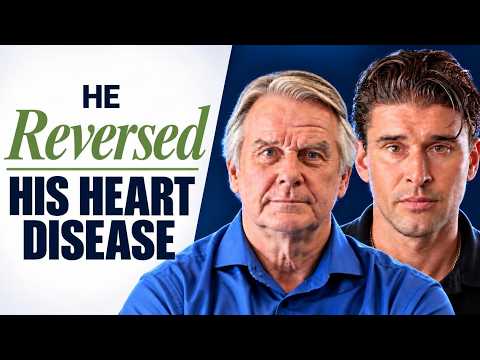
A Biochemist Reversed His Own Heart Plaque - Here’s How He Did It
~58 min
Episode Brief·YouTube

A Biochemist Reversed His Own Heart Plaque - Here’s How He Did It

Ben Greenfield
Watch on YouTube Add to chat My bookmarks← All sources

TL;DR

The four things you'd lose by not watching

4 items

TL;DR

The four things you'd lose by not watching

4 items
1

Patrick Tew reversed his own coronary artery calcification after being given 4 years to live, using a combination of high-dose vitamin K (K1, MK4, MK7), magnesium, vitamin D, iodine, and a low-carb high-fat diet.

2

He discovered that gut bacteria are crucial for vitamin K production and absorption, and that antibiotics like Cipro can kill those bacteria, leading to deficiency.

3

After the MMR vaccine caused a severe spike in his calcium score, he used vanadium and thyroid support to recover, and now emphasizes frequent testing and personalized supplementation.

4

He follows a 60% fat, 30% protein, 10% carb diet, eats once a day, and takes a custom vitamin K blend that also improves athletic endurance.

Protocols

Concrete recipes — what, when, how much, and why

2 items

Basic Reversal Protocol (Minimum)

WhatNormalize RBC magnesium (upper limit), vitamin D (60–100 ng/mL), and free T3 (through selenium/iodine or supplementation).
WhenOngoing maintenance; check labs periodically.
DoseTarget lab values: RBC Mg upper normal, vitamin D 60–100 ng/mL, free T3 optimal (not specified).
For whomAnyone with heart disease or elevated calcium score.
WhyThese are prerequisites for the vitamin K system to function; free T3 activates enzymes that activate osteocalcin and vitamin D.
CaveatsDo not exceed vitamin D >120 ng/mL; monitor levels to avoid toxicity.

Patrick emphasizes that many people ask for the minimum. He states that without adequate magnesium, vitamin D, and free T3, the vitamin K protocol will not work. He also mentions that ketones (from a low-carb diet) support foam cell destruction via autolysis. He considers these non-negotiable for plaque reversal.

Mechanism

Free T3 activates certain enzymes which activate undercarboxylated osteocalcin, which in turn activates vitamin D, which then activates other factors in the reverse calcium transport chain. Ketones are also needed for autolysis of foam cells.

Personal experience

I made sure my free T3 was around 3.8–3.9, normal. I brought my iodine levels up by consuming more iodized salt.

Bring your magnesium levels back to normal. Magnesium in red blood cells—keep it at the upper limit of normal. Bring your vitamin D levels back to normal. Somewhere between 60 and 100 ng/ml. You need to normalize your free T3.

Also said
“You need to normalize your free T3. This is either consuming sufficient amounts of selenium and iodine or taking supplements.”— Provides actionable methods for T3 optimization.

Vanadium Protocol for Pancreatic Recovery

WhatTake chelated vanadium daily for ~3 years to induce pancreatic rest and allow beta cell regeneration.
WhenDaily after MMR vaccine-induced insulin dysregulation.
DoseVanadium dose not specified; duration 3 years.
For whomOnly himself (anecdotal, radical).
WhyVanadium was historically used for diabetes; it effectively shuts down the pancreas, giving beta cells a chance to recover from immune attack.
CaveatsHe explicitly says 'I don't recommend it to your listeners because it's very radical.' Requires close monitoring.

After the MMR vaccine triggered a massive spike in insulin and calcium score (from 20 to 800 in 6 months), Patrick was desperate. He knew the body regenerates organs every 3–5 years, so he aimed to give his pancreas a break. He sourced vanadium online, along with thyroid meds, and took them for three years. His calcium score progression slowed to 5% per year. He credits this with eventually reversing the damage.

Mechanism

Vanadium acts as an insulin-mimetic and can reduce insulin secretion, temporarily suppressing pancreatic activity. Combined with thyroid medication, it allowed his pancreas to regenerate.

Personal experience

I put myself on a diet of chelated vanadium. Because vanadium used to be given to people who had diabetes 80–90 years ago. ... I took vanadium for 3 years, effectively shutting down my pancreas. And I gave my pancreas a chance to recover.

I took vanadium for 3 years, effectively shutting down my pancreas. And I gave my pancreas a chance to recover.

What's new

Personal practice updates, fresh positions, predictions

1 item

Neutrophil to HDL ratio as new marker

Near the end of the interview

Patrick mentions a very recent (12 weeks old) biomarker: neutrophil-to-HDL ratio indicates infection in the arteries.

Why this matters: Novel indicator of vascular infection that could guide treatment.

Background

He hasn't established target numbers yet, but says to search online.

Patrick explains that neutrophils usually indicate a viral, bacterial, mold, or fungal infection, so a high ratio suggests an active infection in the arterial wall. He suggests that high HDL is protective. He does not provide specific cutoffs, but says it's 'too early to say anything.' Ben Greenfield notes he will add it to his next blood panel.

The neutrophil to HDL ratio, it's becoming more and more important. Because neutrophils usually indicate that you have a viral, bacterial, mold, or fungal infection somewhere in your 'pipes' or system.

Also said
“It's too early to say anything, but if you do a keyword search, you'll find some numbers. But basically it means you need high HDL and no neutrophils.”— Clarifies the interpretation.

Recommendations

Products, supplements, and tools mentioned in the episode

2 items

Frequent biomarker testing

Practice

Regularly measure calcium score, vitamin D, magnesium, free T3, neutrophil-to-HDL ratio, APOE genotype, and other markers to guide personalized adjustments.

Patrick advocates for aggressive self-testing to monitor progression and fine-tune protocols. He has undergone 28 calcium scans, once doing two scans two hours apart to compare accuracy. He recommends testing K1, PIVKA-II, uncarboxylated osteocalcin, and NTx for bone health. He believes that frequent objective data allows for precise interventions and avoids guesswork.

vs alternatives

Conventional cardiology often relies on infrequent lipid panels and stress tests, missing early signs of plaque regression.

Personal experience

The more you test, the better you feel about your own body.

Test, test, test.

Find Frequent

HART panel from Preventia

Tool

A blood test that measures four protein markers associated with plaque buildup, allowing monitoring between scans.

Ben Greenfield brings up this test as a newer alternative to CT angiograms. Patrick responds that it's a good idea because 'I test, test, test.' He notes that calcium score scans are the gold standard but blood markers can provide intermediate feedback.

vs alternatives

Calcium scans provide direct visualization but are less frequent due to radiation; HART panel is blood-based and can be done more often.

This is a relatively new test. I don't know if you've heard of him before. It is from Preventia, a HART panel. This is a blood test that measures four different protein markers associated with plaque buildup.

Find HART

Notable quotes

Lines worth pulling out — contrarian, specific, or perfectly phrased

5 items
My body got me into this mess, my body can get me out of this mess.
Captures his self-reliant, determined mindset in the face of a dire prognosis.
You have 4 years left to live.
The stark prognosis from Mayo Clinic that set him on his journey.
The MMR shut down my thyroid because my TSH level jumped to seven. My insulin was off the charts.
Describes the dramatic vaccine-triggered setback that caused his calcium score to explode.
I haven't brushed my teeth in 12 years.
Striking claim about oral health resulting from his vitamin/mineral regimen.
Test, test, test.
His mantra for personalized medicine and data-driven health optimization.

Sign in to share feedback

Tell us if this brief hit the mark or missed it — feedback feeds back into the next iteration of the prompt.

Topics covered

calcium-scoringgut-bacteria-heart-diseasevitamin-k-protocolk1-mk4-mk7astaxanthinmmr-vaccine-effectspancreatic-regenerationvanadiumlow-carb-high-fat-dietomad-eatingautolysis-foam-cellsfetuin-aneutrophil-hdl-ratioapoe4-geneticsathletic-enduranceoral-microbiometesting-biomarkersstatins-pcsk9-inhibitorsldl-transport-mechanism
Free account

Make this library yours

Reading is free for everyone. A free account adds the personal layer: save protocols, follow experts, and see how the other experts weigh in on this same topic.

Create a free accountSign in

Where the experts disagree — weekly

One email a week: the sharpest new disagreements and protocols from the library. No spam, unsubscribe anytime.

Educational summary of the cited expert source — not medical advice. Open the source recording linked above and consult a qualified physician before acting on any protocol.