UNFUCG
DashboardSearchChatBookmarksNotificationsActivityPremiumProfile
?
Home
Search
Chat
Saved
Profile
Episode
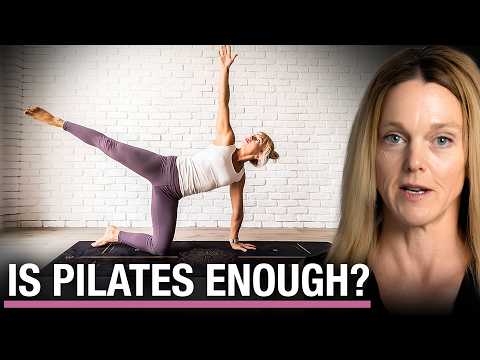
Is Pilates Enough for Women? What Women Need for Strength & Longevity
~4 min
Episode Brief·YouTube

Is Pilates Enough for Women? What Women Need for Strength & Longevity

Stacy Sims
Watch on YouTube Add to chat My bookmarks← All sources

TL;DR

The four things you'd lose by not watching

4 items

TL;DR

The four things you'd lose by not watching

4 items
1

Yoga and Pilates serve as complements for parasympathetic activation, posture, balance, and proprioception but should not replace heavy strength training as the primary exercise for women.

2

Plyometric exercises—like squat jumps, wall push-offs, battle ropes—are for everyone, even beginners, and confer significant benefits for muscle quality, CNS response, cognition, and injury prevention when combined with strength training.

3

Women are culturally pressured toward smaller, quieter, cardio-focused, yoga/Pilates-centric fitness; Stacy Sims argues they should instead "take up space" and prioritize heavy resistance training for long-term mobility and strength.

4

When someone does yoga/Pilates 5 days a week, she first asks about the deeper goal: if it's "soul food" it's fine, but if it's for aesthetics or a certain movement pattern, mixing in strength and plyometrics is essential for longevity.

Protocols

Concrete recipes — what, when, how much, and why

3 items

Warm up with box jumps for plyometric stimulus

WhatInclude box jumps in the warm-up routine to get a plyometric effect without taxing the system.
WhenDuring warm-up before the main strength or conditioning work.
DoseA few low reps as part of a dynamic warm-up.
For whomAnyone who can safely perform or scale box jumps.
WhyDelivers the explosive stimulus and neuromuscular benefits while keeping the session manageable; the warm-up context prevents over-fatigue.
CaveatsAdjust box height and volume to individual ability; not a high-volume protocol.

Sims suggests this as a low-barrier way to incorporate plyometrics into an existing workout. By doing box jumps during the warm-up, you get the CNS and muscle-quality benefits without adding a separate intense session. The intent is to make plyometrics so easy that they become a non-negotiable part of any training session, supporting better proprioception and cognition. This approach directly addresses the common excuse of time or energy constraints.

You can warm up with some box jumps, right? And so you're getting some plyometric work and it's not it's not overly taxing but you're still getting that stimulus.

Ask 'what is your goal?' before committing to 5 days/week of yoga/Pilates

WhatBefore maintaining a 5-day/week yoga/Pilates habit, clarify whether it's for joy ('soul food') or for a specific aesthetic/movement outcome.
WhenWhen designing or reassessing a fitness routine.
For whomAnyone heavily invested in a single training modality like yoga or Pilates.
WhyIf the driver is a certain look or movement pattern, other modalities (heavy resistance training, plyometrics) can achieve it more effectively while building long-term mobility and strength.
CaveatsIf the answer is pure enjoyment and mental well-being, no change is needed; the activity can stay as is.

Sims frames this as a mindset shift from rigid training blocks to a longevity-focused approach. She wants women to ask what they'll be able to do in 5-10 years if they stick only to yoga/Pilates 5 days a week. If the hidden goal is aesthetics, she points out that other modalities can provide that while also promoting strength and bone health. The question itself is a coaching tool to break through the cultural conditioning that promotes yoga/Pilates as the ideal feminine fitness path.

Personal experience

Sims says she personally asks this of women who come to her: 'I'd want to know first of all what their end goal is.'

I'd want to know first of all what what their end goal is. Is it because they love it and it's their soul food? Okay, I understand that. But if it is to go after a certain look or certain, uh, movement pattern, well, we can do that with other modalities.

Also said
“I like to look at it as, what are we doing now so that we are still very mobile and able to do things in 5 years, in 10 years. This is ideal longevity.”— Reveals the underlying philosophy behind the goal-questioning protocol.

Introduce heavy resistance training to yoga/Pilates lovers

WhatEncourage women who love yoga/Pilates and avoid sweating to try heavy resistance training as a non-bulking, non-sweaty strength modality that complements their practice.
WhenWhen someone resists strength training due to fear of bulk or dislike of sweating.
DoseNot specified; aim for consistent heavy loading per standard strength principles.
For whomWomen who identify as 'not liking to get sweaty' and exclusively do yoga/Pilates.
WhyImproves overall strength, which enhances yoga performance and long-term mobility, without the feared side effects.
CaveatsRequires proper programming to ensure progressive overload and technique; 'not getting sweaty' might not hold for all heavy lifting but is a general perception shift.

Sims directly addresses the common objection: 'I don't like getting sweaty.' She asserts that heavy resistance training doesn't necessarily make you sweat like high-intensity cardio and definitely does not make women bulky. The goal is to shift identity—seeing strength training as an ally, not an enemy. By framing it as a complement to yoga (improving asana strength), she makes the sell easier. The underlying argument is that many women are missing out on crucial health benefits because they believe myths about weight training.

Personal experience

Sims says, 'I have so many women like oh I'm just I love going to yoga and I I don't like getting sweaty. It's like okay well have you tried heavy resistance training?'

Have you tried heavy resistance training? It's not going to make you bulky. It doesn't get you sweaty but it does actually improve your strength which will complement your yoga.

What's new

Personal practice updates, fresh positions, predictions

2 items

yoga-pilates-are-complements

Yoga is primarily a parasympathetic activity with some postural/endurance strength; Pilates helps posture, balance, proprioception. Neither counts as 'pure strength.' They are add-ons, not core.

Why this matters: Directly challenges the popular narrative that yoga and Pilates are sufficient strength training for women, especially in wellness marketing.

Background

Mainstream fitness culture often sells yoga and Pilates as complete regimens for women, promising strength without bulk.

Stacy Sims emphasizes that these modalities are fine complements but should not be the foundation of a woman's exercise. She frames yoga as parasympathetic invoking, so even power yoga only offers light postural and endurance strength, not the heavy loading needed for bone density, muscle mass, and metabolic health. Pilates similarly improves postural control and proprioception but lacks the progressive overload required for real strength gains. She argues that marketing pressures women into being 'smaller and quieter,' perpetuating a cycle of insufficient loading. Sims sees this as a systemic issue: women are told to prioritize cardio and flexibility while men are encouraged to lift heavy, which she calls 'a bunch of crap.' Her reframe is to use yoga/Pilates as adjuncts to a strength-focused program.

Personal experience

Sims mentions she encounters many women who say they love yoga and don't like getting sweaty, and she uses that to introduce them to heavy resistance training.

We need to find a voice and take up space because we are always marketed as being, you need to be smaller and quieter and you need to, you know, spend more time on the cardio and you need to do yoga and Pilates and look this certain way and it's just a bunch of crap.

Also said
“It can be a little bit of postural and endurance strength, but it doesn't count with what we're talking about with pure strength.”— Clarifies the limits of yoga for strength.
“They're good complementaries, but they're not the, um, the bread and butter of what you want to do.”— Reinforces the secondary role of Pilates.

plyometrics-for-everyone

Plyometric training is not just for athletes; everyone should do it, starting with simple moves like squat jumps, wall push-offs, or battle ropes. It improves muscle quality, CNS feedback, proprioception, cognition, and reduces injury/illness.

Why this matters: Counters the common assumption that plyometrics are only for advanced exercisers and frames them as low-barrier, high-benefit additions to any routine.

Background

Traditionally, plyometrics are seen as high-impact and reserved for sports conditioning or advanced fitness, potentially intimidating for beginners.

Sims explains that plyometrics involve explosive movement, which sends fast feedback to the central nervous system and maintains muscle quality. When paired with strength training, they enhance proprioception, cognition, and reduce injury and illness risk. The adaptations from even small doses of high-intensity explosive work are substantial. She stresses that it doesn't take much volume: warming up with box jumps provides a plyometric stimulus without being overly taxing. Beginners can start with squat jumps or push-offs from a wall. The overarching message is that explosiveness is a universal need for all ages and fitness levels, not a specialized niche.

Plyometrics, who is it for? Everyone.

Also said
“We're getting a really good fast explosive response feeds back to central nervous system, maintaining muscle quality and we also see that when you're complementing strength and plyometrics so they're working together, it's better proprioception, better cognition, less injury, less illness.”— Lists the comprehensive benefits of plyometrics in combination with strength.
“What level if you're like an you know a beginner to exercise, what level of plyometrics would you advise that people... squat jumps.”— Specific, simple starting point for beginners.

Notable quotes

Lines worth pulling out — contrarian, specific, or perfectly phrased

4 items
As women, we need to find a voice and take up space because we are always marketed as being, you need to be smaller and quieter and you need to, you know, spend more time on the cardio and you need to do yoga and Pilates and look this certain way and it's just a bunch of crap.
A direct, unapologetic rejection of gendered fitness marketing; encapsulates her contrarian stance on women's exercise culture.
Have you tried heavy resistance training? It's not going to make you bulky. It doesn't get you sweaty but it does actually improve your strength which will complement your yoga.
A simple, actionable challenge that reframes strength work as a friend to yoga practitioners, directly countering two major misconceptions (bulk and sweat).
Plyometrics, who is it for? Everyone.
A bold, concise statement that demolishes the idea that explosive training is only for athletes.
I like to look at it as, what are we doing now so that we are still very mobile and able to do things in 5 years, in 10 years. This is ideal longevity.
Shifts the fitness conversation from short-term aesthetics to long-term functional capacity, a theme central to Sims' longevity messaging.

Sign in to share feedback

Tell us if this brief hit the mark or missed it — feedback feeds back into the next iteration of the prompt.

Topics covered

yogapilatesstrength-training-for-womenplyometricsheavy-resistance-traininglongevityparasympathetic-nervous-systemwomen-fitness-marketingproprioceptioncns-adaptationmuscle-quality
Free account

Make this library yours

Reading is free for everyone. A free account adds the personal layer: save protocols, follow experts, and see how the other experts weigh in on this same topic.

Create a free accountSign in

Where the experts disagree — weekly

One email a week: the sharpest new disagreements and protocols from the library. No spam, unsubscribe anytime.

Educational summary of the cited expert source — not medical advice. Open the source recording linked above and consult a qualified physician before acting on any protocol.