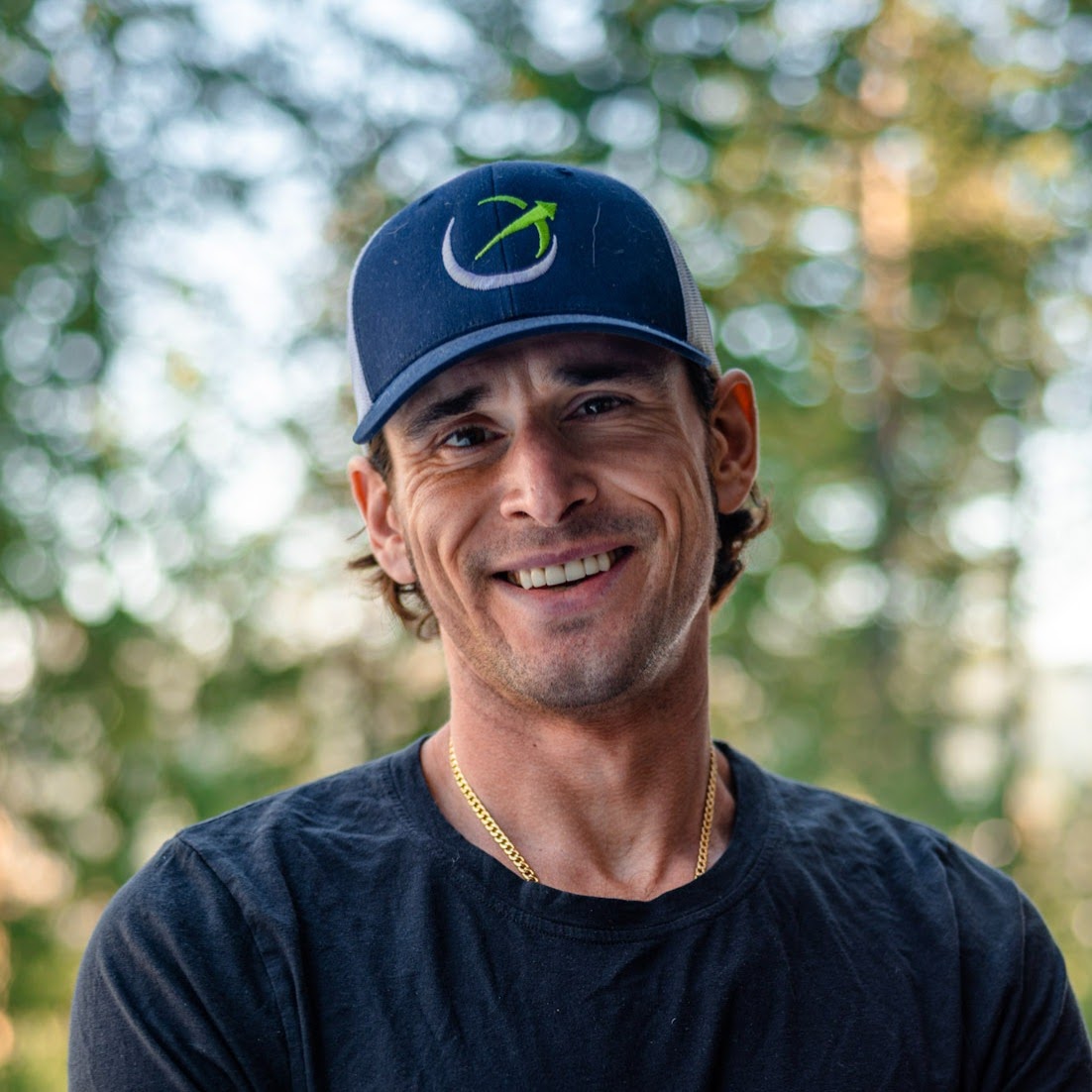
Mark Sisson, 72, abandoned VO2 max obsession after losing 32 lbs of muscle as a marathoner; now trains like a decathlete with 'Old Man Olympics' metrics (90-sec dead hang, 90-sec quarter mile, 20 dips, 1.5x bodyweight hex bar deadlift, 1-min eyes-closed single-leg balance).
2
He's over cold plunging, calling it a 'dick measuring contest' and no longer buys into brown fat or anti-inflammatory hype; his original protocol was mental training, not biohacking.
3
He rejects the 'any alcohol is poison' narrative, drinks a glass of dry farm wine nightly, and argues the body produces ethanol naturally; minimum effective dose applies to wine too.
4
He's anti-biohacking, urging basics: 67°F dark room sleep, daily walking, metabolic flexibility; and warns AI will extract margin without creating wealth, leading to an 'Idiocracy' of meaningless abundance.
Protocols
Concrete recipes — what, when, how much, and why
8 items
Old Man Olympics Fitness Tests
WhatA set of physical benchmarks to train for well-rounded fitness: 90-second dead hang, 90-second quarter-mile run, 3-minute plank, 20 dips, 1.5x bodyweight hex bar deadlift for 10 reps, 1-minute single-leg stand with eyes closed and arms crossed.
WhenUse as ongoing training targets; the list can be personalized and changed periodically.
DoseEach test is a one-time max effort; train the components throughout the week (sprinting, heavy lifting, biking, balance work).
For whomMark designed it for himself at 72, but the concept can be adapted for any age; particularly useful for those who tend to over-focus on either cardio or lifting.
WhyDevelops strength, endurance, mobility, speed, and agility simultaneously, avoiding the catabolic over-specialization of chasing VO2 max alone.
CaveatsThe specific metrics are arbitrary and personal; the list changes. The goal is balanced fitness, not winning a decathlon. Ensure proper progression to avoid injury.
Mark created the 'Old Man Olympics' as a thought experiment to organize his training after rejecting VO2 max as the sole metric. He wanted a list that would make him the only person his age in the world who could do all of them, ensuring he wasn't just lifting weights or just doing cardio. The tests cover grip strength (dead hang), speed (quarter mile), core endurance (plank), upper body pushing strength (dips), lower body strength (hex bar deadlift), and balance/proprioception (single-leg stand). He notes that these activities—sprinting, heavy lifting, biking—all build VO2 max incidentally, so he's not neglecting it. The list is flexible; his son might add golf, and Mark once included slacklining. The key is that it forces variety and prevents the monotony and muscle loss he experienced as a marathoner.
Mechanism
The dead hang and hex bar deadlift build grip and overall strength, which are independent predictors of longevity. Sprinting and the quarter-mile run develop anaerobic capacity and fast-twitch muscle fibers, which decline with age. The plank and dips maintain core and upper body muscular endurance. The single-leg stand with eyes closed trains the vestibular system and foot proprioception, directly reducing fall risk. By rotating these stimuli, the body avoids the catabolic signaling of excessive steady-state cardio while still improving cardiovascular fitness through high-intensity efforts.
Personal experience
Mark, at 72, uses this list to guide his weekly training. He sprints once a week, does a heavy leg day, rides a fat tire bike, and stand-up paddles. He can currently do the dead hang, quarter mile, plank, dips, and deadlift at the prescribed levels, and practices the balance test regularly.
I put together a list that I felt I would be the only one my age in the world who could do it, right? So I would so I would win this particular decathlon.
Also said
“stand on one foot with your arms crossed and your eyes closed, balanced for one minute. Try it sometime. It's not easy.”— Highlights a deceptively difficult balance challenge.
“it's a fun way, analysis, is a thought experiment on how do I organize my workouts so that I'm not too confined to just lifting weights.”— Explains the practical purpose of the list.
Norwegian 4x4 (Mile Repeats) for VO2 Max Maintenance
WhatFour minutes of maximum sustainable intensity followed by four minutes of recovery, repeated four times. Mark notes this is identical to the mile repeats runners have done for decades.
WhenOnce every two weeks is sufficient to maintain VO2 max, according to Mark's reference to Dr. Rhonda Patrick's discussion.
Dose4 minutes on, 4 minutes off, 4 rounds. Total work: 16 minutes high intensity.
For whomThose who want to preserve cardiovascular fitness while prioritizing strength and mobility; not for VO2 max obsessives.
WhyEfficiently maintains aerobic capacity without the volume that causes muscle loss, fitting into a balanced program.
CaveatsMark cautions that it's just rebranded old-school training; don't overdo it. High intensity can be catabolic if done excessively.
the Norwegian 4x4, I love this because 50 years ago we called that mile repeats.
Cold Plunge Mental Training Routine (Mark's Original Protocol)
WhatWalk slowly into cold water (48-52°F), stay for 3 minutes while mentally repeating 'it's not good or bad, it's just a sensation,' then warm up in a jacuzzi.
WhenNightly, before bed, as a mental resilience practice.
Dose3 minutes in 48-52°F water, followed by jacuzzi.
For whomThose seeking mental toughness or cold water adaptation, not those chasing brown fat or recovery.
WhyTrains the mind to tolerate discomfort without panic; originally designed to overcome fear of cold water, not for metabolic benefits.
CaveatsMark no longer recommends cold plunging for health benefits and is 'over it.' He warns against doing it after hard workouts due to blunting of adaptive signals. Avoid if it becomes a 'dick measuring contest.'
Mark's cold plunge practice began as a way to desensitize himself to the shock of cold water, which he hated from his triathlon days. He would walk in slowly rather than jump, using a mantra to reframe the sensation. The 3-minute duration was arbitrary but sufficient to achieve the mental shift. He paired it with a jacuzzi to warm up and found it improved his sleep. He explicitly did not do it for brown fat activation or anti-inflammation, and he's skeptical those benefits are real for most people. He stopped because the culture around cold plunging became performative and competitive, which turned him off. He still acknowledges the feel-good endorphin rush and CNS activation when combined with sauna, but sees that as a subjective pleasure, not a biohack.
Mechanism
The mental training aspect relies on exposure therapy: repeated, controlled exposure to the stressor (cold) reduces the sympathetic nervous system's overreaction. The mantra helps engage prefrontal cortex regulation of the amygdala's fear response. The subsequent jacuzzi creates a contrast effect that may enhance relaxation and sleep onset via vasodilation and parasympathetic rebound.
Personal experience
Mark did this every night at 10 PM in his Malibu pool for years. He'd walk in slowly, use the mantra, stay 3 minutes, then get in the jacuzzi and sleep 'like a baby.' He no longer does it.
Walk in slowly, not dive in and jump out, walk in slowly, you know, give myself the mantra, you know, it's not good or bad, it's just a sensation. And then stay in there for 3 minutes
Also said
“it was more of a mental thing. It for me, it always was. It was never about the the purported brown fat activation, fat burning benefits.”— Clarifies the original intent was never biohacking.
Foot Health Protocol for Longevity
WhatWear minimalist, wide-toe-box shoes (like Peluva) that allow the big toe to splay; use toe socks; walk barefoot on varied surfaces (cobblestones, riverbeds); practice single-leg balance with eyes closed.
WhenDaily footwear choice; incorporate barefoot walking and balance training into regular routine.
DoseNo specific duration; the key is consistent use of foot-shaped shoes and regular barefoot time. The single-leg stand is 1 minute per side, eyes closed, arms crossed.
For whomEveryone, especially those over 50 or with foot issues, bunions, or balance concerns. Also beneficial for athletes to improve ground connection and power transfer.
WhyRestores natural foot function, strengthens intrinsic muscles, improves balance and glute engagement, and reduces fall risk—the leading cause of injury-related death in older adults.
CaveatsTransition slowly to minimalist shoes to avoid overuse injuries. In very cold conditions (below 30°F), insulated minimalist boots may still leave toes cold; use appropriate socks. Not all activities require barefoot feel—use judgment.
Mark's foot health protocol is rooted in the idea that modern footwear deforms the foot by squeezing the big toe against the other toes, causing bunions, atrophy of intrinsic muscles, and loss of sensory feedback. This leads to poor balance and a higher risk of falls after 65, where one in three falls results in a hip fracture and 25% of those patients die within a year. By wearing shoes that let the toes splay (especially the big toe, which is the last point of contact in gait and critical for glute activation), and by walking barefoot on uneven surfaces, the brain reconnects with the foot, improving the kinetic chain. He cites that in the gym, restrictive shoes can reduce glute engagement by 20-30% because the big toe can't abduct. The single-leg stand with eyes closed is a direct test and trainer of this foot-brain connection. He also recommends toe socks because regular socks still compress the toes.
Mechanism
The windlass mechanism of the foot relies on the big toe extending and the arch rising to create a rigid lever for push-off. When the big toe is compressed, this mechanism fails, leading to inefficient gait and reduced power. The intrinsic foot muscles (like the abductor hallucis) atrophy without the stimulus of splaying, weakening the foot's ability to adapt to uneven terrain. Proprioceptive feedback from the foot sole is essential for balance; thick, cushioned shoes dampen this input, delaying reactive muscle contractions. Restoring foot sensation and strength improves balance and reduces fall risk. The big toe also has a direct neurological connection to the gluteus maximus; when the toe can't splay, glute activation decreases, affecting hip stability and power.
Personal experience
Mark wears Peluva shoes exclusively and founded the company based on these principles. He enjoys walking on cobblestones in Europe ('foot candy') and bouldering on riverbeds. He receives testimonials from customers who resolved chronic foot pain and improved their walking.
The big toe is the most important joint in the foot. It is essential for locom motion. It wants to spllay outwardly and it wants to be the last point of contact when you push off.
Also said
“if you're wearing restrictive shoes in the gym and you start doing a leg day, you lose 20 to 30% of your glute engagement just by virtue of the fact that your big toe is not involved in that activity”— Quantifies the performance impact of foot restriction.
“we make a five-toed sock”— Practical tip to avoid even sock-induced toe compression.
Minimum Effective Dose Approach
WhatApply the concept of minimum effective dose to food, protein, exercise, and even alcohol—do the least amount necessary to achieve the desired outcome, not the maximum possible.
WhenDaily, as a guiding philosophy for lifestyle choices.
DoseIndividualized; Mark aims for ~110-120g protein, minimal exercise to stay fit, and stops at half a glass of wine if satisfied.
For whomAnyone prone to all-or-nothing thinking or over-optimization.
WhyPrevents overconsumption, overtraining, and burnout; promotes sustainability and avoids the catabolic effects of excess.
CaveatsRequires honest self-assessment to know what 'effective' means. Not an excuse for laziness; Mark notes that if you do what it takes to look fit, you're probably pretty fit.
I use the minimum effective dose. So, what's the minimum effective dose of food I need to to, you know, to get through the day? Not what's the most I can eat.
Daily Walking
WhatWalk for one hour every day, ideally outdoors.
WhenDaily, Mark does it in the evening.
Dose1 hour.
For whomEveryone, as a foundational practice.
WhyLow-intensity movement that supports metabolic health, mobility, and mental well-being without being catabolic.
I do the same 1-hour walk every night that I can do anywhere in the world with any amount of income.
Sleep Hygiene Basics
WhatSleep in a 67°F dark room with ambient white noise for 8 hours per night.
WhenNightly.
Dose8 hours.
For whomEveryone.
WhyFoundational for recovery, cognitive function, and longevity; non-negotiable before considering any biohacks.
get your sleep dialed in. And by that I mean 67° dark room, some ambient white noise and sleep, you know, 8 hours plus or minus a night.
Do Something Hard Every Day
WhatIntentionally engage in a physically or mentally challenging task each day—usually a workout, but could be writing or another demanding activity.
WhenDaily.
DoseOne hard thing per day.
For whomAnyone seeking purpose and satisfaction; particularly those who feel life is too easy or automated.
WhySatisfies an innate human drive for effort and accomplishment, making the rest of the day more rewarding and reinforcing resilience.
CaveatsThe 'hard thing' should be challenging but not destructive; it's about effort, not punishment.
there's something in the human brain that wants you to do the hard stuff. And that's why every day I want to do something hard every day.
What's new
Personal practice updates, fresh positions, predictions
6 items
shift-from-vo2max-to-decathlete-fitness
Mark Sisson now rejects VO2 max as the sole longevity metric, advocating a decathlete-style fitness that balances strength, speed, mobility, and balance after realizing his marathon training cost him 32 lbs of muscle and functional ability.
Why this matters: Contrarian to prominent longevity voices (Attia, Huberman, Patrick) who elevate VO2 max as the gold standard; Mark argues the pursuit is catabolic and genetically capped, and that well-rounded fitness better serves real-life mobility and injury prevention.
Background
Mark was a sub-2:20 marathoner with a VO2 max of 67, which he calls 'meek and meager' compared to elites. He noticed that chasing VO2 max forced him to forego other sports and left him a 'skinny whizzed old bag of bones.'
Mark's central argument is that longevity is about mobility and the ability to navigate life—play with grandkids, travel, avoid falls—not just a number on a lab test. He points out that VO2 max is largely genetically predetermined; you can't train past your genetic ceiling, so obsessing over it yields diminishing returns. The training required to reach the top 2% for age is so catabolic that it sacrifices muscle, strength, and the capacity for other activities. He contrasts this with a 'decathlete perspective' where he trains sprinting, heavy lifting, biking, and balance, all of which incidentally build VO2 max without making it the focus. His 'Old Man Olympics' list—90-sec dead hang, 90-sec quarter mile, 3-min plank, 20 dips, 1.5x bodyweight hex bar deadlift, 1-min eyes-closed single-leg stand—is a thought experiment to organize workouts around well-rounded fitness, not just lifting or just cardio. He notes that even the Norwegian 4x4 protocol is just rebranded mile repeats from 50 years ago, and that maintaining VO2 max can be done with as little as one session every two weeks.
Personal experience
As a marathoner, Mark weighed 140 lbs; now at 72 he's 172 lbs with the same body fat. He lifted weights even then but couldn't keep muscle because 'the running was so catabolic.' He couldn't ski, play tennis, basketball, or football. Now he sprints once a week, does heavy leg days, rides a fat tire bike, and stand-up paddles, all while maintaining a lean, muscular physique.
I weighed, you know, 40 pounds. I weigh 172 now. So I'm 32 pounds heavier now. same body fat. I lifted weights. I was an aggressive weightlifter in those days. And I could put 225 up. I could do a lot. But I couldn't keep any muscle on because the running was so catabolic.
Also said
“one thing that people don't understand about V2 max, it's genetically predetermined. There's a maximum that you can get and you can never train yourself above that genetic maximum.”— Undercuts the idea that everyone can meaningfully improve VO2 max with enough training.
“most of the things that I do in terms of training, whether it's sprinting one day a week, uh, heavy lifting in in including a heavy leg day, a bike ride, those all build V2 max. So, the fact that I'm not focusing on V2 max doesn't mean I'm not optimizing.”— Shows his approach still improves the metric without obsession.
cold-plunging-disillusionment
After 15 years of cold plunging, Mark is 'over it,' dismissing brown fat activation and anti-inflammatory claims for most people, and criticizing the practice as a 'dick measuring contest.'
Why this matters: Pushes back against the widespread biohacking enthusiasm for cold exposure, reframing it as a mental training tool at best, not a metabolic or recovery hack.
Background
Mark started cold plunging in Malibu to train himself to enter cold water without panic, not for health benefits. He did it nightly at 10 PM, walking slowly into a 48-52°F pool, staying 3 minutes, then warming in a jacuzzi.
Mark argues that the primary reason people cold plunge is because it's hard, not because of robust science. He doesn't buy brown fat activation for most people, nor the anti-inflammatory benefits outside of elite athletes using it for recovery between games. He warns that cold immersion after a hard workout can blunt the biochemical signals that drive adaptation, citing inhibition of mitochondrial biogenesis and satellite cell proliferation. He also notes that the culture has become a 'dick measuring contest' of duration and temperature, which turned him off. He still acknowledges the feel-good rush and CNS activation when paired with sauna, but says the ability to withstand 4 minutes in 48°F water no longer intrigues him. His original protocol was purely mental: walk in slowly, repeat a mantra ('it's not good or bad, it's just a sensation'), stay 3 minutes, then jacuzzi, and sleep like a baby.
Personal experience
Mark cold plunged every night in his unheated Malibu pool for years, not for fat loss or recovery, but to overcome his hatred of cold water from triathlon days. He'd walk in slowly, not jump, and use the mantra. He'd finish in the jacuzzi and sleep deeply. He no longer does it.
cold plunging has become a dick measuring contest with people seeing how long they can stay in and then brag about it. And that's when I got over it.
Also said
“I don't believe I don't buy into the brown fat activation for most people. I don't buy into the, you know, the anti-inflammatory benefits of it.”— Directly rejects two commonly cited benefits.
“if it does have any ant anyin inflammatory benefits don't do it after a hard workout or you'll negate you know some of the biochemical signals that that workout produced.”— Adds a caveat about timing that aligns with some research.
moderate-alcohol-defense
Mark argues that moderate alcohol consumption, particularly a glass of low-alcohol, additive-free wine with dinner, is not harmful and may mitigate stress, countering the 'any amount is poison' narrative.
Why this matters: Directly challenges the abstinence messaging from health influencers, providing a nuanced, dose-dependent view backed by the body's endogenous ethanol production.
Background
Prominent health figures have driven a surge in non-alcoholic products by claiming all alcohol is toxic. Mark counters that the human body produces up to 30-35 grams of ethanol daily and the liver handles small doses easily.
Mark's position is that alcohol toxicity is dose-dependent, not absolute. He notes that the body naturally produces ethanol and can metabolize it; the problem is quick overdoses, not small, consistent amounts. He drinks a glass of wine almost every night, preferring Dry Farm Wines for their lower alcohol, lack of additives, and biodynamic farming. He believes a glass of wine can take the edge off a stressful day, potentially reducing cortisol, and that having it with dinner at 6 PM won't disrupt sleep at 10 PM. He warns against the binge-abstinence cycle: people who go cold turkey often end up on a bender, whereas consistent moderation reduces abuse risk. He applies his 'minimum effective dose' philosophy to wine—stopping at half a glass if he's had enough. He also distinguishes problematic alcohols (sugary, high-alcohol, additive-laden) from clean, dry wines.
Personal experience
Mark has been drinking wine his whole life, hasn't been drunk in 20 years, and has a glass almost every night. He often leaves half a glass unfinished because he's reached his minimum effective dose.
I enjoy a glass of wine, you know, pretty much every night. And I think there are there are types of alcohol that are probably really problematic for a lot of people, especially the ones that that have the sugars in them and lots of, you know, lots of additives and things like that. I stay away from those myself.
Also said
“the body produces ethanol and ethanol burns within the human body naturally providing seven calories per gram. Uh we don't produce a lot of it, but we can produce up to 30 35 grams a day of ethanol on our own.”— Provides a biological basis for the body's capacity to handle alcohol.
“what's the minimum effective dose of wine? Like there's a point at which and I hit that, you know, I'm like, 'No, I don't want like I might have a half a glass of wine left and go, nope, I don't I don't need to finish it.'”— Illustrates his practical application of moderation.
anti-biohacking-stance
Mark positions himself as the 'anti-biohacking guy,' dismissing most gadgets and supplements (methylene blue, compression sleeves, brain headsets) as distractions from the basics of sleep, diet, walking, and metabolic flexibility.
Why this matters: A prominent health influencer rejecting the entire biohacking industry's premise, arguing it's a tech-bro pursuit of magic potions that obviate hard work.
Background
Biohacking has exploded with devices, peptides, and protocols promising optimized health. Mark sees it as a symptom of people looking for problems that don't exist and then selling solutions.
Mark's critique is that biohacking preys on the desire to bypass the hard work of foundational health. He lists the basics: sleep in a 67°F dark room with white noise for 8 hours, dial in protein and eating schedule for metabolic flexibility, walk every day. If those aren't in place, he says, don't talk about methylene blue. He draws a parallel to the tech world's Soylent—a solution to a problem (hating to eat) that didn't exist for most people. He extends this to GLP-1 agonists used as productivity hacks to suppress hunger so people can keep grinding, warning of downstream effects like loss of libido and connection. He believes the biohacking movement is largely driven by tech bros who never learned to push themselves physically, seeking helicopter drops onto Everest. His core message: life is about doing hard things and reaping the benefits; no pill or device replaces that.
Personal experience
Mark recounts seeing biohacking expos with protocols and equipment that make him 'roll my eyes.' He contrasts with his own routine: same coffee, workout, and 1-hour walk he did when poor, emphasizing that wealth and gadgets don't improve the things that make us human.
if you guys haven't covered the basics, get your sleep dialed in. And by that I mean 67° dark room, some ambient white noise and sleep, you know, 8 hours plus or minus a night. If you haven't figured that out, if you haven't figured your diet out, um, gotten your protein dialed in, gotten your, you know, your eating schedule uh, strategized so you develop metabolic flexibility, if you don't have your movement patterns, if you're not walking every single day, don't start talking to me about methylene blue
Also said
“the thing that bothers me most about biohacking is this pursuit of the magic potion, the magic injection, the magic pill, the magic protocol that obviates the need to do the hard work.”— Captures the core philosophical objection.
“I think the world of tech is full of people who are looking for problems that don't really exist and then they create the problem and then they then they find the solution for it.”— Explains the origin of many biohacking products.
ai-skepticism-and-abundance-critique
Mark is deeply skeptical of AI, viewing it as a word-predicting tool built on flawed human data that will only extract margin from existing systems, not create wealth, and fears a future of meaningless abundance.
Why this matters: Offers a stark, human-centric counterpoint to tech optimism, linking AI to a loss of purpose and an 'Idiocracy' scenario where everything is done for you.
Background
AI is rapidly advancing, with promises of efficiency and abundance. Mark's experience with early AI giving false information about himself shaped his distrust.
Mark argues that AI is fundamentally limited because it's trained on human internet input—full of bias, hate, and non-facts—so hallucinations won't disappear. He sees it as a margin-extraction tool: his son uses AI agents to reorganize a warehouse for 5% more efficiency, but that's not innovation. On the stock market, AI just helps people take money from each other without creating value. He predicts it will eliminate professions like law and radiology, but notes that even in those fields there are no absolute right answers, just opinions. His deeper fear is the promise of abundance: if robots do everything, what reason is there to wake up? He equates overabundance to obesity and diabetes—too much of a good thing becomes its own weight. He cites the movie Idiocracy and says even as a wealthy man, his joy comes from the same simple, hard things he did when poor: coffee, workout, walk, family. He rejects the idea of living to 180 if there's nothing meaningful to do.
Personal experience
Mark asked AI about himself and it lied, then defended the lie. He now uses a Claude-powered daily brief to save time on calendar and email review, but sees that as margin improvement, not life-changing. He remains wealthy but lives identically to his poorer days, finding meaning in hard work and human connection.
why do you wake up in the morning? Like when when everything is done for you and everything is and you don't have to memorize anything. I mean, kids aren't going to have to remember anything. They're not going to have to. I just envision this world where everybody's a stupid, you know, idiocracy type world
Also said
“all of this is just there. It's just people taking money from other people. It's not creating wealth. It's not producing. It's not adding to the to the GDP.”— Economic critique of AI's value creation.
“obesity and diabetes is is abundance too.”— Powerful analogy that abundance itself can be pathological.
foot-health-longevity
Mark identifies foot health as the lowest-hanging fruit in longevity, arguing that strong, mobile feet prevent falls and hip fractures, and that modern footwear causes bunions and atrophy by squeezing the big toe.
Why this matters: Shifts longevity focus to an overlooked, mechanical foundation—foot function—and ties it directly to mortality risk from falls after 65.
Background
One in three people over 65 falls each year; 25% of hip fracture patients die within a year. Mark contends this cascade starts with weak feet from a lifetime of restrictive shoes.
Mark explains that the big toe is the most important joint for locomotion: it should splay outward and be the last point of contact during push-off. Modern shoes compress the big toe against the others, causing bunions (which he insists are not genetic—no indigenous people have them) and atrophy of intrinsic foot muscles. This loss of foot strength and sensory feedback means older adults can't catch themselves when they trip, leading to falls. He advocates for minimalist footwear that allows the toes to splay and the foot to feel the ground, rewiring the kinetic chain. He notes that in the gym, restrictive shoes can reduce glute engagement by 20-30% because the big toe isn't involved. His company Peluva makes shoes for various activities (golf, court, trail, winter) based on this principle. He also recommends toe socks and single-leg balance training (1 minute eyes closed, arms crossed) to rebuild foot-brain connection.
Personal experience
Mark wears Peluva shoes exclusively and receives testimonials from people who couldn't walk without pain now moving comfortably. He enjoys walking on cobblestones ('foot candy') and bouldering on riverbeds to stimulate foot sensation.
the lowest hanging fruit in longevity, which nobody talks about, is foot health.
Also said
“after the age of 65, like one out of every three people falls at some point and breaks a hip and then 25% of those die within a year.”— Quantifies the mortality risk tied to foot dysfunction.
“bunyions by the way are not they're not genetic. You don't have bunyions because your mother had them or your father had them. You have bunyions because you wore bad shoes. No indigenous people have bunions.”— Challenges a common belief about foot deformities.
Recommendations
Products, supplements, and tools mentioned in the episode
1 item
Dry Farm Wines
Product
Biodynamic, low-alcohol, additive-free wines sourced for purity and lower sugar content, recommended as a cleaner option for moderate drinkers.
Mark recommends Dry Farm Wines as a way to enjoy alcohol without the downsides of conventional wines. These wines are grown without irrigation, so grapes have less sugar and the resulting alcohol content is naturally lower. They contain no added sulfites, sugars, or histamine-rich tannins from over-maceration, which Mark says are common in California cabs and cause reactions. He drinks a glass almost every night and argues that this type of wine, consumed with dinner, does not disrupt sleep or cause hangovers. He contrasts it with high-alcohol, additive-laden wines that are more likely to cause problems.
vs alternatives
Compared to typical commercial wines, Dry Farm Wines have lower alcohol, no additives, and are less likely to trigger histamine reactions or sleep disruption, according to Mark.
Personal experience
Mark has been a fan for a long time and drinks Dry Farm Wines regularly. He finds that a glass with dinner provides mild euphoria without negative next-day effects.
I've been a big fan of dry farm wines for a long time. These are wines that are that are sourced for their relatively lower alcohol content to begin with, for their lack of additives. There are no additives. These are biodnamic wines.
Also said
“a lot of these wines are not overly merated. You know, in the US, we get a lot of these, particularly in California cabs that are just so deep red, dark, you know, whatever because the skins, the red skins are ground up and ground up and ground. That's where all the tannins and that you the histamines reside.”— Explains why conventional wines can be problematic.
Minimalist, wide-toe-box shoes designed to let the foot function naturally, with models for golf, court sports, trail running, hiking, and winter.
DisclosureMark Sisson is the founder of Peluva.
Mark founded Peluva based on the principle that modern footwear deforms the foot by squeezing the big toe, leading to bunions, atrophy, and increased fall risk. The shoes feature a foot-shaped toe box that allows the toes to splay, a thin sole for ground feel, and zero drop. He argues this restores the natural gait, improves balance, increases glute engagement in the gym, and can resolve chronic foot pain. The line includes a court shoe for pickleball/tennis, a golf shoe worn by long-drive competitors, a trail shoe (ATR), a winter boot with shearling lining, and a desert boot. He emphasizes that transitioning to such shoes rewires the kinetic chain and that even socks should be toe socks to avoid compressing the toes. He receives emotional testimonials from customers who regained pain-free walking.
vs alternatives
Compared to traditional cushioned running shoes or stiff hiking boots, Peluva shoes allow the foot to move naturally, providing sensory feedback that Mark argues prevents ankle rolls and knee tweaks by letting the brain adapt to terrain in real time.
Personal experience
Mark wears Peluva shoes exclusively and uses them for all activities. He notes that walking on cobblestones or riverbeds in them feels amazing ('foot candy').
PUVA was based on this idea that we want the big toe to be the hero, to be the the the part of the foot that regains its strength.
Also said
“we have a winter boot. It's got the shearling lining. It's uh it's leather. It's got um it's just amazing boot.”— Addresses the cold-weather limitation of minimalist shoes.
“I really I feel more strongly than ever that we're changing the way the world looks at strength, foot health, mobility, and longevity through footwear.”— Conveys the mission behind the product.
Lines worth pulling out — contrarian, specific, or perfectly phrased
6 items
cold plunging has become a dick measuring contest with people seeing how long they can stay in and then brag about it. And that's when I got over it.
Blunt, memorable dismissal of a popular biohacking trend.
the lowest hanging fruit in longevity, which nobody talks about, is foot health.
Reframes longevity around an overlooked, mechanical factor with stark mortality stats.
if you guys haven't covered the basics, get your sleep dialed in. And by that I mean 67° dark room, some ambient white noise and sleep, you know, 8 hours plus or minus a night. If you haven't figured that out, if you haven't figured your diet out, um, gotten your protein dialed in, gotten your, you know, your eating schedule uh, strategized so you develop metabolic flexibility, if you don't have your movement patterns, if you're not walking every single day, don't start talking to me about methylene blue
Comprehensive, no-excuses checklist that undercuts the entire biohacking supplement industry.
why do you wake up in the morning? Like when when everything is done for you and everything is and you don't have to memorize anything. I mean, kids aren't going to have to remember anything. They're not going to have to. I just envision this world where everybody's a stupid, you know, idiocracy type world
Stark existential warning about AI-driven abundance eliminating purpose.
I weighed, you know, 40 pounds. I weigh 172 now. So I'm 32 pounds heavier now. same body fat. I lifted weights. I was an aggressive weightlifter in those days. And I could put 225 up. I could do a lot. But I couldn't keep any muscle on because the running was so catabolic.
Vivid personal proof that excessive endurance training sacrifices muscle, even with lifting.
the thing that bothers me most about biohacking is this pursuit of the magic potion, the magic injection, the magic pill, the magic protocol that obviates the need to do the hard work.
Crystallizes his anti-biohacking philosophy in one sentence.
Sign in to share feedback
Tell us if this brief hit the mark or missed it — feedback feeds back into the next iteration of the prompt.
Reading is free for everyone. A free account adds the personal layer: save protocols, follow experts, and see how the other experts weigh in on this same topic.
Educational summary of the cited expert source — not medical advice. Open the source recording linked above and consult a qualified physician before acting on any protocol.