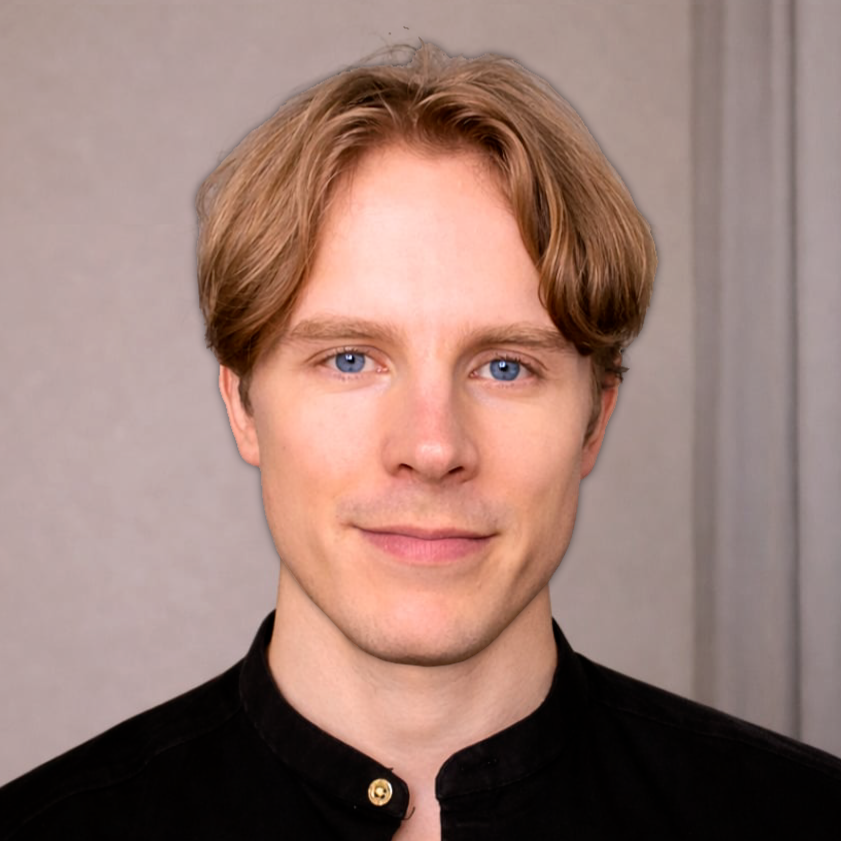
Chris Angie went from 320 lbs, smoking two packs a day and on antidepressants for 22 years to becoming ‘the world’s most connected person’ by obsessive self‑logging — but argues the real hack is understanding your subjective experience of time.
2
His central claim: different apps and interfaces push your brain into specific temporal frames (temporary, soon, future, recent) that either accelerate anxiety or allow you to stretch time — and you can deliberately use ‘slow apps’ like countdowns and count-ups to slow your perception of life.
3
Practical pieces: block your spouse and closest friends on all social media, practice ‘being old’ by asking for help, make a calendar appointment one year from today with a message to yourself, and always keep a chaos agent (a partner or pet) nearby to prevent over‑optimisation.
4
He is conspicuously anti‑immortality — ‘I’m pro‑death, death is not a disease that needs to be cured’ — and believes happiness arrived only when he stopped trying to be a ‘grown‑up’ and got okay with not being okay.
Protocols
Concrete recipes — what, when, how much, and why
6 items
Daily countdown/up ritual to slow time perception
WhatEvery day, open a countdown app (or several) that visually show how many days remain until a future event, and also how many days have passed since a meaningful past event. Watch the numbers change deliberately, not passively.
WhenDaily, ideally as a brief morning or evening check‑in, and whenever you feel time slipping away.
DoseA few minutes per day; multiple apps if desired.
For whomAnyone who feels that weeks and months are disappearing without a trace; particularly useful as you get older.
WhyDeliberately paying attention to temporal markers — e.g. watching 45, 44, 43 days count down to a trip — forces the brain to re‑engage with the passing of time, which counters the ‘time flying by’ effect caused by routine and inattention.
CaveatsDon’t let it become a passive widget; the value is in the conscious act of looking. Avoid obsessing over dates to the point of anxiety.
Chris explains that routine and energy conservation are the reasons time speeds up — the brain stops paying attention to repeated experiences. By actively tracking the approach of a future event and its recession into the past, you break that automaticity. He uses multiple countdown apps on his phone, some counting up from past events (e.g., 152 days since a big party) and some counting down to future concerts or milestones. He says this practice is so important that he’s been doing it for over a decade. When Spotify asked him how they could help people with time, he mapped their interface to temporal feelings, and countdowns were central. The practice also creates ‘synchronicity’ — by looking every day, you notice the journey instead of the blur.
Personal experience
Chris says he has a bunch of countdown apps on his phone and loves watching something he had been looking forward to slowly approach and then drift away into the past. He shares a personal example: ‘Looking forward to my … 25,000 days is … 4,000 days from now’ and a big party at his house was 152 days ago. He finds it almost meditative.
So every day you see it okay 45 44 43 40 39 etc. looking at it every day slows down your perception. … I love watching something I knew was far away in the future kind of come arrive and then slowly go and watch it get farther out.
Also said
“I have a lot of countdown apps. … I love them because they also count show me how far things are in the past. So, I like watching things go away real slow that I was looking forward to in the future.”— Describes the dual count‑up/countdown practice that makes the technique richer.
Block your closest people on all social media and never connect to them online
WhatUnfollow and outright block your spouse, your best friends, and anyone you truly care about on every social platform. Never use social media to interact with them. Only connect to ideas (pages, groups) or professional contacts you’ve met in person.
WhenNow, and maintain it permanently.
DosePermanent; make it a clean break.
For whomAnyone who feels their close relationships have become shallow or are being ‘maintained’ through likes and story views.
WhySocial media collapsed relationships into passive consumption, rewarding asynchronous, low‑effort interaction. Blocking forces your close relationships back to synchronous, high‑quality communication like calls or in‑person talks, and prevents you from treating a person’s life as content.
CaveatsIt will feel strange socially; people may be offended. You may need to explain the philosophy gently. Also, ensure you have alternative channels (phone, messages) that you still use deliberately.
Chris argues that between 2012 and 2015 the social internet shifted from being a tool for connection to a passive consumption engine. People now scroll through friends’ lives as if they were content, without genuine synchronous exchange. He says the richest conversations — like the podcast itself — happen in real time and cannot be replaced by asynchronous texts or comments. He implemented this block with his spouse 15 years ago; they have never seen each other’s online lives. He also does not connect to people on social media at all unless it’s a business connection he has first met in person. He only follows groups or pages that align with his values. The practice removes the false sense that you are keeping up with someone and returns the relationship to deliberate, intentional communication.
Personal experience
Chris reveals that he has never seen his spouse online — he has no idea what music, friends or conversations his partner engages with digitally. His closest long‑time friends asked to connect but he refused. He says this has preserved the depth of his relationships and prevented the ‘contentified’ version of his loved ones from taking over.
The people I'm closest to are blocked on all social media and have been since, you know, the last 15 years. My spouse and I have never seen each other online. … I only connect ideas. Um so like I'll follow you know groups on Facebook … I'll only connect to someone in a business way if I've actually met them.
Also said
“It's become way too easy to consume another person's life as if their content.”— Summarises the problem that the blocking solves.
Practice being old daily
WhatSeveral times a week, deliberately ask for help with physical tasks you could do on your own — lifting groceries, reading labels, reaching something — just to inhabit the felt sense of being older and physically limited.
WhenWhenever a natural opportunity arises; at least a couple of times per week.
DoseFlexible; the point is the regular practice, not a set duration.
For whomEspecially people in middle age and beyond, but even younger people can benefit from reducing ego around capability.
WhyPracticing being old prevents the sudden, traumatic realisation that your body has aged. If you wake up at 60+ and suddenly discover you can’t lift what you used to, the shock and self‑judgment may be more damaging than the biological change. By practicing early, you stay comfortable with your real age and reduce judgment of yourself.
CaveatsDo it genuinely, not in a performative or mocking way. Don’t use it to become helpless; the aim is mental integration, not dependency.
Chris is nearly 60 but has the energy and appearance of someone 20–25 years younger. This creates a disasociative gap: when he meets people his own age who look old, his conditioning tells him to treat them like ‘old people’, yet he has to remember he is their peer. To bridge that split and avoid the day when he looks in the mirror and can’t recognise himself, he practices asking for help that he doesn’t strictly need. He’ll ask a store clerk to put things in his car, ask someone to read something for him, all in a spirit of accepting the reality of aging. He emphasises that self‑judgment kills faster than anything, and this practice is a way of removing that judgment by aligning expectations with reality.
Personal experience
Chris regularly asks for assistance at the grocery store and with reading, even though he could manage these tasks. He says that after about 5 years of deliberately accepting his age in this way, it has become a super important part of his mental health.
I ask for help like at the grocery store, can you put these things in my vehicle or or help me lift something? I'll ask for all sorts of assistance. Can you read something for me … I've long maintained that practicing being old helps you become old.
Also said
“A lot of people also have this age bias like where you can't be old you can't act old and again there nothing kills you faster than self judgment.”— Explains why the practice is protective, not performative.
Future self appointment for synchronicity and time expansion
WhatRight now, create a calendar entry exactly one year from today. Write yourself a short note — ideally something positive or aspirational. Then forget about it. When it appears in a year, it will feel like a message from your past self, creating a temporal synchronicity that stretches your sense of time.
WhenDo it immediately after reading/listening.
DoseA one‑time annual rhythm; you can do more, but start with one.
For whomAnyone who feels time disappearing.
WhyOur devices keep us locked in the anxious ‘next few hours’ mindset. Anchoring a future point and then ignoring it trains the brain to hold a larger temporal horizon. When the reminder arrives, it jars you out of the immediacy and shows you how much has changed, which slows the retrospective perception of time.
CaveatsWrite something that feels good to read — don’t use it for self‑criticism. Make sure your calendar is set to actually notify you on that date.
Chris ties this to his time‑interface framework: unlike maps and reminders that create anxiety, a deliberate future note sitting untouched for a full year pulls attention into a longer, more spacious temporality. He says that when the appointment pops up, it’s often completely forgotten, and the synchronicity of receiving a message from your past self is a powerful reminder of how much life has happened, making the year feel fuller rather than a blur. He has used this technique for years and claims that whatever you write tends to come true, simply because you set an intention and then let go.
Personal experience
Chris has used this hack extensively and says he loves the moment when a forgotten calendar appointment from years ago arrives and creates a ‘weird synchronicity’. He says he once set a note from a past podcast about being on a specific episode number, and it was a fun moment when it arrived.
Make an appointment with yourself whenever you're listening to this podcast for one year from today, right? Uh and write yourself a note in your calendar. Uh I promise whatever you write, it will come true.
Also said
“You'll forget that appointment's there and by the time it comes, it's kind of this weird synchronicity.”— Explains the mechanism — the disorienting, time‑stretching effect of a forgotten future message.
Invite a chaos agent into your life to counter over‑optimisation
WhatDeliberately include a person (or pet) in your daily life whose personality and habits run opposite to planning, tracking, and optimisation. Allow their unplanned, unexamined, unmanaged influence to disrupt your rigid routines without resistance.
WhenOngoing; integrate them into your home and daily rhythms.
DoseConstant presence; you don’t control it, you surrender to it.
For whomSelf‑quantifiers, biohackers, hyper‑planners.
WhyIf you are a heavy self‑tracker or time‑hacker, you risk becoming hyper‑focused and socially isolated. A chaos agent — like a spouse who never plans, or a puppy — forces variety, spontaneity, and unpredictability into your otherwise optimised world, keeping you grounded and preventing you from drifting too far from normal social reality.
CaveatsThe chaos agent must be genuinely accepted, not resented. You have to actively let go of the need to document or manage their influence; otherwise it becomes just another optimisation project.
Chris, who time‑blocked his entire life and automated everything, realised that without external chaos he could become disconnected from everyday life. When he got married in 2018, he made a deliberate choice to welcome his spouse’s completely different way of living — undocumented, unplanned, unexamined — as a counterbalance. He calls this a ‘chaos agent’ and says even a puppy can serve this purpose if you don’t have a partner. The idea isn’t to stop your tracking, but to have a human or animal who keeps you in the messy, unpredictable present so that your time isn’t all spent in a controlled, expedited flow state.
Personal experience
Chris shares that when he got married, he deliberately allowed his spouse’s unstructured approach to life — completely opposite to his own — to remain untouched by his systems. He also mentions that their puppy currently serves as the chaos agent. He says this keeps him from becoming the stereotypical lonely, over‑optimised biohacker.
I made sure that I allowed my spouse's point of view which is completely different than mine … undocumented unplanned unmanaged uh unexamined all of those things you know it's best if you're someone who likes these things to have a chaos agent at close at hand.
Also said
“Biohackers are very lonely people.”— Sets up the risk that the chaos agent counteracts.
Wear a smart pendant for continuous biometric and behavioural feedback
WhatWear a pendant (currently using Limitless AI) that passively captures everything you say throughout the day, along with biometrics from other devices, and feeds it into an AI system that provides daily coaching, affirmations, and even playful interfaces like tarot readings.
WhenAll day, every day; the pendant is designed to be always‑on.
DoseContinuous wear; data is processed nightly.
For whomPeople willing to accept high‑frequency personal data collection and who want a deeply personalised AI‑driven self‑improvement loop.
WhyChris used to manually log everything (Google Calendar, wearable cameras, capture wristbands), but now a pendant does it automatically. The resulting dataset becomes a mirror of your life, enabling a daily overview ‘coach’ that tells you what you should focus on based on your entire history, and a nightly summary that highlights where you went off track relative to your values.
CaveatsRequires comfort with pervasive listening and recording. Data privacy is a significant concern. Also, the system requires custom setup and integration (Airtable, automation tools) to be fully useful; out‑of‑the‑box it may not give Chris’s level of insight.
Chris describes his current system as light‑years beyond his early quantified‑self setup. He now has a pendant (Limitless AI) that captures all his speech. Combined with Apple Watch/phone data, credit card spending, and calendar entries, his system pulls everything together each night and morning. In the morning, an AI ‘coach’ reviews his entire life’s data and suggests what he should focus on that day. Throughout the day, it sends personalised affirmations based on his history. He even built whimsical add‑ons: an AI tarot reading that uses the day’s data, and a ‘deity sub‑routine’ that can summon gods from various religions to answer his questions. He says this brings back the mirror‑like feedback he originally created with much cruder tools, but now it’s effortless.
Mechanism
The pendant uses always‑on speech capture and cloud processing; the data is then passed through custom automation (Airtable, Zapier‑like tools) to a personal AI that Chris has trained on 20 years of his own life data, allowing querying and coaching with full context.
Personal experience
Chris describes his current morning routine: ‘At the beginning of each day, it kind of gives me an overview based on my entire life on what I should be thinking about that day. Think of it as kind of like a wakeup coach.’ He also shared a specific example where the system highlighted that on a particular day he got no exercise and ate too much, prompting him to reflect.
You can just wear a pendant, you know, that just captures everything you say all day long … It pulls out what I'm saying throughout the day, little journal entries, grabs a lot of biometrics … at the beginning of each day, it kind of gives me an overview based on my entire life on what I should be thinking about that day.
What's new
Personal practice updates, fresh positions, predictions
6 items
technology’s hidden temporal architecture
Chris claims that every app and notification we encounter frames our brain in a specific time horizon — temporary (Snapchat, security codes), ‘soon’ (maps, reminders), plannable future (Google busy‑times), far future (death), and recent past (app recents) — and that this framing directly dictates our anxiety and time perception.
Why this matters: It reframes the entire debate about screen time from content or attention to a deeper, almost architectural manipulation of how we experience time. He goes beyond ‘dopamine loops’ to argue that the temporal interface is what shapes our life’s pace.
Chris spent years mapping how different technologies ‘make your mind consider something’ in a specific temporal window. He describes a chart he created showing that apps anchored in the ephemeral (things that disappear, like Snapchat or one‑time codes) or in the very near future (maps showing how close you are, reminder alerts) generate a constant background anxiety. Moving outward to Google listings that tell you when a place is busy moves you into a zone where you can actually plan, reducing anxiety. Further out, the far future and death become more abstract but still shape behaviour. He stresses that the recent‑past apps (the phone shows what you just did) and ‘life‑summary’ features reinforce a sense of time rushing. This framework leads to his practical advice: deliberately using ‘slow apps’ — countdown timers, count‑up apps, and future calendar appointments — to shift your brain away from the anxious next‑few‑hours and into a longer, richer experience of time.
Personal experience
Chris says he has a bunch of countdown apps on his phone and has been using them for years, watching events approach and then recede. He also described how he once mapped all of Spotify’s interface elements to different temporal feelings when visiting their Stockholm office, and they loved it because it revealed how their recommendations could manipulate users’ sense of time.
A bunch of different apps that you would possibly come in contact with using a phone … and how they made your mind consider something. So temporary apps like … where things just disappear … they have a very anxiety provoking part of their nature. You know, you just go a little further out into what I call the soon … maps that tell you how far you are from something, how close you're getting, or reminders of appointments, also very anxietyprovoking. But if you go way out … a little further in the future and you look at … a Google listing, it will show you when something's busy. Not as anxietyprovoking because you can actually plan that.
Also said
“Your brain responds completely differently when you use technology referring to the recent, right? So that's kind of like the temporary from the future, but just in the past.”— He extends the model backward, showing that even how a phone serves your recent activity affects time perception.
“So temporal interfaces are a big big big deal for me.”— Cements that this is not just a casual observation but a core personal obsession driving his work.
friends have become content to be passively consumed
Chris argues that between 2012 and 2015 social media disconnected true social relationships and merged them with passive consumption, turning people into content — and that many lifelong ‘friendships’ are actually just people who want to ‘be you’ rather than ‘be with you’.
Why this matters: In an era of constant digital connection, he directly attacks the idea that staying connected online benefits close relationships, and redefines friendship quality by momentary depth rather than duration.
He says that somewhere around 2012–2015, social platforms collapsed the distinction between active, synchronous social relationships and passive content consumption. As a result, people began to treat each other’s lives as content feeds rather than as sources of real‑time, reciprocal connection. He notes that many people boast about having lifelong friends as a badge of honour, but this can be unhealthy — the quality of a relationship should be about the immediacy of the moments shared, not the sheer number of years. He gives the example of an hour‑long conversation with a stranger at an airport bus station that can be one of the best friendships you ever have. His solution is radical disconnection: he and his spouse have never seen each other online, and his closest friends are blocked on all social media. He only connects to ideas (groups, pages) and will only link to someone in a business context after meeting in person.
Personal experience
Chris shares that his spouse and he have intentionally never had any online interaction — they have no idea what music, friends, or conversations the other consumes digitally. He says this practice felt weird at first but is the reason their relationship remains rich and unmediated by asynchronous communication.
Somewhere between 2012 and 2015, people disconnected social relationships and combined it with passive consumption. And social relationships require synchronous conversations like we're having now … it doesn't work but we expect our relationships to work when we have asynchronous communication.
Also said
“My spouse and I have never seen each other online. Um I have no idea what my spouse does online. I no idea what music my spouse listens to, what friends, what conversation.”— Shows the extreme, deliberate implementation of his philosophy.
“The quality of your relationships is not by defined by the length of their time. Quality of your life is not defined by the length of it.”— Links the relationship insight directly to the central theme of time perception.
practicing being old prevents an aging crisis
Chris deliberately acts old — asking for help at the grocery store, having someone read things aloud for him — to avoid waking up one day and being shocked that his body can no longer perform, because ‘practicing being old helps you become old’.
Why this matters: Against the cultural grain of anti‑aging biohacking, he reframes aging acceptance as a proactive practice that might actually extend life by removing self‑judgment.
Chris, who is nearly 60 but looks and sounds decades younger, finds it disassociative to meet peers who appear old. He was raised with an automatic ‘treat them like an old person’ response, and then has to remind himself that he is also that age. To integrate his biological age with his self‑image, he practices asking for assistance that he could easily manage on his own — lifting groceries, reading labels, anything that lets him inhabit the felt‑sense of being older. The core danger, he says, is the catastrophic shock of suddenly one day realising you can’t do something you used to do effortlessly; that shock itself ‘will probably kill you’. The practice also removes self‑judgment, which he calls the fastest way to deteriorate. He extends this to accepting that you will never feel like a ‘grown‑up’ — our brains are always our brains, and the illusion of one day feeling like an adult is false.
Personal experience
Chris describes regularly asking for help putting groceries in his car or reading something to him, even though he could do it himself. He says he has maintained this practice for years as a way of staying comfortable with his actual age, and it has helped him remain calm about the physical realities of getting older.
Practicing being old helps you become old. That if you just wake up one day and say, ‘Why can't I lift this amount of weights? Why can't I go out and run this mile? Why am I not as viral in bed?’ All of the things that come with aging, it'll probably kill you.
Also said
“I ask for help like at the grocery store, can you put these things in my vehicle or help me lift something? I'll ask for all sorts of assistance. Can you read something for me that, you know, it's just I could probably read it if I just put my glasses on.”— Concretely describes the daily practice of ‘being old’.
“No matter how well I treat myself … no matter how strong I am I will age it is just part of life. … getting okay with aging has been a really super important thing for me for about 5 years.”— Highlights that this isn’t a positioning gimmick but a long‑term integration effort.
death is not a disease — mortality gives time its meaning
In direct opposition to much of the longevity movement, Chris calls the idea of curing death a disease in itself, says he is ‘pro‑death’, and argues that our perception of time is inherently hinged on mortality.
Why this matters: This is a stark and unusually direct challenge to the immortality‑focused biohacking mainstream, framing death as necessary rather than a problem to solve.
While many biohackers pursue ‘longevity escape velocity’ and treat death as a condition to be cured, Chris believes this framing is pathological. He explicitly mentions that unlike figures such as Brian Johnson, he does not see death as a disease. He has moved to a state where assisted dying is legal and green burial is available, reflecting a full embrace of mortality. His reasoning ties back to time perception: the finitude of life is what gives temporal experience its richness; if you try to engineer an infinite lifespan, you rob time of its texture. He is careful not to attack individuals directly, but he labels the belief that death is a mistake as ‘a disease’. He also notes that accepting his own eventual death, which he will face alone regardless of his loving spouse, forced him to become truly okay with his own mind.
Personal experience
Chris shares that he moved to a state where death is assisted at end of life and green burial is permitted, and that his acceptance of mortality became a cornerstone of his mental peace after years of struggling to be happy.
I don't think death is optional. I think death is required to be remaining … I'm pro‑death you know … I unlike Brian Johnson, I don't think death is a disease that needs to be cured. I think that is a disease.
full attention can feel like an assault
Chris warns that giving someone your complete, undistracted attention — especially after years of meditation training — can feel overwhelming to the recipient, to the point that he often pretends to be distracted to make people comfortable.
Why this matters: It overturns the common assumption that undivided attention is always a gift; instead, it recasts it as an intense state that many people are unprepared for.
Having spent years in heavy meditation, 10‑day silent retreats, and isolation tanks, Chris acquired a capacity for absolute presence. He found that when he is fully attentive in social settings — eyes locked, fully tracking the person — it creates a discomfort that feels like an assault to the person he is with. This is because most people are used to fragmented, asynchronous, distracted interaction, and true attention confronts them with a level of intimacy they are not ready for. In crowds, he consciously feigns distractedness, glancing away, breaking eye contact, just to lower the perceived intensity. He likens it to the deep eye lock of an intimate moment — that level of mindfulness can easily be creepy if not contextually appropriate. The core point is that attention is a powerful tool that must be wielded sensitively, and over‑tuning it without social calibration can damage human connection.
Personal experience
Chris describes how after deep retreats, he had to almost pretend to be distracted in social environments because people would feel overwhelmed by his full attention. He says this is a learned adaptation to keep interactions comfortable.
Giving someone your full attention can feel like an assault. … I know for me when I work with the public or I'm speaking to someone or I'm in a social environment where I have a lot of people interacting with me, I have to almost pretend to be distracted so they don't feel overwhelmed.
Also said
“I think it's kind of like heroin. You have to have the smallest hits of it because flow is all very isolating for you when it comes to your ability to socialize.”— Extends the idea to flow state, showing that the isolation of deep focus can damage social connection just as excessive attention can intimidate.
the dark night of heavy meditation is real and disorienting
Chris warns that intensive meditation can cross a line into a terrifying ‘dark night of the soul’, where heightened awareness becomes an assault on the self. He shares the story of coming home from a 10‑day silent retreat and literally forgetting how to open a jar.
Why this matters: In a world that often promotes meditation as a panacea, this is a rare, vivid cautionary tale from someone who went extremely deep and emerged with a warning.
Chris meditated heavily from 2014, doing isolation tanks, then 10‑day silent retreats, and eventually a couple of hours a day. He says hands‑down there’s nothing more important than a relationship with your mind, but there is a line you can cross where awareness of awareness becomes terrifying — the ‘dark night of the soul’. For someone used to being distracted, sitting with their own mind for the first time can feel like an assault. He describes returning after 10 days of no speaking, no watches, no reading — just a yogi job and meditation — to a friend’s kitchen. Standing there trying to open a jar, he couldn’t remember the motor sequence of holding and twisting. He had become so detached from everyday reality that a mundane task was incomprehensible. His friend, experienced in retreats, calmly reassured him. The takeaway: meditation is essential but should be approached with caution, especially for those with no prior practice.
Personal experience
Chris recounts trying to open a jar after a 10‑day silent retreat. He couldn’t remember how jars work — ‘I couldn't remember to hold it and twist.’ He says he had been so detached from his reality for so long that the experience felt dissociative. He had to slowly go outside and watch people do regular things before speaking, and didn’t speak for the first 30 minutes after being picked up.
I remember standing in my friend's kitchen trying to open a jar. And I couldn't remember how jars worked. I couldn't remember to hold it and twist. I had been so detached from like my reality for so long.
Also said
“I do think there's a line you can cross with meditating where … you get to a point where it can become almost terrifying to be as aware of awareness.”— General warning that complements the specific anecdote.
“I just want to put this out there … people who don't meditate or have never meditated, it's not something you're just going to start and … you have to be real careful because if you're used to being distracted, working with your mind can feel like an assault.”— Adds the crucial nuance that the danger isn’t just for advanced meditators; it’s especially acute for beginners.
Recommendations
Products, supplements, and tools mentioned in the episode
4 items
Limitless AI Pendant
Product
The pendant (Limitless AI) is a wearable that passively records all your speech, integrates with your calendar and other data, and provides AI summaries, affirmations, and coaching. Chris used it to replace older capture methods and now runs his entire life‑coaching system through it.
Chris, who pioneered extreme self‑logging with custom scripts and sensors in 2008, now says a single pendant does what used to require multiple devices and manual logging. The pendant works alongside a PC client and a web service that processes your data. Chris’s personal system goes far beyond the standard app: he pipes the data into a custom setup that holds 20 years of his life, enabling a morning coach and nightly reflections. While his implementation is advanced, he suggests the hardware alone is enough to get started with continuous speech capture and automated journaling.
vs alternatives
Compared to old tools he used — a Fitbit, the Capture wristband (which required tapping to start a session), and body‑worn cameras — the pendant is frictionless and always‑on, making continuous life‑logging accessible without constant manual input.
Personal experience
Chris wears the pendant daily and described how it captures his conversations, automatically creates journal entries, and feeds his custom ‘Bearbot’ system. He even demonstrated the system’s deity and tarot features, which rely on the pendant’s data stream.
You can just wear a pendant, you know, that just captures everything you say all day long. … It pulls out, you know, what I'm saying throughout the day, little journal entries, grabs a lot of biometrics.
Also said
“Limitless AI … the website is Limitless.ai. Don't quote me, but if you Google Limitless Pendant, it'll come right up.”— Provides the actual name and website.
Chris uses multiple countdown apps on his phone, both to count days until future events and to count days since past events. He recommends using them daily to slow time perception and create temporal awareness.
The apps are simple timers, but Chris’s practice is to use them deliberately: he watches the numbers change almost like a ritual. He has one for a concert in the fall, another counting days since a big party, and even one tracking his 25,000th day of life. The key is not the app’s features but the habit of paying attention. He says these apps counteract the ‘fast time’ caused by routine and brain energy conservation, because they force you to notice the granular passage of time.
vs alternatives
Most people use reminders or simple calendar alerts that only announce an event once. Countdown apps provide a persistent visual that your brain can’t ignore as easily, offering a different psychological effect.
Personal experience
Chris mentions having multiple countdown widgets open on his phone and describes how looking at them every day makes the journey toward an event feel longer and richer, and then allows him to watch the memory recede.
I've got a bunch of them on my phone right now. … I've been doing countdowns and count ups for the longest time because I think they're so important for helping you get a hold of your brain and how your brain works.
Also said
“There's a million apps for that for your computer, for uh your phone.”— Encourages people to find any of the many available options.
Chris mentions using Airtable as a simple SAS database and ‘Zeite’ (likely Zapier) or a tool from a company called ‘fill out’ to create custom backends and automation for pulling data from various sources and presenting it in a personal dashboard.
He says that while modern device ecosystems are more closed than in 2010, tools like Airtable and no‑code automation (vibe coding, Zapier) make it possible for anyone to build the kind of robust data‑integration routines he had to hand‑code years ago. He specifically describes a workflow where at night, a routine extracts data from his phone’s health system and sends it to his personal system, all orchestrated by simple automations. He says tools like ‘Z’ (possibly a web tool from a company called ‘fill out’) can generate entire backends just by describing the data schema.
vs alternatives
Compared to heavy coding (Python scripts, custom APIs), no‑code automation tools dramatically lower the barrier to entry. He contrasts this with the early 2010s when leaving APIs open was standard; now, extracting data requires these automation layers.
Personal experience
Chris uses these tools to power the custom system that runs his life, pulling in credit card spending, biometrics, speech logs, and calendar events, and then generating daily coaches and summaries.
Things like vibe coding and you know uh super simple SAS databases like an air table or something … tools like Zeite uh or it's fill out is the company but the their web tool Z it'll create whole backends for you.
Moroccan Spice home fragrance (discontinued, purchased via eBay)
Product
Chris keeps a long‑standing eBay alert for ‘Moroccan Spice’ — a scent he used as a teenager — and will occasionally spray it in the air to instantly time‑travel back to his youth, experiencing a vivid sense‑triggered recall.
He describes the scent as coming from a European apothecary called Evelyn and Crab Tree, sold in malls in the 1980s. He used it to make his bedroom a sanctuary, and now, decades later, acquiring and spraying it creates an immediate, almost overwhelming return to being a teenager in his room. The practice is a low‑tech but powerful method of anchoring and re‑accessing past identities, which he says is ‘the coolest thing’. The item is no longer manufactured, so he buys whatever appears on eBay, often at a high price, but considers it a worthwhile investment in time travel via nostalgia.
vs alternatives
Unlike mental visualisation or photos, scent‑triggered memory is famous for its emotional intensity and speed of recall. He frames it as a sensory ‘time travel’ that technology can’t replicate.
Personal experience
Chris actively hunts for this specific scent via eBay alerts and sprays it randomly to relive his teenage years. He says it instantly transports him back, demonstrating how scent can hack time perception without any digital tool.
Just randomly every now and then just spray it in the air and be able to like it takes me so quickly back to being a teenager in my room.
Also said
“Find some scent that you grew up with that's hard to find, acquire it, and time travel. It's the coolest thing.”— Generalises the idea to any scent, making it a universal recommendation.
Lines worth pulling out — contrarian, specific, or perfectly phrased
6 items
Practicing being old helps you become old. That if you just wake up one day and say, ‘Why can't I lift this amount of weights? Why can't I go out and run this mile? Why am I not as viral in bed?’ All of the things that come with aging, it'll probably kill you.
A vivid, counter‑intuitive reframe that turns aging into a proactive practice, directly challenging biohacking’s obsession with eternal youth.
The quality of your relationships is not by defined by the length of their time. Quality of your life is not defined by the length of it. It's what you do with it in the moment you're in it.
Distills his entire philosophy — relationships and life are measured by depth, not duration — into a memorable, quotable framework.
I don't think death is optional. I think death is required to be remaining … I'm pro‑death you know … I unlike Brian Johnson, I don't think death is a disease that needs to be cured. I think that is a disease.
Blunt and deliberately provocative within the longevity community; names a prominent figure while staking out a radically different position.
Giving someone your full attention can feel like an assault. … I know for me when I work with the public … I have to almost pretend to be distracted so they don't feel overwhelmed.
Overturns the classic advice to ‘be present’; reveals that deep attention can be intimidating and must be calibrated to the situation.
I thought at some point I would be an old man. I'm sure at some point you would feel 30. You know, unfortunately, you're never going to feel 30. You're never going to feel 41. You're never going to feel 51, right? It's just not. It doesn't happen.
A raw and reassuring observation that the internal sense of self never ages into a ‘grown‑up’, dismantling a lifetime of expectation.
Don't be afraid to find new friends. … you know for so long I kept people in my life who were more interested in being me than being with me.
A succinct final piece of advice that cuts to the core of toxic relationships and the sunk‑cost fallacy of long‑term friendships.
Sign in to share feedback
Tell us if this brief hit the mark or missed it — feedback feeds back into the next iteration of the prompt.
Reading is free for everyone. A free account adds the personal layer: save protocols, follow experts, and see how the other experts weigh in on this same topic.
Educational summary of the cited expert source — not medical advice. Open the source recording linked above and consult a qualified physician before acting on any protocol.